

The Best Spice Cooking Class Marrakech in a Riad

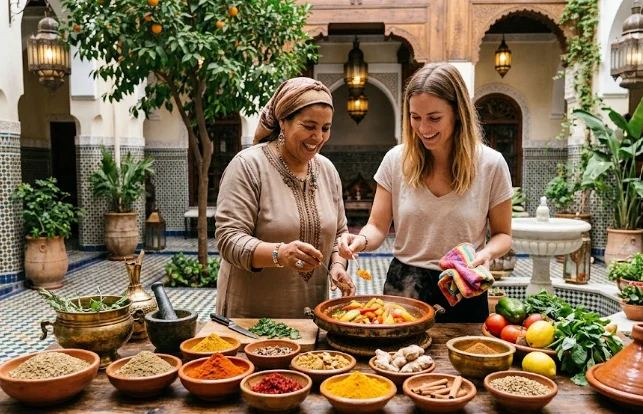
Marrakech is a city where aromas guide you before you ever see the source. From the warm perfume of orange blossom to the smoky depth of cumin and paprika, Moroccan cuisine is built on spices that feel both ancient and intensely personal. Therefore, booking a spice cooking class Marrakech experience inside a traditional riad is one of the best ways to understand the true flavors of Morocco—and to bring those flavors home.
In a traditional riad, surrounded by tiled courtyards and soft lantern light, you’ll cook with guidance from local hosts who know exactly how spices behave in a tagine, in a stew, or in fragrant bread dough. Consequently, if you want more than a basic recipe lesson, you should choose an experience that teaches spice sourcing, blending, and the “why” behind each step.
Why Choose a Riad for Your Spice Cooking Class Marrakech
Cooking in a riad isn’t just a charming setting—it’s part of how Moroccan home cooking is practiced. Many riads were designed around a central courtyard, which makes the experience feel intimate and relaxed. As a result, you’ll typically cook in a dedicated kitchen space while still enjoying the calm rhythm of the household.
Because these classes are often run by families or local culinary guides, the knowledge feels grounded. You’ll learn how spices are used daily, not just how to follow a single dish. Ultimately, the result is a lesson that stays with you long after you leave Marrakech.
What a Premium Spice Cooking Class Marrakech Should Include
Not all cooking experiences focus equally on spices. The best Marrakech riad classes treat spices as the heart of the menu, connecting them to Morocco’s markets, traditions, and regional cooking styles. Therefore, look for programs that cover both ingredients and technique.
Spice Tasting Protocols in a Spice Cooking Class Marrakech
A standout class often begins with an introduction to Moroccan spice staples. First, you may taste small pinches of ingredients and learn what they do in a dish. This helps you understand how to adjust flavors at home later.
Learn to Build Blends the Moroccan Way
Some of the most memorable moments happen when you grind, mix, and measure. For instance, you might create a blend for chicken or lamb, prepare a seasoning mix for vegetables, or build a warm, balanced profile for a tagine.
Practice How Spices Change During Cooking
In Moroccan cooking, timing matters. Toasting spices briefly can deepen their aroma, while slow simmering softens sharpness. For this reason, a strong class will show you how to layer flavor rather than just sprinkle seasoning at the end.
Top Dish Styles You’ll Cook in a Spice Cooking Class Marrakech
Most spice-focused riad classes use a curated menu that highlights Morocco’s signature cooking methods. You’ll commonly see tagines, stews, salads, and classic breads, each offering a different way to experience spice:
- Chicken or lamb tagine with a spice blend built from cumin, ginger, turmeric, paprika, and aromatic herbs.
- Vegetable-based tagine featuring preserved lemon or olives for bright, salty depth.
- Moroccan salads like carrot with spices or zaalouk-style smoky eggplant flavors.
- Flatbread or batbout-style bread where timing and texture matter as much as seasoning.
- Sweet finishing treats often flavored with cinnamon, orange blossom, or sesame.
Even when menus vary, the best classes share a common thread: the spices aren’t an afterthought. Instead, they’re a teaching tool, showing how Moroccan cooks create layered flavor with simple, widely available ingredients.
How to Choose the Best Spice Cooking Class Marrakech Offers
Marrakech offers many cooking options, from market tours to full-day experiences. To find the best riad class for local spice learning, use a few practical checks.
Check the Class Size and Atmosphere
Smaller groups generally mean more hands-on time. Indeed, you should be able to grind spices, smell them freshly, and ask questions while you cook. A calm riad setting also makes the experience feel deeply personal.
Look for Ingredient Transparency
The ideal hosts explain where ingredients come from and why specific spice blends are used. If the class highlights local staples—like saffron, preserved lemons, dried herbs, and regional spice mixes—it’s usually a strong sign the session is thoughtfully designed.
Confirm Whether the Class Includes Spice Blending
Moreover, ask whether you’ll mix spices yourself and how much focus is placed on local seasonings. “Cooking with spices” can mean anything from sprinkling at the end to actively crafting a blend that drives the entire flavor profile.
Review Timing and Hands-On Steps
A good class has a clear flow. You should spend real time prepping ingredients, learning technique, tasting during the process, and adjusting seasoning as you go. On the other hand, if everything feels rushed or overly lecture-based, you may miss the heart of the experience.
A Typical Spice Cooking Class Marrakech Experience, Step by Step
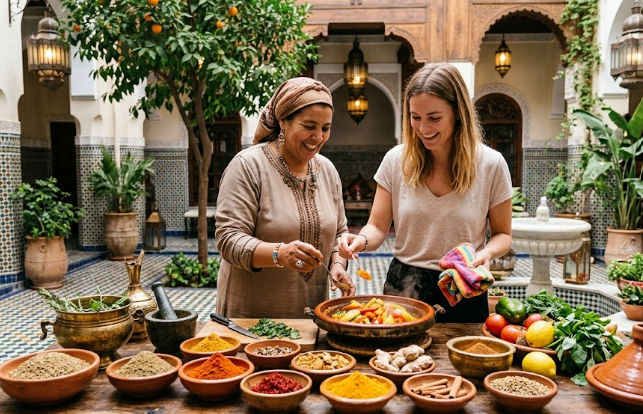
While details differ by provider, the structure of the best Marrakech riad classes tends to follow a logical rhythm. Here’s what many guests can expect:
- Welcome and introduction to Moroccan pantry staples: You’ll likely meet your host in the courtyard or kitchen area. Expect a short overview of key flavors and a guided discussion of spice notes—earthy, warm, bright, and aromatic.
- Spice tasting and learning flavor roles: You may be invited to smell and taste small samples. This helps you notice how cumin warms, turmeric adds color, ginger brings brightness, and cinnamon offers gentle sweetness.
- Blending your own seasoning mix: Some classes feature a hands-on moment with grinding and mixing. You’ll learn how Moroccan cooks balance spices, often using a combination of warm aromatics with herbal notes.
- Cooking the main dish with technique: You’ll typically prepare a tagine or stew, learning to layer flavor. The host may demonstrate how to bloom spices, sear ingredients if needed, and build a base that becomes richer during slow cooking.
- Finishing touches, tasting, and plating: As the dish comes together, you’ll taste and adjust. This is where spice knowledge becomes practical: you’ll learn how to fix imbalance with small changes—more heat, more salt, or a brighter note from lemon or herbs.
- Dessert or tea ceremony-style conclusion: Finally, many riad classes finish with mint tea and a sweet dish. Cinnamon, orange blossom, and sesame are common, giving you a final snapshot of how Moroccan flavors move between savory and sweet.
Tips for Your Riad Spice Cooking Class Marrakech
To enjoy the experience fully, come with a curious mindset. Moroccan cooking is about balancing tastes, not chasing perfection. These quick tips can help you make the most of your time:
- Ask for spice quantities and substitutions so you can recreate the blend later at home.
- Take notes during the tasting stage—it’s the moment when flavor logic becomes clear.
- Bring an appetite for experimenting; small adjustments are part of the craft.
- Check dietary needs upfront to ensure the menu can be adapted comfortably.
Pair Your Cooking Class With a Marrakech Flavor-Focused Itinerary
Even if the class itself is your main event, it pairs beautifully with other experiences in Morocco. Before or after your session, consider a visit to a market where spices are displayed in colorful heaps. Learning what you smell—cumin, coriander, smoked paprika-like notes, ras el hanout-style blends—adds depth to what you cook.
Furthermore, walking through historic neighborhoods and tasting street-level specialties helps you connect spice blends with real-world flavor. Thus, your class becomes the bridge between what you taste on the street and what you can recreate at home.
Make Marrakech Taste Unforgettable
In conclusion, the best spice cooking class Marrakech has to offer does more than teach recipes—it teaches flavor thinking. From spice tasting and blending to learning how aromas develop during slow cooking, you’ll come away with both skills and confidence. In the warm, traditional atmosphere of a riad, Moroccan cuisine becomes personal, memorable, and ready to recreate whenever you crave those familiar, comforting notes of Morocco.
FAQ: Spice Cooking Class Marrakech Questions
1. Is a spice cooking class Marrakech suitable for vegetarians or vegans?
Yes, absolutely. Most riad cooking classes are highly adaptable. Because Moroccan cuisine features a rich variety of vegetable-based side dishes, salads, and couscous, hosts can easily adjust the main tagine to be entirely vegetarian or vegan while still using the exact same traditional spice blending techniques.
2. Can I easily find these Moroccan spices when I return home?
Fortunately, yes. While some rare blends like premium Ras el Hanout or local saffron are best bought in Marrakech, foundational spices like cumin, ginger, turmeric, paprika, and cinnamon are widely available globally. During your class, your host will often give you tips on how to source high-quality alternatives in your home country.
3. How long does a typical riad cooking class last?
Generally, a standard spice cooking class Marrakech experience lasts between 3 to 4 hours. This timeline includes the initial spice tasting, the hands-on preparation and slow-cooking process, and finally, the time spent sitting down to enjoy the delicious meal you created.
4. Do I need any prior cooking experience to join a class?
Not at all. These classes are designed for all skill levels, from absolute beginners to passionate home cooks. The local guides will walk you through every single step, from chopping ingredients to mastering the subtle art of spice blooming, ensuring a relaxed and stress-free environment.