
Marrakech food markets: The Ultimate Guide
- Moroccan cuisine Traditional Dishes
 Manal Hachi
- 0
- 22 minutes read

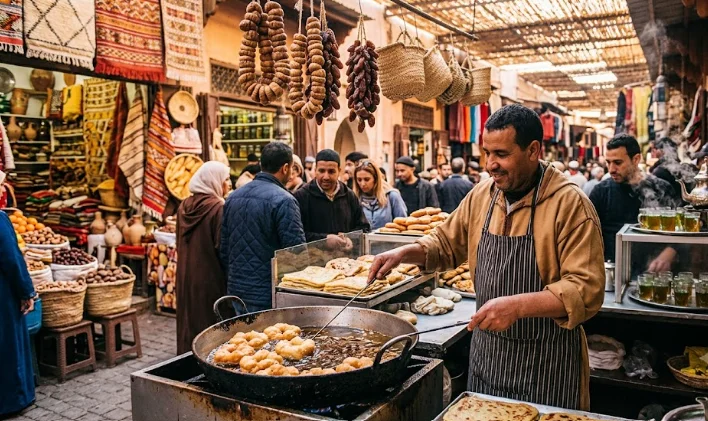
Marrakech food markets are an open-air sensory spectacle where centuries of North African culinary traditions collide with vibrant colors, intoxicating aromas, and bustling market trade. Beyond the labyrinthine alleyways selling leather slippers and brass lanterns lies a thriving ecosystem of traditional markets—known locally as souks and marchés couverts. Here, residents gather daily to source fresh herbs, sun-cured olives, heirloom spices, and slow-roasted meats.
Whether you are seeking the sizzle of charcoal-grilled skewers at dusk or searching for rare Ras el Hanout blends ground right before your eyes, exploring Marrakech food markets is the ultimate way to experience Moroccan gastronomy. In this comprehensive guide, we unpack the best traditional markets in the Red City, what to taste at each spot, and essential local customs to help you navigate like a seasoned traveler.
Why Marrakech Food Markets Are a Culinary Heritage
For over a millennium, Marrakech served as a crucial trading hub for caravans crossing the Sahara Desert and Atlas Mountains. Consequently, this historic crossroads birthed a complex culinary culture deeply tied to seasonal agriculture, nomadic preservation techniques, and community life.
Unlike modern supermarkets, traditional Marrakech food markets are divided into specialized quarters where artisans master a single trade:
- Spice merchants blend medicinal herbs, roots, and aromatic flowers.
- Olive purveyors cure dozens of varieties in wooden barrels.
- Master roasters tend underground clay pits for hours to yield legendary meat dishes.
Furthermore, recognized in part by the UNESCO Intangible Cultural Heritage list for the storytelling and culinary traditions of Jemaa el-Fnaa, these markets remain the beating heart of daily life in the Medina.
The 8 Best Marrakech Food Markets You Must Visit
1. Jemaa el-Fnaa Night Food Stalls (The Beating Heart)
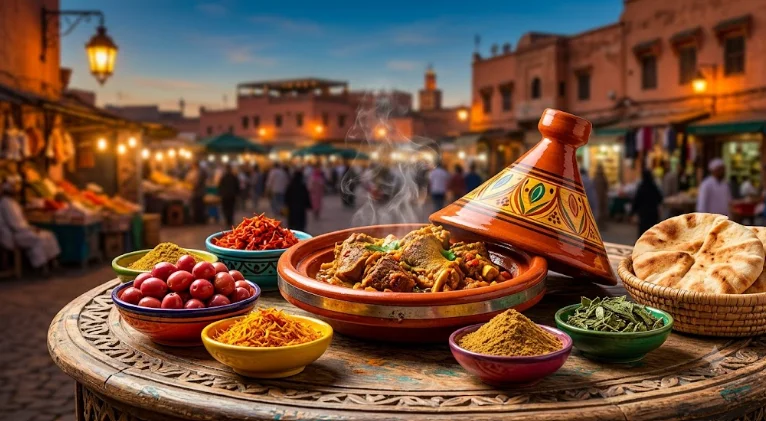
By day, Jemaa el-Fnaa is a sunlit square filled with fresh orange juice vendors and dried fruit stalls. However, as dusk sets over the Koutoubia Mosque, the open space transforms into one of the world’s largest open-air street food kitchens. Smoke rises from dozens of numbered food stalls serving everything from charcoal-grilled kefta to spicy snail broth.
- Best For: Atmospheric dining, street food sampling, and late-night eats.
- Must-Try: Babouche (flavorful snail soup infused with licorice root and thyme), grilled lamb skewers, and spiced tea.
- Local Tip: Choose stalls packed with local families rather than empty tourist setups. For a curated tasting experience, consider booking a guided Marrakech street food tour.
2. Rahba Kedima (Spice Square)
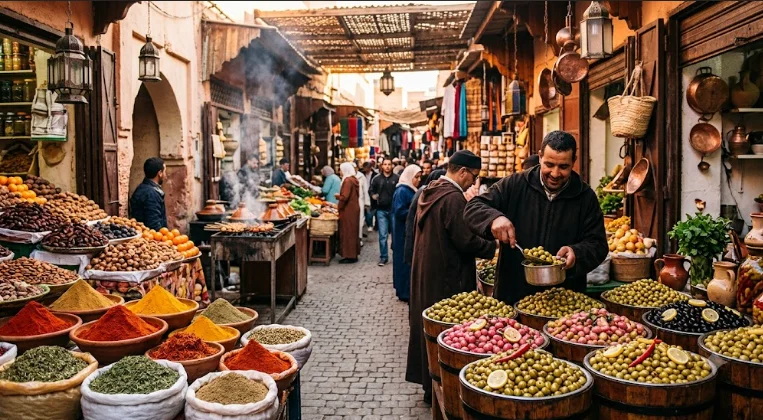
Framed by towering piles of vibrant yellow turmeric, crimson paprika, and emerald-green henna, Rahba Kedima (often called Spice Square) is the most famous aromatic market in the Medina. Historically a bustling trade center, today it hosts rows of herbalists (attarine) selling medicinal plants, essential oils, Amlou (Moroccan almond-argan butter), and artisanal spice mixes.
- Best For: Spices, medicinal herbs, argan oil, and tea blends.
- Must-Try: Freshly ground Ras el Hanout (a complex blend containing up to 30 spices) and pure culinarily-graded Argan oil.
- Buying Guide: Learn more in our detailed guide to buying authentic Argan oil in Morocco.
3. Souk Ableuh (The Olive & Preserved Fruit Market)
Tucked right off the edge of Jemaa el-Fnaa, Souk Ableuh is an irresistible destination for olive enthusiasts among Marrakech food markets. Towering pyramids of glistening green, purple, black, and pink olives fill open barrels, marinated in harissa, lemon peel, garlic, cumin, or wild thyme.
- Best For: Pickled vegetables, harissa paste, preserved lemons, and cured olives.
- Must-Try: Meslalla (cracked green olives cured with hot chili and lemon) and salted preserved lemons essential for making authentic Moroccan tajine recipes.
4. Marché Bab Doukkala (The Authentic Local Hub)
Located near the western gate of the Medina, Marché Bab Doukkala is where local Marrakchis shop for their daily kitchen needs. Indeed, free from tourist gimmicks, this sprawling street market offers seasonal fruits, fresh herbs, live poultry, butchered meats, and freshly baked flatbreads at true local prices.
- Best For: Experiencing everyday market life, raw ingredients, and budget street food.
- Must-Try: Freshly griddled Msemmen (flaky layered flatbread) stuffed with spiced onions and peppers, washed down with sweet mint tea.
5. Marché Couvert du Mellah (The Old Jewish Quarter Market)
Located in the historic Mellah district, this covered produce market is one of the oldest in the city. For instance, it features narrow lanes filled with butcher shops, fishmongers, vegetable stalls, and bakeries. In addition, the adjacent streets sell dried herbs, sea salts, and traditional remedies at very reasonable prices.
- Best For: High-quality fresh produce, fish, spices, and non-touristy shopping.
- Must-Try: Fresh figs, pomegranates, and locally caught seafood fried on order at small stalls near Place des Ferblantiers.
6. Mechoui Alley (Derb Dabachi)
Tucked away in a narrow alleyway near Jemaa el-Fnaa, Mechoui Alley is a holy grail for meat lovers exploring Marrakech food markets. Here, pitmasters slow-roast whole lambs (mechoui) underground in deep, clay-lined brick ovens for up to six hours.
- Best For: Traditional slow-cooked meat specialties.
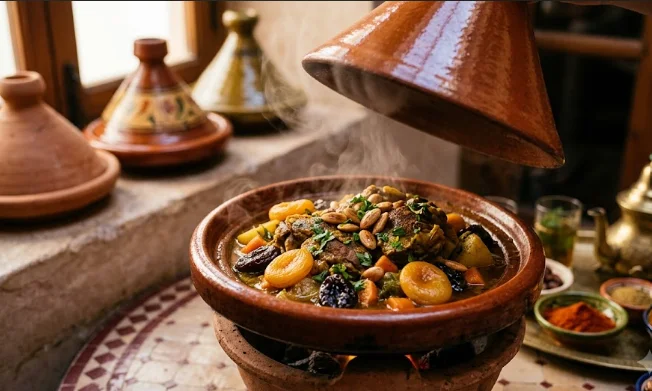
- Must-Try: Roasted lamb shoulder served on parchment paper with coarse salt and cumin, and Tanjia Beldia (beef or lamb stewed in terra-cotta urns inside wood-fired hammam ashes).
- Recipe Focus: Curious how this dish is made? Check out our step-by-step guide on how to prepare authentic Marrakech Tanjia.
7. Souk Kchacha (Dried Fruits & Nuts Market)
If you love dates, figs, and almonds, Souk Kchacha is your ideal destination. For example, this compact market section supplies the city with premium dried fruits sourced across Morocco—from the Ziz Valley date palms to the High Atlas walnut groves.
- Best For: Nuts, dried fruits, seed pastes, and sweet snacks.
- Must-Try: Medjool dates stuffed with walnuts, sun-dried Smyrna figs, and raw roasted almonds.
8. Marché Central de Guéliz (The Modern Covered Market)
For a change of pace from the historical Medina, head to the New Town (Ville Nouvelle) of Guéliz. The Marché Central is an orderly covered market built during the French protectorate era. Therefore, it offers cheese, charcuterie, fresh flowers, organic produce, and wine vendors under one roof.
- Best For: High-end produce, European delicatessen items, and clean, hassle-free shopping.
- Must-Try: Artisanal goat cheese from the Atlas foothills and fresh Mediterranean oysters.
Comparison of Top Marrakech Food Markets
| Market Name | Location / Neighborhood | Primary Specialties | Ambiance & Vibe | Ideal Time to Visit |
| Jemaa el-Fnaa | Central Medina | Street food, grilled skewers, orange juice | Energetic, bustling, tourist-heavy | 7:00 PM – 11:00 PM |
| Rahba Kedima | Medina (Near Souk Semmarine) | Spices, medicinal herbs, Amlou, argan oil | Aromatic, photo-worthy, vibrant | 10:00 AM – 4:00 PM |
| Souk Ableuh | North edge of Jemaa el-Fnaa | Olives, harissa, preserved lemons | Compact, colorful, high-density | 10:00 AM – 7:00 PM |
| Marché Bab Doukkala | Bab Doukkala (West Medina) | Produce, flatbreads, raw ingredients, fish | Authentic local life, noisy, non-touristy | 8:00 AM – 1:00 PM |
| Marché du Mellah | Mellah (Jewish Quarter) | Fresh vegetables, meats, herbs, fish | Historic, relaxed, budget-friendly | 9:00 AM – 2:00 PM |
| Mechoui Alley | Derb Dabachi | Slow-roasted lamb, Tanjia | Sizzling, savory, rustic | 11:00 AM – 3:00 PM |
| Souk Kchacha | Central Medina Souks | Dried dates, figs, almonds, walnuts | Compact, sweet aromas, traditional | 10:00 AM – 6:00 PM |
| Marché Central | Guéliz (New Town) | Gourmet produce, cheeses, flowers | Clean, organized, colonial-style | 9:00 AM – 1:00 PM |
Must-Taste Specialties in Marrakech Food Markets
Navigating the stalls is half the fun; however, the other half is eating! Make sure to add these quintessential Marrakchi delicacies to your tasting list:
- Tanjia Marrakchia: Known as the “bachelor’s dish,” this clay pot meal combines beef or lamb shank with garlic, cumin, saffron, preserved lemon, and smen (fermented butter). It cooks slowly inside the ashes that heat the public hammams.
- Mechoui: Whole pit-roasted lamb seasoned simply with sea salt and cumin. Consequently, it is tender enough to tear apart with your fingers.
- Sfenj: Moroccan deep-fried dough rings that are crispy outside and pillowy inside. Best enjoyed fresh from the oil alongside morning mint tea.
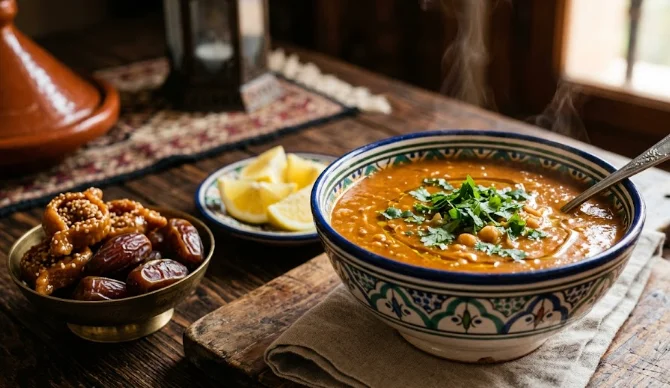
- Harira & Chebbakiya: A comforting tomato, lentil, and chickpea soup served with dates and sesame-honey pastries—a daily ritual across local food stalls.
- Amlou: A creamy dip made of toasted almonds, wild blossom honey, and pure culinary argan oil. In short, it is Morocco’s answer to almond butter.
Practical Tips for Navigating Marrakech Food Markets
To get the most out of your market visits, keep these insider recommendations in mind:
- Bargaining Etiquette: Haggling is expected for non-perishable goods like dried spices, argan oil, and nuts in tourist areas. However, fresh produce, bread, and prepared meals at local markets have fixed, standard prices.
- Hygiene & Safety: When eating street food, choose vendors with high customer turnover—especially local families. Read our complete guide on safety tips for eating street food in Morocco.
- Payment: Always carry cash in small denominations (Moroccan Dirhams – MAD). As a result, credit cards are rarely accepted in Medina markets.
- Cultural Sensitivity: Always ask permission before taking close-up photos of vendors or their produce. A friendly “Mkein mushkil?” (Is it okay?) accompanied by a warm smile goes a long way.
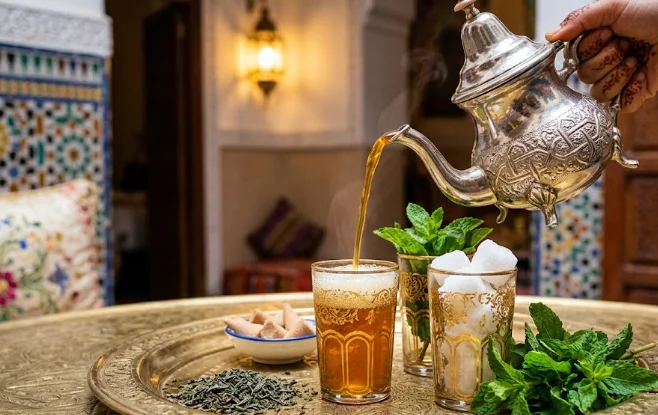
- Navigating the Souks: For a seamless exploration of the surrounding craft and spice quarters, read our ultimate guide to Marrakech Medina souks and master the Moroccan mint tea ritual and etiquette.
For official travel guidelines, event schedules, and safety notices, consult the Visit Marrakech Tourism Board or the official portal of the Moroccan Ministry of Tourism.
Frequently Asked Questions (FAQ)
Are Marrakech food markets safe for tourists?
Yes, Marrakech food markets are generally very safe for international tourists. However, you should still take basic precautions against pickpocketing in crowded areas like Jemaa el-Fnaa and Bab Doukkala.
What is the best time of day to visit Marrakech food markets?
For fresh produce, meats, and bakery items at markets like Marché Bab Doukkala or Marché du Mellah, morning (between 8:30 AM and 11:30 AM) is best. On the other hand, for street food dining at Jemaa el-Fnaa, head out after sunset.
How do I know if spices and Argan oil in the markets are pure?
Purchase spices whole whenever possible or ask to have them ground in front of you at Rahba Kedima. Furthermore, for pure culinary Argan oil, look for a distinct nutty aroma, a light golden hue, and official cooperative certification. Avoid cheap oil sold in unlabelled clear plastic bottles in direct sunlight.
Can vegetarians eat well in Marrakech food markets?
Optionally, yes! Moroccan markets abound with fresh fruits, marinated olives, cooked vegetable salads (Zaalouk, Taktouka), freshly baked flatbreads, sfenj, dried fruits, and vegetable tajines.
Conclusion
The traditional Marrakech food markets offer far more than fresh ingredients—they provide a window into Morocco’s rich cultural heritage, hospitality, and culinary artistry. From the smoky barbecue stands of Jemaa el-Fnaa to the peaceful, spice-filled corners of Rahba Kedima, every market presents a unique flavor profile waiting to be discovered.