

Moroccan Tagine: How to Cook and Season the Authentic Pot
- Moroccan cuisine Moroccan Culture Morocco Guide
 Maroc Fans
- 0
- 24 minutes read

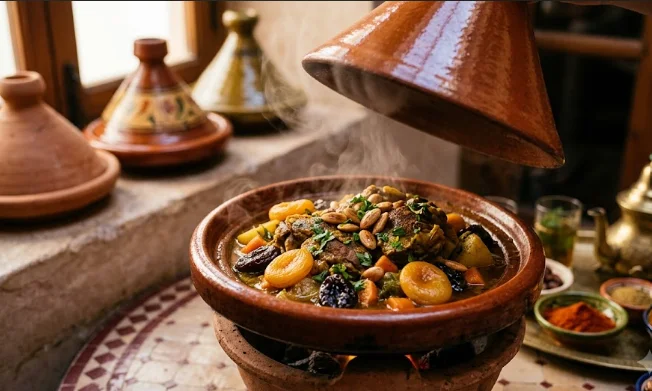
Few dishes around the world carry the same cultural weight, aromatic allure, and historical depth as the Moroccan Tagine. More than just a meal, it is a sensory journey through centuries of North African tradition, a testament to communal gathering, and the undisputed crown jewel of Moroccan cuisine.
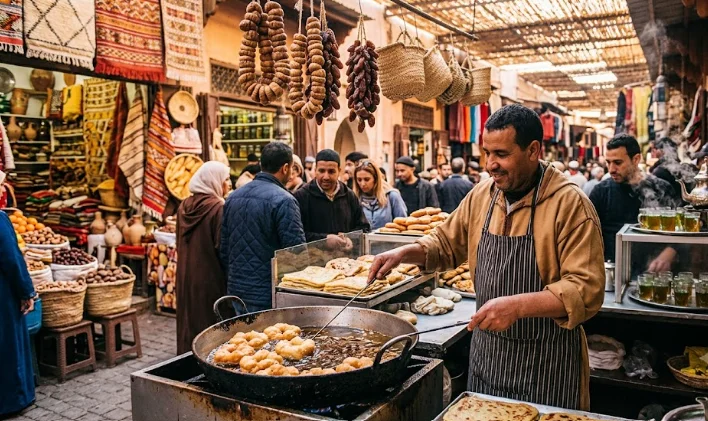
Whether you are walking through the bustling alleys of Marrakech’s Jemaa el-Fnaa or sitting in a quiet Berber village in the High Atlas Mountains, the slow, rhythmic simmer of a clay tagine is the ultimate soundtrack to Moroccan hospitality.
In this ultimate guide, we will unearth the fascinating history behind this iconic dish. Furthermore, we will explore the science of the unique conical vessel, provide step-by-step authentic recipes, and share essential tips to help you master the art of tagine cooking right in your own kitchen.
What is a Moroccan Tagine? Understanding the Dual Meaning
To truly appreciate this culinary masterpiece, one must first understand that the word “tagine” (sometimes spelled tajine) refers to two distinct but inseparable things:
- The Vessel: A heavy, two-piece earthenware or clay pot consisting of a flat, circular base and a distinctive cone-shaped lid.
- The Stew: The slow-cooked, deeply spiced, and incredibly tender stew that is prepared inside this very pot.
The magic of the Moroccan tagine lies entirely within its architectural design. Specifically, the conical lid acts as a natural condensation trap. As the ingredients simmer slowly over low heat, steam rises into the cool upper cone, condenses against the clay walls, and trickles back down into the food. Consequently, this continuous self-basting cycle ensures that meat becomes melt-in-your-mouth tender, vegetables remain perfectly intact, and sauces reduce into a rich, velvety glaze—all while using a minimal amount of water.
The Rich History and Cultural Heritage of the Moroccan Tagine
The origins of the Moroccan tagine are deeply rooted in the history of North Africa’s indigenous people, the Amazigh (Berbers). For thousands of years, these nomadic communities relied on portable, durable clay pots to cook hearty meals over open campfires.
Over the centuries, Moroccan cuisine evolved into a magnificent tapestry woven from various cultural influences:
- Arab-Islamic Influences: Introduced sophisticated spice routes, bringing cumin, ginger, saffron, and cinnamon into the culinary lexicon, alongside the art of pairing savory meats with sweet fruits like apricots and prunes.
- Moorish (Andalusi) Legacies: Brought refined cooking techniques, olives, citrus fruits, and herb pairings.
- Jewish Moroccan Traditions: Contributed unique preservation methods, most notably preserved lemons (l’hmed m’bessal), which remain a foundational element of authentic tagines today.
In Morocco, a tagine is rarely eaten alone. Instead, it is traditionally placed in the center of the table, shared among family and friends. Rather than using forks and knives, diners use pieces of crusty Moroccan bread (khobz) to scoop up the tender meat, vegetables, and rich sauce (marga), making it a deeply communal and bonding experience.
Earth and Fire: Choosing and Seasoning Your Moroccan Tagine Vessel
If you want to recreate an authentic Moroccan culinary experience, choosing the right pot is paramount. When shopping, you will encounter two main categories: cooking tagines and serving tagines.
Important Note: Serving tagines are often heavily glazed, brightly painted, and adorned with intricate silver or ceramic designs. Therefore, do not cook in these! They are not designed to withstand heat and may contain harmful lead glazes. Look for heavy, unglazed or lightly glazed clay or iron-based cooking tagines.
How to Season an Unglazed Clay Moroccan Tagine
Before your unglazed clay tagine touches a stovetop or fire, it must be seasoned to prevent cracking and eliminate any raw clay taste. Follow these traditional steps:
- Soak: Submerge both the base and the conical lid in water for at least 6 to 12 hours.
- Dry: Take it out and let it air dry completely for a couple of hours.
- Oil: Rub the interior of the base and lid generously with olive oil or vegetable oil.
- Bake: Place the oiled tagine into a cold oven. Next, set the temperature to 300°F (150°C) and let it bake for 2 hours. Turn off the oven and allow the tagine to cool down completely inside.
- Wash: Finally, rinse with warm water (avoid dish soaps, as the porous clay absorbs chemicals) and it is ready for its maiden voyage!
The Holy Trinity of Flavors in a Moroccan Tagine
What separates a mediocre stew from a sublime Moroccan tagine is the masterclass balance of spices. Moroccan cuisine does not emphasize fiery, tongue-scorching heat; instead, it focuses on deep warmth, earthiness, and a subtle interplay of sweet and savory notes.
Essential Tagine Spices
- Ginger (Skjinbir): Adds a sharp, clean warmth that pairs beautifully with poultry.
- Cumin (Kamoun): Earthy, smoky, and absolutely vital for beef and lamb dishes.
- Turmeric (Kharkoum): Provides a beautiful, golden-yellow hue and a mild, woody undertone.
- Saffron (Zafrane Beldi): The world’s most luxurious spice, lending an irreplaceable floral aroma and deep crimson undertone to royal tagines.
- Cinnamon (Karfa): Often used in tandem with dried fruits to build the signature sweet-and-savory (M’hassel) flavor profile.
The Aromatic Base
Every great tagine begins with a generous bed of finely chopped red or yellow onions, minced garlic, and a tied bouquet or fine mince of fresh cilantro and flat-leaf parsley. Moreover, olive oil—preferably robust, cold-pressed Moroccan olive oil—is used generously to coat the base and emulsify the spices.
Step-by-Step Guide: Making an Authentic Lamb & Prune Moroccan Tagine
This recipe is a timeless classic across Morocco, frequently served at weddings, celebrations, and Friday family gatherings. It perfectly demonstrates the M’hassel (sweet and savory) culinary style.
Ingredients
- Lamb: 2 lbs (1 kg) of lamb shoulder or shanks, cut into large chunks.
- Onions: 2 large onions, finely grated or chopped.
- Garlic: 3 cloves, minced.
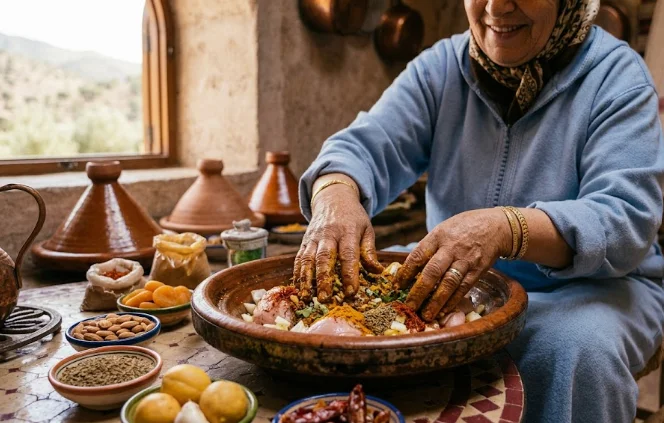
- Spices: 1 tsp ginger, 1 tsp turmeric, ½ tsp cinnamon, 1 tsp ground cumin, a generous pinch of saffron threads soaked in warm water, salt, and black pepper to taste.
- Fruits & Nuts: 1 cup of dried prunes, ½ cup of raw blanched almonds, 1 tbsp honey.
- Aromatics: A small bunch of fresh cilantro and parsley tied together.
- Oil: 3 tbsp extra virgin olive oil.
Cooking Instructions
Step 1: Layering the Flavors
First, place your seasoned tagine base on a heat diffuser over low heat. You can then pour in the olive oil and add the chopped onions and minced garlic. Let them sweat gently for 5 minutes until soft and translucent.
Step 2: Searing the Meat
Next, add the lamb pieces to the center of the tagine. Carefully dust the meat evenly with the ginger, turmeric, cumin, salt, and pepper. Turn the meat over several times to coat it thoroughly with the spiced onion mixture, then let it sear gently for about 10 minutes.
Step 3: The Slow Simmer
After searing, pour the saffron water over the meat and add the bouquet of cilantro and parsley. You should now pour in just enough extra warm water to fill the base about a third of the way up before placing the conical lid on top. Keep the heat on low and let it simmer undisturbed for 2 to 2.5 hours. However, remember to check occasionally to ensure the liquid hasn’t dried out, adding a splash of warm water if necessary.
Step 4: Preparing the Sweet Topping
While the lamb cooks, place the dried prunes in a small saucepan. Add a ladleful of the savory broth from the tagine, a pinch of cinnamon, and a tablespoon of honey. Simmer over medium heat for 10-15 minutes until the prunes are plump and glazed in a thick syrup. Meanwhile, fry the blanched almonds in a separate pan with a drop of oil until golden brown and crispy.
Step 5: The Finishing Touch
Once the lamb is incredibly tender and separating easily from the bone, remove the herb bouquet. Gently arrange the glazed prunes on top of the meat and drizzle the remaining sweet syrup over the dish. Finally, garnish with the toasted almonds and a sprinkle of toasted sesame seeds, then serve bubbling hot straight from the clay pot!
Alternate Varieties: From Chicken to Vegetarian Masterpieces
While lamb is deeply cherished, the world of Moroccan tagines is incredibly diverse. Here are three other popular variations you must try:
1. Chicken, Preserved Lemon, and Olive Tagine (Djaj M’Kalli)
Arguably the most common tagine found in Moroccan households. It features chicken pieces braised with saffron, ginger, and garlic, finished with the tangy punch of cured preserved lemons and briny green olives. Consequently, the resulting sauce is thick, savory, and intensely flavorful.
2. Kefta Meatball Tagine
A fast-cooking, crowd-pleasing favorite. Ground beef or lamb (kefta) is heavily spiced with cumin, paprika, fresh herbs, and onion, rolled into bite-sized balls, and poached in a rich, zesty tomato-garlic sauce. Just before serving, whole eggs are cracked directly into the bubbling sauce and cooked until the whites are set but the yolks remain wonderfully runny.
3. Seven-Vegetable Berber Tagine
A celebration of seasonal agriculture. This entirely vegetarian option layers hearty vegetables radially around the center of the tagine, forming a beautiful conical mountain of food. Commonly used vegetables include potatoes, carrots, zucchini, sweet potatoes, turnips, cabbage, and chickpeas, seasoned generously with cumin and paprika.
5 Pro-Tips for Cooking a Moroccan Tagine Like a Local
- Always Use a Heat Diffuser: Clay is highly sensitive to sudden temperature fluctuations. If you are cooking on a gas or electric stove, always place a metal heat diffuser between the tagine and the burner to prevent cracking.
- Low and Slow is the Law: A tagine is not a stir-fry or a pressure cooker. It requires low, gentle heat and patience. Rushing the process will result in burnt bases and tough meat.
- Never Add Cold Water: If your tagine needs more liquid during cooking, always add warm or hot water. Pouring cold liquid into a hot clay pot can cause structural thermal shock, splitting the vessel in two.
- Arrange with Geometry: Moroccans eat with their eyes first. Therefore, when assembling your ingredients, place the densest components (like meat and hard root vegetables) in the center, and angle lighter vegetables outward in a beautiful, symmetrical pyramid.
- Let it Rest: Once you turn off the heat, leave the lid on for 10 to 15 minutes before serving. This allows the sauce to settle, thicken, and reach its peak flavor density.
Explore More Moroccan Culinary Wonders
If you want to fully immerse yourself in the rich gastronomic world of North Africa, your journey doesn’t end with the tagine! Be sure to explore our comprehensive guides on other Moroccan staples:
- Learn the art of steaming light-as-air semolina grains in our guide to Authentic Moroccan Couscous.
- Master the ultimate symbol of Moroccan hospitality by reading about the ritual of Traditional Moroccan Mint Tea.
- Discover the sweet, flaky, and savory layers of Morocco’s ultimate celebration pie in our deep-dive on The History and Art of Moroccan Pastilla.
Frequently Asked Questions (FAQ) about the Moroccan Tagine
1. Can I cook a Moroccan tagine in a regular Dutch oven or slow cooker?
Yes, you can! If you do not own a clay tagine, a heavy-bottomed Dutch oven, braiser, or a modern electrical slow cooker can mimic the slow, moist heat environment reasonably well. However, keep the lid tightly sealed and reduce the liquid volume slightly, as a standard lid does not condense steam as efficiently as a traditional conical clay lid.
2. Is it safe to eat out of an unglazed clay Moroccan tagine?
Absolutely, provided it is a designated cooking tagine purchased from a reputable artisan or vendor. Pure clay is completely natural and non-toxic. In fact, many culinary experts argue that unglazed clay transfers a distinct, earthy, and rustic flavor profile to the food that modern metal cookware simply cannot replicate.
3. Why did my tagine crack during cooking?
Cracking is typically caused by thermal shock or direct contact with high heat intense focal points. To prevent this, always use a heat diffuser on stovetops, never expose a cold tagine to a preheated hot oven, and never add cold water while the pot is hot.
4. How do I clean my Moroccan tagine without ruinous soap residue?
Because clay is incredibly porous, it can absorb synthetic dish soaps, which will ruin the flavor of your next meal. Instead, clean your tagine using warm water, a soft sponge, and a sprinkle of baking soda or coarse salt for stubborn food stains. Dry it thoroughly before storing.
5. What is the difference between a Moroccan tagine and a Tunisian tagine?
While they share the exact same name, they are completely different dishes! A Moroccan tagine is a slow-cooked, moist stew made in a clay pot. A Tunisian tagine, on the other hand, resembles a crustless quiche or frittata made with eggs, cheese, meat, and starch, baked in the oven until firm.
6. Can a Moroccan tagine be made completely vegan?
Yes! The Berber Vegetable Tagine is a staple across Morocco and is entirely plant-based. By utilizing a robust base of extra virgin olive oil, aromatic herbs, and traditional spices, you can create a rich, savory gravy without using any animal products or meat broths.