

Moroccan Pastilla: Secrets to the Perfect Crunch
- Moroccan cuisine Moroccan Culture Morocco Guide
 Maroc Fans
- 0
- 10 minutes read

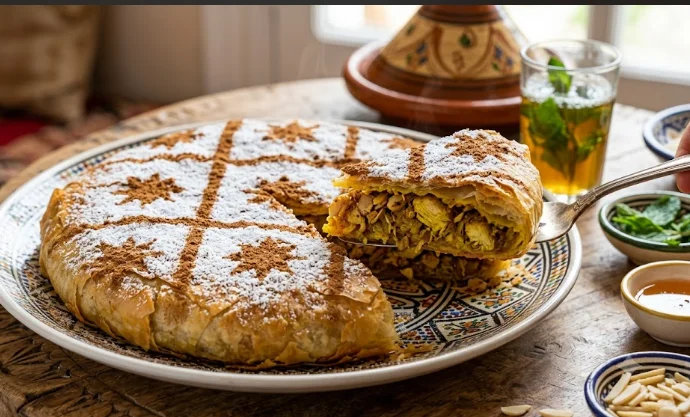
When it comes to culinary showstoppers, few dishes in the world can match the sheer complexity of the traditional Moroccan Pastilla. This iconic pie stands proudly at the intersection of savory and sweet flavors. Consequently, it remains the absolute crown jewel of Moroccan gastronomy. Traditionally reserved for lavish weddings and prestigious feasts, it represents the pinnacle of Fassi culinary artistry.
If you want to understand this culinary masterpiece, you must explore its rich components. This comprehensive guide details the history, essential layers, and secrets to mastering an authentic Moroccan Pastilla.
What is an Authentic Moroccan Pastilla?
At its core, a Moroccan Pastilla is a magnificent savory-sweet pie. It features meticulously spiced meat enveloped in paper-thin layers of crispy, golden pastry known as warka.
What truly sets it apart from other global savory pies is its unapologetic embrace of contrasting flavors. For instance, a single bite delivers a simultaneous crunch of pastry and a burst of rich meat. Furthermore, it combines the warmth of North African spices with a delicate finish of powdered sugar and ground cinnamon. Therefore, it offers a truly unique sensory experience.
The History Behind Moroccan Pastilla
The story of the dish is just as layered as the pastry itself. Food historians generally trace its origins back to Moorish Spain. When the Muslims and Jews were expelled during the 15th-century, many settled in North Africa. As a result, they brought their sophisticated culinary traditions with them.
The word pastilla itself stems from the Spanish language, meaning “small pastry.” Over centuries, local Moroccan chefs adapted these Andalusian techniques in the royal kitchens of Fez. They introduced native spices and replaced European doughs with hyper-thin local warka sheets. Today, it stands proudly as a symbol of cultural synthesis.
Anatomy of a Classic Chicken Version
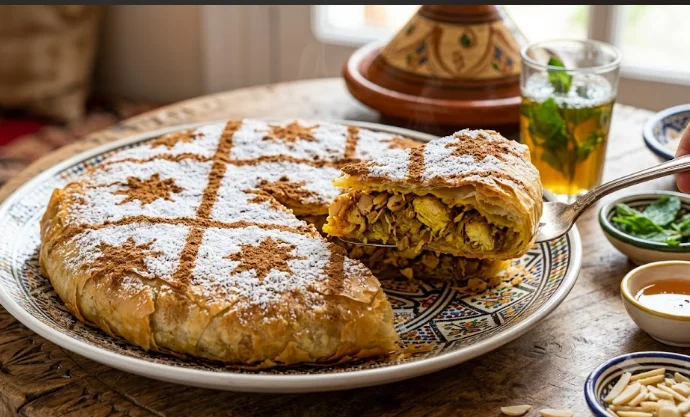
While variations exist, the absolute benchmark of this dish is the sweet and savory chicken version. A masterfully constructed pie relies on three distinct internal layers:
1. The Spiced Meat Filling
The foundation begins with bone-in chicken or traditional young pigeon. Chefs slow-cook the meat in a dense broth of onions, butter, and a precise blend of spices. This mixture heavily features ginger, saffron strands, turmeric, and black pepper. In addition, freshly chopped cilantro and parsley are added to ground the flavors.
2. The Egg Sauce Layer
Once the meat is perfectly tender, it is removed from the pot and shredded. Meanwhile, the remaining onion and spice reduction is kept over low heat. Whole eggs are gently whisked into this simmering sauce. They cook down until the liquid completely evaporates, leaving behind a beautifully moist filling.
3. The Crunchy Almond Layer
To introduce texture, blanched almonds are fried until golden brown. Next, they are coarsely crushed and tossed with powdered sugar, cinnamon, and a few drops of orange blossom water.
Finally, these three components are carefully layered inside a circular nest of warka pastry. The entire pie is folded into a round shape, heavily brushed with melted butter, and baked until intensely golden.
Popular Variations of Moroccan Pastilla
As the dish spread across different regions, local communities adapted the recipe to mirror their local resources. Thus, multiple styles emerged.
| Pastilla Type | Core Protein | Key Flavor Profile | Best Known For |
| Classic Chicken / Pigeon | Shredded chicken or squab | Savory-sweet, saffron, cinnamon, toasted almond crunch | Royal feasts, traditional weddings, holidays |
| Seafood Style | Calamari, shrimp, white fish, vermicelli | Savory, spicy, garlicky, laced with harissa | Coastal cities like Casablanca and Tangier |
| Dessert Milk Version | None (Pastry layers) | Sweet, crispy pastry with orange-blossom custard | A light, refreshing conclusion to a heavy meal |
Pro Tips to Achieve the Perfect Crunch
If you are attempting to make this dish at home, several technical tips will elevate your results.
- Dry the Fillings Thoroughly: The absolute enemy of a good pastilla is moisture. Therefore, ensure your egg-and-onion mixture is thoroughly drained before assembly. Excess liquid will quickly make the bottom pastry soggy.
- Generous Buttering: Do not skimp on the clarified butter. Every single layer of pastry must be generously brushed. Consequently, this step guarantees that signature, shatteringly crisp texture upon baking.
- The Cinnamon-Sugar Lattice: Never skip the final decoration. A true masterpiece is always dusted with a heavy layer of powdered sugar and a hand-drawn crisscross pattern of ground cinnamon.
Frequently Asked Questions (FAQ)
Can I use phyllo dough if I cannot find authentic warka?
Yes, you can. While authentic warka is preferred for its unique elasticity, standard store-bought phyllo dough makes an excellent substitute. Simply use two layers of phyllo dough for every single layer of warka called for in the recipe. However, ensure you keep it covered with a damp towel while working so it does not crack.
Is a Moroccan Pastilla served hot or cold?
It should always be served hot or warm, straight out of the oven. This timing ensures the warka pastry maintains its maximum crunch. Furthermore, the aromatic fats within the meat filling remain luscious and flavorful at this temperature.
Can you freeze the pie before baking it?
Absolutely, because it freezes beautifully. You can assemble the pastry completely up to the baking step. Then, wrap it tightly in multiple layers of plastic wrap and aluminum foil. It can be stored in the freezer for up to two months. When you are ready to serve, simply bake it directly from frozen while adding an extra 15 minutes to the cooking time.