

Landscapes in Morocco: A Complete Nature Guide
- Destinations Travel in Morocco
 Manal Hachi
- 0
- 27 minutes read

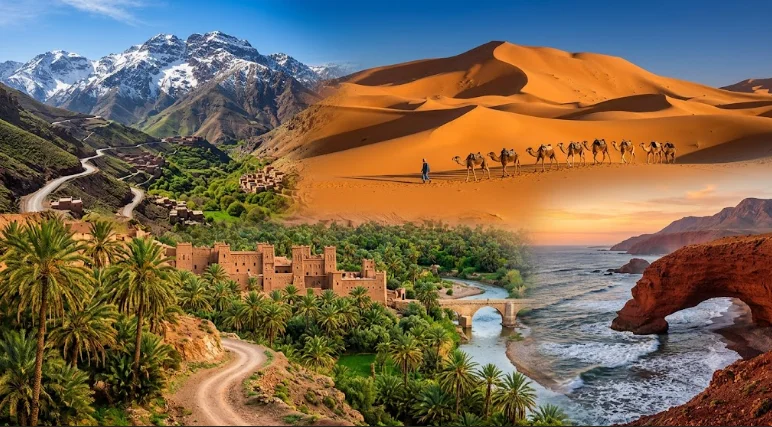
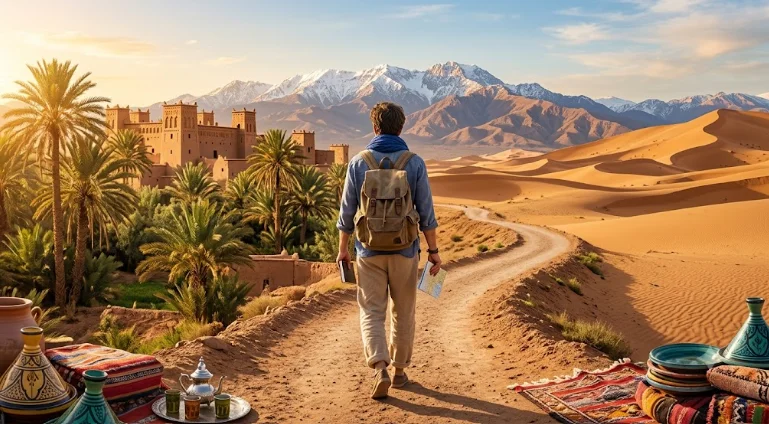
The diverse landscapes in Morocco make it one of the most geographically dynamic countries in the world. Within a single day’s travel, you can journey from snow-capped alpine peaks down to lush palm oases. Furthermore, you can explore carved limestone canyons before ending your day on vast rolling desert dunes. Situated at the meeting point of Africa and Europe, and influenced by both the Atlantic Ocean and the Mediterranean Sea, Morocco offers a spectacular array of natural environments.
Whether you are an avid hiker seeking high-altitude mountain trails, a landscape photographer hunting for dramatic lighting, or a traveler longing for serene wilderness, exploring these regions guarantees an unforgettable adventure. Consequently, this comprehensive guide covers Morocco’s premier natural regions, complete with practical travel advice, a comparative overview, and expert planning insights.
1. High Atlas Mountain Landscapes: Peaks, Gorges, and Cascades
The High Atlas range forms the towering mountain backbone of North Africa, stretching over 700 kilometers across the country. Home to the region’s highest peaks, deep river valleys, and centuries-old Amazigh (Berber) villages, this area contains some of the most impressive mountain landscapes in Morocco.
Mount Toubkal and Toubkal National Park
Rising to 4,167 meters (13,671 feet) above sea level, Jbel Toubkal is the highest summit in North Africa. Located just 60 kilometers south of Marrakech, Toubkal National Park protects dramatic high-altitude environments, oak forests, and exposed granite ridges.
- Why Visit: Trekking to the summit rewards adventurers with sweeping views across mountain ranges all the way to the edge of the Sahara.
- Best Time to Visit: May to October for trekking; however, November to April is ideal for winter mountaineering because of heavy snow cover.
- Traveler Tip: Hire a certified local guide in Imlil, which serves as the primary base village for Toubkal expeditions.
The Ouzoud Waterfalls (Cascades d’Ouzoud)
Nestled in the Middle Atlas region near Azilal, the Ouzoud Waterfalls plummet dramatically over 110 meters across three tiers into the El-Abid River gorge. Red sandstone cliffs surrounded by lush olive groves create a striking contrast against rushing white waters.
- Key Highlights: Swimming in lower natural pools, taking small wooden boat rides across the basin, and spotting wild Barbary macaques in the surrounding trees.
- Accessibility: Accessible as a popular day trip from Marrakech or, for example, as a scenic stopover toward benito Mellal.
Todra and Dades Gorges
Carved over millions of years by the Todra and Dades rivers, these twin canyons rank among the most imposing geological sights in North Africa.
- Todra Gorge: Features sheer limestone cliff walls rising up to 300 meters high, with a narrow passage just 10 meters wide at its narrowest point. Consequently, it is a premier destination for international rock climbers.
- Dades Valley (The Valley of a Thousand Kasbahs): Renowned for its unique “Monkey Fingers” rock formations as well as winding mountain roads overlooking green palm-filled riverbeds.
2. Desert Landscapes in Morocco: Golden Dunes and Infinite Horizons
No exploration of the natural landscapes in Morocco is complete without experiencing the immense silence and beauty of the Sahara Desert.
Erg Chebbi (Merzouga)
Located near the town of Merzouga near the Algerian border, Erg Chebbi is famous for its massive wind-sculpted sand dunes, some reaching heights over 150 meters. The golden-orange sand shifts in color throughout the day; as a result, it glows deep crimson during sunrise and sunset.
- Activities: Camel trekking, sandboarding, 4×4 dune drives, and luxury desert camping under starlit skies.
- Highlight: Stargazing with zero light pollution, where the Milky Way is clearly visible to the naked eye.
Erg Chigaga (Zagora & M’Hamid)
For a wilder and more remote desert environment, Erg Chigaga offers a vast expanse of sand dunes stretching over 40 kilometers. However, unlike Erg Chebbi, Erg Chigaga is accessible only via 4×4 off-road vehicles or multi-day camel treks starting from M’Hamid El Ghizlane.
- Why Choose Erg Chigaga: Total solitude, expansive gravel plains (reg) meeting sand dunes (erg), and authentic nomadic culture.
- Recommended Duration: 2 to 3 days to fully experience the remote wilderness.
3. Coastal Landscapes in Morocco: Atlantic Cliffs, Lagoons, and Bays
When exploring coastal landscapes in Morocco, travelers discover over 3,500 kilometers of coastline spanning both the Atlantic Ocean and the Mediterranean Sea. Consequently, this shoreline presents dramatic sea cliffs, pristine dunes meeting the water, and peaceful saltwater estuaries.
| Location | Landscape Type | Key Attraction |
| Legzira Beach | Red Sandstone Sea Arches | Natural wave-carved architecture |
| Dakhla Lagoon | Desert Sand Dunes Meet Ocean | World-class kitesurfing & wildlife |
| Paradise Valley | Coastal Canyons & Natural Pools | Emerald pools & palm groves |
| Cap Spartel | Atlantic-Mediterranean Meeting Point | Historic lighthouse & ocean views |
Legzira Beach (Sidi Ifni)
Located on the southern Atlantic coast between Tiznit and Sidi Ifni, Legzira Beach is renowned for its massive red sandstone sea arches formed by centuries of oceanic wave erosion.
- Atmosphere: Wild, atmospheric, and windswept. For instance, the red rock walls glow intensely during late afternoon light.
- Activities: Long coastal walks, paragliding off sea cliffs, and surfing.
Dakhla Lagoon
Situated in the far south where the Sahara Desert meets the Atlantic Ocean, the Dakhla Peninsula surrounds a calm turquoise lagoon edged by brilliant white sand dunes.
- Best For: Kitesurfing, windsurfing, stand-up paddleboarding, and observing migratory birds like flamingos.
- Vibe: Eco-focused, relaxed luxury with eco-lodges situated along the lagoon’s shore.
Cap Spartel and the Caves of Hercules (Tangier)
At the northwestern tip of mainland Africa, Cap Spartel marks the exact meeting point of the Atlantic Ocean and the Mediterranean Sea. Surrounded by lush coastal pine forests and crowned with a 19th-century lighthouse, it offers panoramic sea views.
- Caves of Hercules: Located nearby, these natural sea caves feature an opening to the ocean shaped remarkably like the outline of Africa.
4. Lush Oasis Landscapes, Valleys, and Hidden Canyons
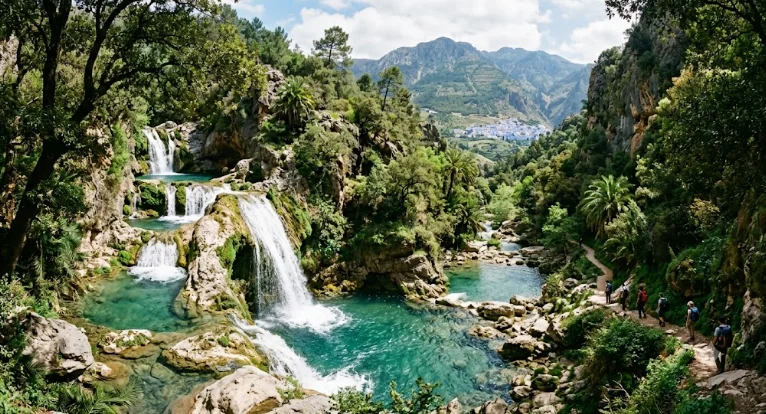
Beyond arid mountains and sand dunes, river systems create some of the most vibrant oasis landscapes in Morocco, carving lush green corridors of life through rocky terrain.
Akchour Waterfalls and God’s Bridge (Rif Mountains)
Hidden inside Talassemtane National Park in the northern Rif Mountains near Chefchaouen, the Akchour Valley is a lush oasis featuring turquoise river pools, dense greenery, and soaring limestone cliffs.
- God’s Bridge (Pont de Dieu): A massive natural limestone arch formed by water erosion hanging high above the mountain stream.
- Lower & Upper Waterfalls: Scenic hiking trails guide visitors along crystal-clear mountain streams to dramatic cascades.
Paradise Valley (Agadir Hinterland)
Nestled in the foothills of the High Atlas near Agadir, Paradise Valley (Val-Paradis) is a palm-lined canyon carved by the Tamraght River. Deep natural emerald pools cut into limestone rock offer refreshing swimming spots during the spring season.
- Best Time: Late winter and spring (February to May) when river water levels are highest following seasonal rains.
- Key Features: Terraced palm groves, almond blossoms in early spring, and natural cliff-diving spots.
Draa Valley (Vallée du Draâ)
Stretching over 200 kilometers from Ouarzazate down to the Sahara, the Draa Valley is Morocco’s largest palm oasis. Over two million date palms flourish along a narrow river strip flanked by ancient mud-brick kasbahs and fortified villages (ksour).
- Historical Value: In addition to its natural beauty, this was a historic trade corridor where trans-Saharan trade caravans arrived after months traveling across the desert.
5. Volcanic Highlands and Cedar Forest Landscapes
In addition to traditional sights, central regions feature volcanic and forested landscapes in Morocco that often surprise visitors expecting only sand and stone.
Ifrane National Park and Cèdre Gouraud Forest
Located in the Middle Atlas region, Ifrane National Park features dense forests of ancient Atlas cedars, rolling limestone hills, and volcanic crater lakes (dayas).
- Wildlife: Home to the endangered Barbary macaque, North Africa’s only native primate species.
- Ecological Importance: Furthermore, these cedar forests form a crucial biosphere reserve protecting regional freshwater aquifers.
- Landscape Character: Often referred to as “Little Switzerland” because of its European-style architecture, snowy winters, and evergreen scenery.
Jbel Sirwa: The Volcanic Link
Positioned between the High Atlas and Anti-Atlas mountain ranges, Jbel Sirwa is an extinct stratovolcano reaching 3,305 meters in elevation.
- Landscape: Jagged volcanic pinnacles, isolated valleys cultivated with saffron crocuses, and terraced agricultural plots.
- Highlight: Trekking through the Sirwa region in November during the annual saffron harvest in Taliouine.
Comparative Overview: Landscapes in Morocco
To help you decide which natural landscapes in Morocco fit your travel style, physical preparation, and seasonal timing, review the comparison below:
| Destination | Landscape Type | Best Season | Key Activities | Accessibility |
| Toubkal Peak | Alpine Mountains | May – Oct | Trekking, Peak Bagging, Photography | Moderate to Challenging |
| Erg Chebbi | Sand Dunes (Sahara) | Oct – April | Camping, Camel Trekking, Stargazing | Easy (Road access to edge) |
| Ouzoud Waterfalls | River Canyon & Falls | March – June | Hiking, Boat Ride, Wildlife Viewing | Easy |
| Legzira Beach | Coastal Sandstone Arches | Year-round | Surfing, Beach Walks, Photography | Easy |
| Akchour Valley | Forest Gorge & Waterfalls | April – Oct | River Trekking, Swimming, Hiking | Moderate |
| Dakhla Lagoon | Desert Coastal Lagoon | Year-round | Kitesurfing, Eco-lodging, Birdwatching | Direct flights available |
| Draa Valley | River Oasis & Palms | Oct – April | Cultural Drives, Kasbah Tours | Easy via Highway |
| Ifrane Cedar Forest | Highland Cedar Forest | Year-round | Nature Walks, Wildlife Spotting | Easy |
Practical Tips for Exploring Landscapes in Morocco
1. Planning Around Seasons and Climate
Morocco’s climate varies greatly across different terrain and altitudes. Therefore, careful planning is required:
- Mountainous Regions (Atlas/Rif): Warm and pleasant summers, but very cold winters with heavy snowfall above 1,500 meters. Always pack warm layers.
- Desert Regions (Sahara): Extremely hot in summer (June to August). However, conditions are mild and pleasant in spring/autumn, and freezing cold at night in winter.
- Coastal Regions (Atlantic/Mediterranean): Temperate year-round because of sea breezes along the Atlantic and calm waters along the Mediterranean.
2. Sustainable and Responsible Travel
Many natural environments are sensitive ecosystems vulnerable to climate change and heavy tourist traffic. Therefore, keep these rules in mind when exploring landscapes in Morocco:
- Stay on designated walking trails when hiking inside national parks.
- Dispose of all trash responsibly, especially single-use plastics in remote desert or mountain environments.
- Respect local wildlife; for example, avoid feeding or disturbing Barbary macaques in Ifrane or Ouzoud.
3. Transportation Logistics
- Car Rental: This is the best option for maximum flexibility when exploring scenic routes, mountain passes (like Tizi n’Tichka), and coastal drives.
- Guided Off-Road / 4×4 Tours: Highly recommended for deep desert expeditions (Erg Chigaga) or remote mountain trekking.
- Public Buses: Reliable companies like CTM and Supratours connect major hubs to gateway towns like Ouarzazate, Chefchaouen, and Merzouga.
Frequently Asked Questions (FAQ)
What are the most iconic landscapes in Morocco?
The rolling sand dunes of Erg Chebbi in Merzouga and the high-altitude peaks of Toubkal National Park are widely considered the two most iconic natural sights in the country.
What is the best season to explore natural landscapes in Morocco?
Spring (March to May) and autumn (September to November) offer the best overall weather across Morocco. During these months, desert temperatures remain comfortable, mountain trails are clear of ice, and river levels in oases are high.
Do I need a licensed guide to hike mountain landscapes in Morocco?
While self-guided day walks are common in places like Akchour or Ouzoud, a certified local guide is required for high-altitude climbs such as Mount Toubkal due to safety regulations and unpredictable mountain weather.
Can you see both mountain and desert landscapes in Morocco on a 7-day trip?
Yes. A popular week-long route departs from Marrakech, crosses the High Atlas mountains via the Tizi n’Tichka pass, continues through the Todra and Dades Gorges, reaches the Sahara desert dunes at Merzouga, and returns through the Draa Valley.
Are coastal landscapes in Morocco safe for swimming and water sports?
Yes. The Atlantic coast near Agadir, Taghazout, and Essaouira offers sandy beaches with world-class surfing waves, while the Mediterranean coast near El Hoceima provides calm, crystal-clear waters perfect for swimming and snorkeling.
From the high alpine summits of the Atlas Mountains down to the golden sands of Erg Chebbi and the dramatic sea cliffs of Legzira, the landscapes in Morocco offer an extraordinary variety of scenery. Exploring these natural environments reveals not only spectacular views, but also the ancient relationship between local communities and their surrounding land. Consequently, whether you want high-altitude hiking, coastal sports, or serene desert nights, Morocco’s nature provides an endless journey of discovery.