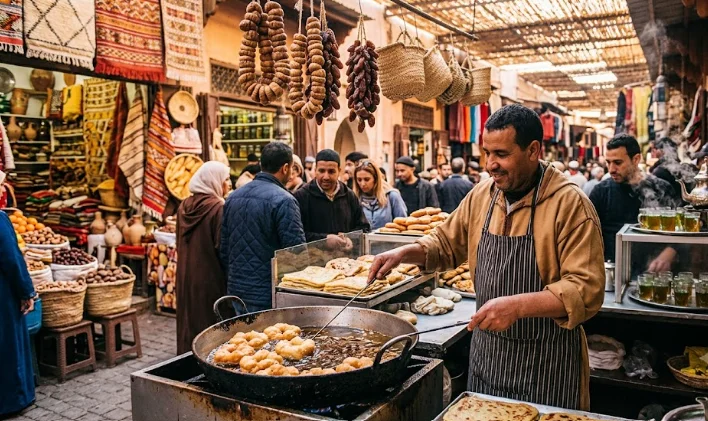


Marrakech Street Food: The Best Spots for Tagine Lovers

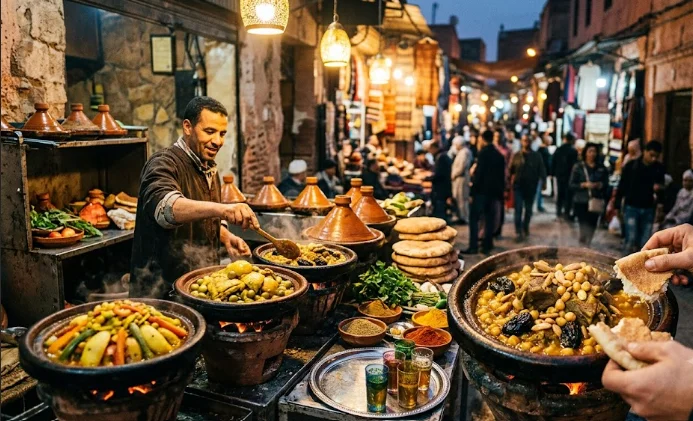
Marrakech is where the aroma of slowly simmered sauces becomes a street-level ritual. If you are exploring the vibrant world of Marrakech Street Food and tagine is your love language, you’ll be in heaven. Indeed, vendors pack their stalls with warm spices, tender meat, and fragrant vegetables served in bowls, wraps, or classic clay pots. From bustling medina corners to lively evening squares, the best tagine moments come when you follow the scent and the crowd.
How to spot the best tagine on Marrakech Street Food stalls
Street food tagines are often made with the same care as restaurant versions. However, the pace here is faster and the atmosphere is much more raw. Therefore, you should look for busy stalls where pots are kept warm and sauces are actively ladled rather than pre-prepared and reheated.
A quick rule of thumb: when you see a vendor handling spices, chopping onions, or letting the sauce reduce, you’re likely to get deeper flavor. In addition, you should prioritize places that serve tagine with fresh bread or msemen—those fluffy layers are perfect for scooping.
What to order on your Marrakech Street Food journey
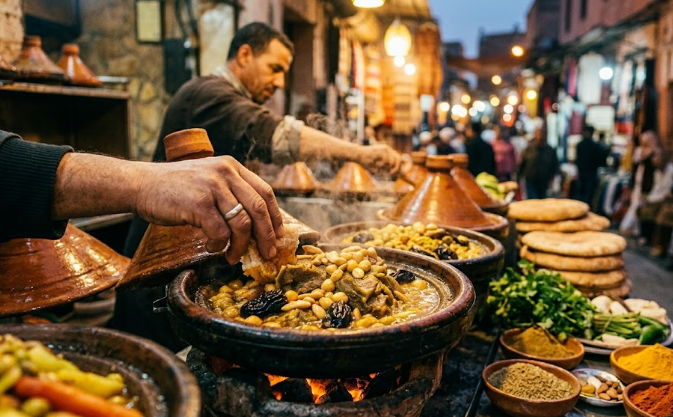
If you’re hunting the “local” experience, go beyond the generic chicken tagine. Instead, try variations that reflect Marrakech’s spice routes and market ingredients. Don’t be shy about asking what’s cooking today; consequently, seasonal produce changes the entire dish.
- Chicken tagine with preserved lemon and olives for bright, tangy depth.
- Beef tagine with prunes and almonds for sweet-savoury balance.
- Lamb tagine with raisins and spices for a warming, aromatic bite.
- Vegetable tagine when you want smoky peppers, zucchini, and slow-cooked tomato.
- Tagine with chickpeas for hearty, comforting street-style richness.
Where to find standout Marrakech Street Food tagines
The city’s food scene is spread across the medina, near major squares, and along evening footpaths. Thus, you don’t need a map of “hidden secrets”—just know which areas buzz at the right times and match them to tagine cravings.
Jemaa el-Fnaa at night: Marrakech Street Food with the full buzz
No visit feels complete without Jemaa el-Fnaa. By late afternoon, the square fills with cooks, drummers, and families. While many street stalls focus on grilled meats and soups, excellent tagine options show up regularly, especially once the evening rush starts.
For tagine lovers, the best move is to scan for places that keep pots simmering and serve immediately. Expect a lively, sometimes noisy experience—which is, after all, part of the charm when you’re eating Moroccan food fresh and hot.
Medina lanes near Souks: The best walk-by Marrakech Street Food bowls
Wandering the medina’s market streets is where you’ll stumble into smaller food points. Generally, these are simple stands with a handful of tagine options rotating throughout the day. Although these spots can be less polished than restaurants, the flavor is frequently more direct and traditional.
However, remember to order early if possible. Some vendors tailor their portions to what’s selling, and tagine ingredients can change quickly depending on meat cuts, spice blends, and market availability.
Rahba Kedima area: Classic flavors with a crafts-and-eats vibe
Rahba Kedima is known for its distinctive atmosphere, with crafts, browsing, and food all interwoven. This is an excellent zone to try tagine-based stews served in generous bowls, particularly on evenings when foot traffic is steady.
Furthermore, make sure to pair your tagine with bread that’s still warm from the stall. Vendors who keep bread fresh often take their food seriously, and that matters for every scoop.
Gueliz downtown: A calmer Marrakech Street Food option
If you prefer a more relaxed dining rhythm, head toward Gueliz and nearby downtown avenues. Here, many street-style eateries operate at a slower pace. While you’ll find more modern variety in these areas, you can still track down Moroccan tagine favorites served as hearty comfort meals.
Consequently, this is a smart choice when you want easier access, smoother service, and a comfortable environment for families or travelers who don’t want constant crowding.
Top tagine flavors to chase in Marrakech Street Food
Tagine isn’t just one flavor—it’s a method. Each variation tells a different story, and street stalls often showcase the most beloved combinations. Use these cravings as a guide as you walk from one scent to the next.
Preserved lemon & olives: Bright and instantly addictive
When preserved lemon meets olives, the sauce becomes both fragrant and sharply balanced. Moreover, street versions often lean toward bold seasoning and generous spoonfuls, making this one of the easiest tagines to fall for on your first night.
Don’t forget to ask for extra bread if you plan to wipe the bowl clean. Because the sauce is usually the star, it deserves your full attention.
Prune & almond tagine: Sweet-savoury magic
Prunes soften into jam-like sweetness while almonds add a gentle crunch. This combo is highly popular in Marrakech Street Food culture because it mirrors the region’s love for layered, complex flavors—sweetness paired with warm spices and slow-cooked meat.
To get the best quality, look for a sauce that looks glossy rather than watery. That usually means it’s been reduced properly, which represents the difference between “good” and unforgettable.
Chicken tagine with saffron notes: The aromatic everyday classic
Chicken tagine is everywhere for a reason: it’s comforting, forgiving, and infused with Moroccan spice character. Many vendors build their sauce with saffron-like aromas (often from turmeric and other warm spices), plus onion and herbs for depth.
If you’re new to the cuisine, this is a safe bet. It also pairs beautifully with msemen or khobz, turning a simple street meal into a full-on feast.
Vegetable tagine: Smoky, herby, and surprisingly satisfying
Vegetable tagines can be just as crave-worthy as meat versions, especially when peppers, tomatoes, carrots, and zucchini are cooked until tender. Additionally, Marrakech street stalls may add chickpeas for extra bite.
Choose this option if you want a lighter meal without sacrificing the slow-cooked Moroccan soul. Similarly, it’s a great way to balance heavy grilled food later in the evening.
Street food etiquette for tagine lovers
Dining outside in Morocco is part culture, part hospitality. Therefore, a little awareness helps you enjoy the meal more—and ensures you get the freshest serving.
- Eat hot and ask what’s ready: Street stalls often serve in cycles. If you arrive at the perfect moment, your tagine will still be steaming from the heat.
- Expect quick service: It’s perfectly normal for meals to come out quickly. Thus, focus on timing rather than waiting like you would in a formal restaurant.
- Choose your seat wisely: At crowded squares, there may be limited seating. However, standing with a warm bowl can be part of the adventure. If you see local families eating calmly, that’s a clear sign the stall is consistent and trusted.
How to make your Marrakech Street Food night even better
Marrakech street food works best when you treat it like a tasting journey. Don’t feel locked into one dish; instead, your taste buds can handle a few different bowls if you pace yourself.
First, start with a small tagine portion and save room for a second flavor. Second, order bread with every dish to maximize sauce enjoyment. Finally, pair your meal with mint tea to reset your palate between bites, and always go where the locals queue rather than only where tourists linger.
Your Marrakech tagine trail starts with the scent
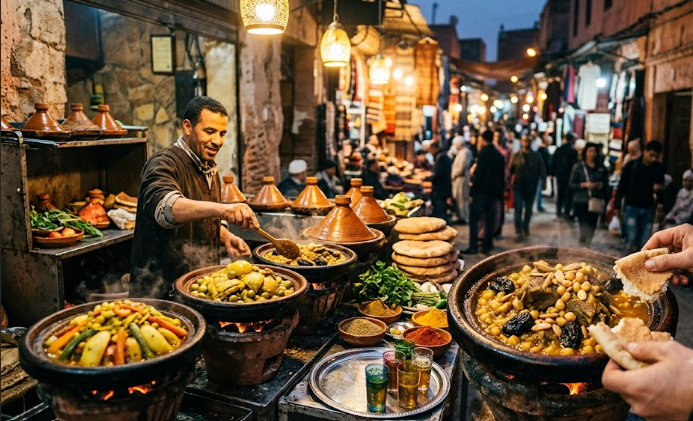
Ultimately, the best spots for Marrakech Street Food lovers are the ones that feel alive—where pots are kept warm, sauces are rich, and bread arrives fresh. Whether you chase preserved lemon tang or prune-sweet depth, you’ll quickly learn that Marrakech tagines aren’t just meals; they are unforgettable moments.
So, walk the medina in the evening, follow the crowded stalls, and trust your senses. One hot bowl is often all it takes to understand why tagine is at the heart of Moroccan food culture.