



Atlas Mountains: How to Plan Your Dream Hike
- Destinations Travel in Morocco
 Maroc Fans
- 1
- 16 minutes read

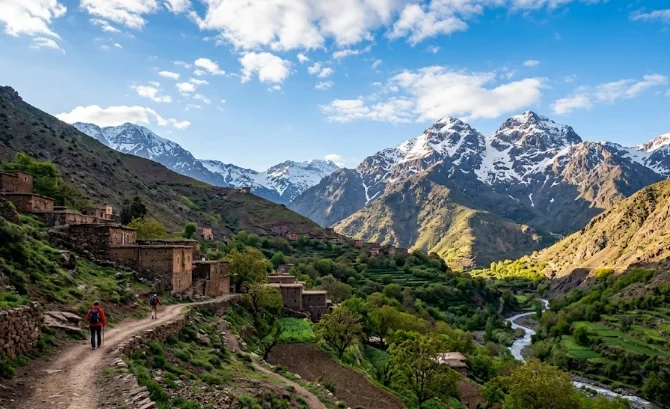
Rising majestically as a massive geological backbone across Morocco, the Atlas Mountains divide the Mediterranean and Atlantic coastlines from the harsh sands of the Sahara Desert. Extending for over 2,500 kilometers (1,600 miles), this breathtaking mountain range is not just a paradise for outdoor adventurers, but it is also the historic heartland of North Africa’s indigenous Amazigh (Berber) people.
Whether you are looking to conquer the highest peak in North Africa, wander through terraced green valleys, or experience ancestral hospitality in remote mud-brick villages, the Atlas Mountains offer an unforgettable escape from the bustling souks of Marrakech.
In this comprehensive guide, we will explore the best places to visit in the range, look at some of the top trekking routes, and share essential safety tips to help you plan your mountain adventure.
1. The Three Sub-Ranges of the Atlas Mountains
Before packing your hiking boots, it helps to understand how the Atlas Mountains are structured. The Moroccan portion is divided into three distinct sub-ranges, each offering a completely unique climate and landscape:
- The Middle Atlas: Located further north (near Fes and Meknes), this region is characterized by lush oak and cedar forests, deep lakes, and cooler temperatures. It is home to the Barbary macaque.
- The High Atlas: This is the most famous and dramatic section. It contains the highest peaks, including Mount Toubkal, as well as deep-cut gorges, lush valleys, and traditional stone villages.
- The Anti-Atlas: Bordering the Sahara Desert, this arid, volcanic southern range features dramatic, barren peaks, hidden palm oases, and almond groves.
2. Best Places to Visit in the Atlas Mountains
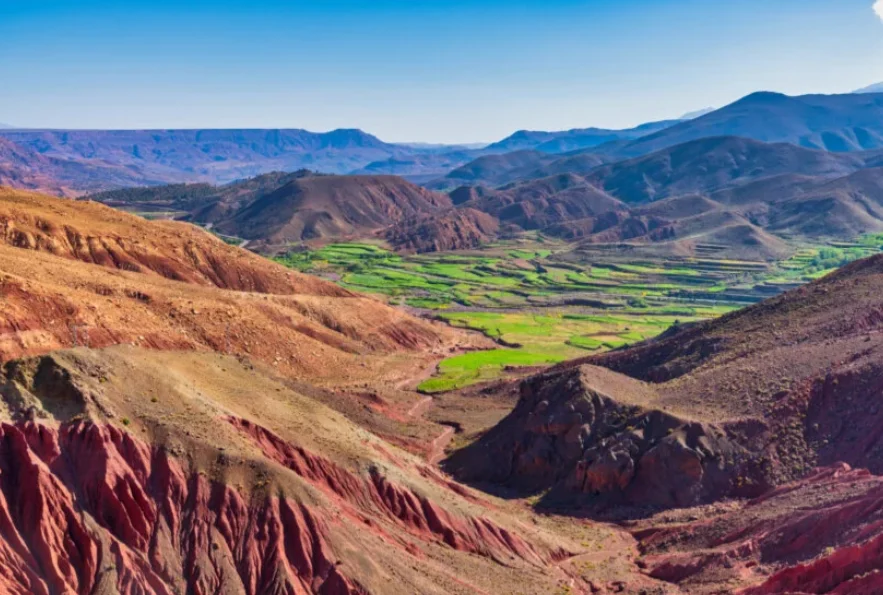
Imlil: The Trekker’s Gateway
Located just a 90-minute drive south of Marrakech, Imlil is a peaceful alpine village nestled at an altitude of 1,800 meters. Surrounded by walnut orchards and cherry trees, it serves as the primary base camp for anyone attempting to climb Mount Toubkal. Even if you aren’t planning a multi-day summit trek, Imlil offers stunning day hikes to local waterfalls and neighboring valleys like the Azzaden Valley.
Ourika Valley and Setti Fatma
If you want to experience the foothills of the High Atlas without strenuous effort, the Ourika Valley is an incredibly popular day trip. The main draw is the village of Setti Fatma, famous for its series of seven cascading waterfalls. The lower falls are easily accessible, making this a fantastic option for families and casual walkers. Along the riverbank, you can enjoy a fresh tagine while sitting at colorful tables placed directly in the cool, shallow waters.
Ouirgane Valley
For travelers seeking tranquility, olive groves, and a slower pace, the Ouirgane Valley is a hidden gem. Located at a lower elevation than Imlil, it offers a milder climate year-round. It is an excellent destination for horseback riding, bird watching, and gentle hikes through red-dirt pine forests.
Ait Bouguemez (The “Happy Valley”)
Hidden deep within the Central High Atlas lies the Ait Bouguemez Valley. Known affectionately as the “Happy Valley,” this isolated region is highly prized by trekkers who want to escape the more crowded trails around Toubkal. The valley is filled with green agricultural fields, ancient clay fortresses, and offers access to the dramatic M’Goun Massif.
3. Top Hiking Routes and Treks
Mount Toubkal Ascent (2 to 3 Days)
Standing at a towering 4,167 meters (13,671 feet), Jebel Toubkal is the crown jewel of North African peaks. The climb is not technically demanding (it is a non-technical walk during the summer months), but it requires a very strong physical condition to cope with the steep elevation and thin air.
1.Imlil to Toubkal Refuge:Day 1: 5 to 6 Hours.
Begin the trek in Imlil (1,800m) and hike steadily uphill through the shrine of Sidi Chamharouch to reach the Toubkal Refuge (also known as Neltner Refuge) at 3,207 meters. Rest early to prepare for the summit attempt.
2.Summit Push and Descent:Day 2: 7 to 9 Hours.
Wake up at 5:00 AM for an early alpine start to avoid the midday heat and catch the sunrise. The final scree slope is steep, but the panoramic views of the Sahara Desert on a clear day make every step worth it. Descend back to the refuge for lunch, and continue all the way down to Imlil.
The Azzaden Valley Trail (Moderate Challenge)
For a scenic loop that bypasses the crowds, consider combining the Toubkal trek with the Azzaden Valley. This route winds through stunning red clay gorges, juniper forests, and traditional villages. It is highly recommended for acclimatization before tackling Toubkal’s main peak.
4. Essential Hiking Tips for the Atlas Mountains
To make your journey both safe and memorable, keep these expert preparation tips in mind:
Respect Local Berber Culture
The Atlas Mountains are home to Amazigh communities who have preserved their unique language, customs, and farming traditions for millennia.
- Dress modestly: While hiking, wear clothing that covers your shoulders and knees, especially when walking through rural villages.
- Ask permission: Always ask before taking photos of the local people, particularly women and elders.
- Learn a few words: Simple greetings like “Salam Alaykum” (peace be upon you) or “Tanmirt” (thank you in Amazigh) go a long way.
hire a Licensed Local Guide
Following updated safety policies in Morocco, hiring a licensed local guide is mandatory for trekking Mount Toubkal. Not only does this secure your safety on high-altitude trails, but it also directly supports the local mountain economy. Guides can easily arrange mule drivers to carry heavy packs, allowing you to hike with just a light daypack.
Pack for Changing Weather (The Layering System)
Mountain weather is notoriously unpredictable. Even if it is 40°C (104°F) in Marrakech, temperatures at the Toubkal Refuge can drop below freezing overnight, even during the peak of summer.
- Avoid cotton clothing, which absorbs sweat and keeps you cold.
- Bring moisture-wicking base layers, a warm fleece middle layer, and a windproof, waterproof outer shell.
- Sturdy, broken-in hiking boots are non-negotiable. Do not attempt the scree fields of the High Atlas in regular sneakers.
Summary of the Best Seasons to Visit
| Season | Best For | What to Expect |
| Spring (March–May) | Wildflowers & green valleys | Mild temperatures, snow-capped peaks, great for photography. |
| Summer (June–August) | High-altitude treks | Very hot in the valleys, but refreshing and cool at higher peaks. |
| Autumn (Sept–Nov) | General trekking & stable weather | Clear skies, thinning crowds, and perfect daytime hiking temperatures. |
| Winter (Dec–Feb) | Winter mountaineering | Deep snow; requires technical gear like crampons, ice axes, and winter experience. |
Frequently Asked Questions (FAQ)
1. Can I hike the Atlas Mountains without a guide?
While you can complete simple day walks around Imlil or the Ourika Valley independently, a certified local guide is legally required for climbing Mount Toubkal and other high-altitude routes. Police checkpoints are set up along the trail to enforce this regulation.
2. How difficult is it to climb Mount Toubkal?
The standard 2-day trek is rated as moderate-to-strenuous. It does not require technical climbing skills in the summer, but the steep elevation gain (roughly 2,000 meters over two days) and loose scree slopes require good physical stamina and cardio preparation.
3. How do I get to the Atlas Mountains from Marrakech?
Imlil and the Ourika Valley are located roughly 60 to 90 minutes away from Marrakech. You can easily reach them by booking a private transfer, taking a shared grand taxi from the Bab Rob station in Marrakech, or renting a car.
4. Is altitude sickness a concern in the Atlas Mountains?
Yes. Mount Toubkal reaches an elevation of over 4,167 meters. Some hikers experience mild symptoms of altitude sickness (headaches, nausea, or dizziness) above 3,000 meters. The best way to prevent this is to walk at a slow, steady pace, drink plenty of water, and spend an acclimatization night in Imlil before ascending.
5. What kind of accommodation is available on the trails?
In villages like Imlil, you will find beautiful, traditional guesthouses (gîtes) and luxury eco-lodges. On high-altitude trails like Mount Toubkal, hikers stay in stone mountain refuges (dormitory beds, shared bathrooms, and basic communal meals cooked by local staff).
6. Is water safe to drink in the Atlas Mountains?
Tap water in the mountains is not recommended for tourists. It is highly advised to bring a reusable water bottle equipped with a built-in filtration system, use purification tablets, or buy bottled water from small shops in the villages along the trail.
1 Comment
[…] (March to May): The absolute best time for a Middle Atlas Trek. Temperatures are mild, rivers flow at maximum volume, and wild peony fields bloom across the […]