

Marrakech riad cooking class: Exposed secrets

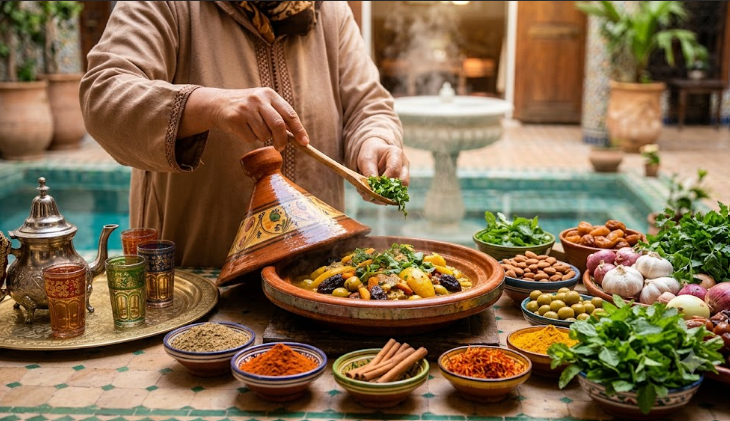
Cooking in a Marrakech riad cooking class is more than a hands-on activity—it’s a slow, fragrant introduction to Moroccan daily life. From the first sip of mint tea to the final spoonful of tagine, you’ll learn how flavors are layered with care. Furthermore, you will discover how spices are balanced and why technique matters as much as ingredients. If you’re planning a traditional culinary journey in Morocco, this guide will help you choose the right experience and cook with confidence.
Why a Marrakech riad cooking class feels different
In Marrakech, many culinary experiences take place inside stunning riads. These hidden gems feature serene courtyards, tiled fountains, and kitchen spaces designed for Moroccan hospitality. Consequently, that setting changes the pace entirely. You’re not just following steps; instead, you’re tasting, learning, and truly understanding the culture.
Most sessions begin with a warm welcome ritual, often involving traditional mint tea, followed by a market-style overview of key ingredients. In addition, you’ll hear important regional context. For instance, you will learn how tagine recipes vary by season, family tradition, and even neighborhood specialties.
What to expect in your Marrakech riad cooking class
Even if menus vary, authentic classes usually follow a familiar, structured flow. Therefore, you’ll prepare elements of the dish in sequence, then assemble everything for slow-cooking.
1) Ingredient overview and spice guidance
You may start with spices like cumin, ginger, turmeric, cinnamon, and paprika, plus herbs such as cilantro and parsley. Naturally, a good instructor explains how each one behaves during cooking—how heat brings out aroma and how spices mellow over time.
2) Building the base: aromatics, sauces, and texture
Tagine flavor typically starts with sautéed onions, garlic, and sometimes preserved lemon or olives. Depending on the menu, you might learn to make a simple tomato-cilantro sauce or a rich herb paste. Don’t be surprised if you’re guided on how to adjust thickness. Indeed, Moroccan stews often aim for a glossy, spoon-coating consistency rather than a watery broth.
3) Preparing the main ingredients
Many classes include either chicken, lamb, or vegetables as the star. If you’re cooking meat, you’ll learn how to brown properly and season evenly. On the other hand, if it’s vegetable-based, you’ll focus on slicing and layering for even tenderness.
4) The tagine assembly and simmering technique
Most traditional tagines cook slowly so flavors blend beautifully. As a result, you’ll likely learn when to add ingredients: some go in early for deep flavor, while others are added later to preserve aroma and texture.
5) Finishing touches: herbs, citrus, and the final balance
Fresh herbs, a squeeze of lemon, a handful of toasted sesame or almonds, and a dusting of spices can transform the last stage. Ultimately, the instructor’s goal is balance—sweet notes where appropriate, acidity to brighten, and warmth to round everything out.
How to choose the best Marrakech riad cooking class
With many options in the city, selecting the right session helps you get the most authentic experience. Look beyond “tagine” in the description and focus specifically on how the Marrakech riad cooking class is run.
- Menu variety and transparency: Choose a class that clearly states what you’ll cook—specific tagine styles, sides, and bread elements.
- Hands-on time: If you’re only watching, you won’t learn technique. Therefore, ask whether you chop, season, assemble, and plate.
- Skill-building focus: The best instructors explain methods, including spice timing, browning, simmering, and seasoning adjustments.
- Group size: Smaller groups usually mean more individual guidance and better access to ingredients.
- Riad atmosphere: A genuine riad setting contributes to the mood, especially if the class includes tea or a courtyard introduction.
- Dietary flexibility: Finally, reliable hosts can easily adapt for vegetarian, halal preferences, and common allergies.
If possible, confirm whether the class includes traditional bread (like msemen or khobz) or side dishes such as couscous, salads, or preserved lemon accompaniments. After all, those extras often make the meal feel complete.
Traditional tagine tips from your Marrakech riad cooking class
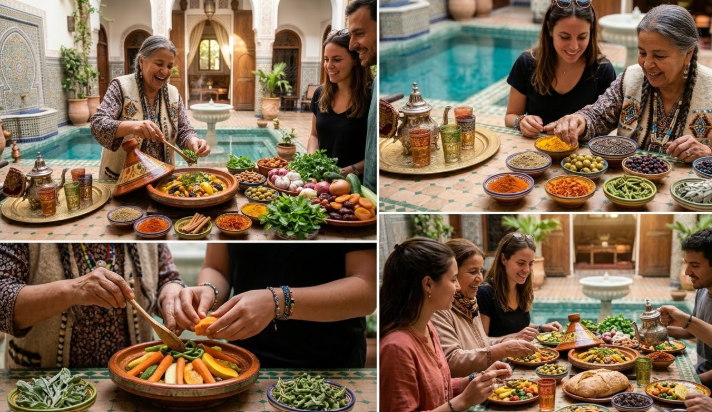
Tagine cooking is simple on paper but sensitive in practice. Here are practical tips you can use during your Marrakech riad cooking class—and later when you cook at home.
Master the seasoning order
Moroccan flavor builds in stages. Aromatic ingredients (onion, garlic, spices) are typically cooked first so the oils carry spice aroma. Then, tomatoes and liquids develop body, and finally, herbs and citrus brighten the finish. If you add everything at once, the result can taste flat. For that reason, ask your instructor when to introduce each component.
Don’t rush the browning
Whether you’re using chicken or lamb, a light browning step helps create depth. You’re not trying to burn the food; rather, you’re developing flavor. Once the surface color forms, seasoning and liquid can follow.
Control the liquid level
Tagine should simmer, not boil aggressively. Too much liquid turns the dish into stew, while too little can dry out the ingredients. During your Marrakech riad cooking class, watch how much sauce clings to the pot before it goes into a slower cook.
Layer ingredients for tenderness
Think in timing: ingredients that need longer cooking go earlier. Conversely, delicate vegetables may be added later, and fresh herbs usually come at the end. This approach keeps texture intact—soft where it should be, firm where it should remain.
Use preserved lemon or olives thoughtfully
Preserved lemon adds a distinctive salty-tangy character. If your recipe includes it, treat it as a finishing or mid-cook flavor booster rather than something you dump in large chunks at the start. Similarly, olives should be added so they warm through without losing their briny appeal.
Balance sweet, savory, and spice
Some tagines include dried fruits or honeyed elements. However, the key is restraint. Too much sweetness can overpower the spice. Your instructor may taste along the way, so listen closely and taste repeatedly before final adjustments.
What to serve with your tagine in Morocco
A tagine meal isn’t just the pot; it’s the pairing. Most riad classes serve something that soaks up the sauce and completes the flavor profile.
- Moroccan bread: Warm khobz or msemen to scoop sauce.
- Couscous: Often steamed with butter and herbs, depending on the region and menu.
- Fresh salads: Simple tomato-cucumber salads or a carrot-based salad with citrus.
- Mint tea: A classic finish that refreshes the palate.
- Toasted nuts: Almonds or sesame for crunch and aroma.
How to get the most out of your class experience
To learn quickly, treat the class like a workshop. Specifically, ask questions about timing, seasoning, and equipment, even if you think you understand.
Take notes on the spice blend, cooking stages, and the final balance (salty, sour, sweet, and warm). Many travelers find that remembering “when” matters as much as “what.”
Also, consider practical travel comfort. For example, wear comfortable clothing for kitchen movement, and arrive a little earlier for tea and introductions. When you’re relaxed, you absorb more details—and enjoy the process more fully.
Cook like a local, taste Marrakech at home
A Marrakech riad cooking class offers a rare blend of warmth, tradition, and skill. By choosing a class with hands-on guidance, paying attention to spice timing, and applying classic tagine techniques—layering ingredients, controlling liquid, and finishing with fresh brightness—you’ll leave with more than a meal. Ultimately, you’ll bring back the methods behind Moroccan cooking and the confidence to recreate that unforgettable tagine experience wherever you go.
FAQ: Your Marrakech riad cooking class questions answered
How long does a typical Marrakech riad cooking class last?
Most culinary experiences last between 3 to 5 hours. This timeframe generally includes a welcome mint tea ritual, hands-on food preparation, the slow-simmering process of the tagine, and finally, time to enjoy the meal you created. If your session includes a local market tour to buy fresh ingredients, you should expect it to last a bit longer.
Can vegetarians or vegans join a traditional tagine class?
Yes, absolutely. Most hosts are highly accommodating and can easily adapt the menu to suit vegetarian, vegan, or gluten-free diets. Since Moroccan cuisine relies heavily on fresh vegetables, pulses, and rich spices, vegetable-based tagines are just as authentic and flavorful as meat versions. However, it is always best to inform your host about your dietary preferences when booking.
Do I need prior culinary experience to attend a class?
Not at all. Instructors design these sessions for all skill levels, from complete beginners to experienced home cooks. Because the focus is on learning local methods like spice layering and heat control, the chef will guide you step-by-step through every technique. Consequently, you will gain the confidence needed to recreate these traditional dishes back home.