

Moroccan zellige tile is the ultimate stunning art piece
- Moroccan Crafts Pottery & Zellige
 Maroc Fans
- 0
- 18 minutes read

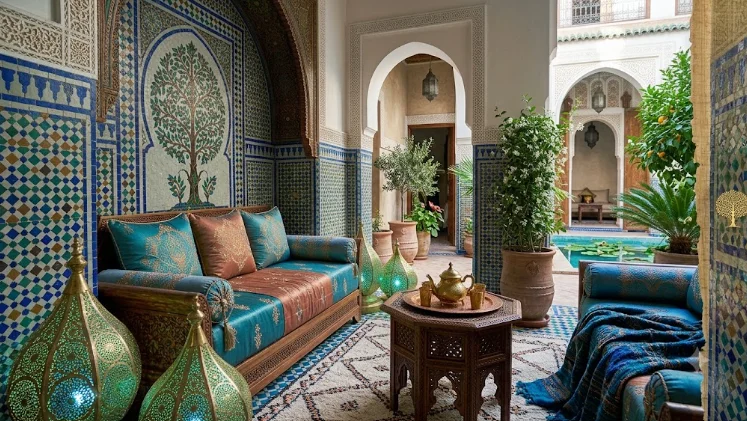
However, in a world increasingly dominated by mass-produced, uniform home finishes, interior designers and homeowners are looking backward to find a sense of soul. One material has captured global attention like no other: the Moroccan zellige tile. From high-end luxury hotels in Paris to minimalist kitchen backsplashes in California, these glazed terracotta tiles bring an organic, shimmering beauty that machine-made tiles simply cannot replicate.
But what exactly is a Moroccan zellige tile, and why does this centuries-old craft continue to influence modern architecture?
What is an Authentic Moroccan Zellige Tile?
Zellige (pronounced zee-leesh or zellig) is a traditional North African art form consisting of handmade, hand-chiseled geometric terracotta tile pieces. Rooted deeply in Islamic art and Moorish architecture, true zellige is made from a specific, mineral-rich grey clay found exclusively in the region of Fez, Morocco.
Furthermore, unlike contemporary ceramic options, zellige tiles are celebrated for their flaws. No two tiles are exactly identical. Instead, each piece features subtle variations in tone, surface texture, thickness, and flatness. When installed en masse, these imperfections catch the light dynamically, creating a unique ripple effect that mimics the movement of water.
The Historical Roots of Moroccan Zellige Tile
The story of the Moroccan zellige tile begins over a thousand years ago. While early traces date back to the 10th century during the Idrisid dynasty, the craft truly flourished between the 13th and 15th centuries under the Marinid dynasty.
Consequently, during this golden age, major architectural masterpieces were constructed across Morocco, particularly in Fez, Marrakech, and Meknes. The Marinids utilized zellige extensively to decorate madrasas (educational institutions), mosques, and royal palaces. Because traditional Islamic art avoids the depiction of sentient beings, artisans turned to sophisticated mathematics and sacred geometry to honor the divine.
Over the centuries, the color palette evolved. Initially, early zellige was limited primarily to muted earth tones like browns, whites, and ochres. By the 14th century, however, advancements in glazing techniques introduced vibrant cobalt blues, emerald greens, and rich saffron yellows. Today, these historical patterns remain preserved in legendary sites like the Bou Inania Madrasa in Fez and the Ben Youssef Madrasa in Marrakech. For those planning a trip to see these masterworks in person, be sure to check out our comprehensive guides on Marrakech Cultural Landmarks and Fez Historical Architecture.
How Moroccan Zellige Tiles are Made: The Artisanal Process
The production of an authentic Moroccan zellige tile is an incredibly labor-intensive process that relies entirely on generational knowledge. The artisans who master this craft are known as Maâlems (Master Craftsmen), and they spend decades perfecting their technique.
As a result, the process can be broken down into five distinct, unhurried stages:
1. Sourcing and Preparing the Clay
This journey begins in the hills surrounding Fez. Specifically, the local clay is unique because it is highly plastic and contains a precise mix of minerals that allow it to withstand high firing temperatures without cracking easily. Therefore, the raw material is harvested, soaked in water vats for days, and kneaded thoroughly by hand to remove air bubbles and impurities.
2. Shaping and Sun-Drying
Once the clay is smooth, it is pressed into flat, square molds by hand to form raw tiles, typically measuring around 10×10 cm or 5×5 cm. Afterward, these tiles are laid out under the intense Moroccan sun to dry completely.
3. Glazing and the First Firing
Following the sun-drying stage, the top face of the tile is dipped into a liquid glass enamel glaze made from natural mineral oxides. The tiles are then stacked carefully inside a traditional, wood-fired or olive-pit-fired pit kiln. Crucially, the temperature variations within these ancient kilns mean that heat isn’t distributed perfectly evenly. Consequently, the glaze on each tile reacts slightly differently, producing the signature nuance (tonal variation) that defines zellige.
4. Hand-Cutting (Tesserae)
After the fired tiles cool down, the truly miraculous part of the work begins. An artisan sits on the floor with a heavy, razor-sharp iron hammer called a manqach. Using incredible muscle memory, they chisel the edges of the glazed tiles at a precise inward angle (a 45-degree bevel). Ultimately, this allows the tiles to be laid incredibly close together during installation, with almost zero grout visible from the front.
5. Mosaic Compositions (Furma)
For intricate geometric patterns, the chiseled shapes—stars, diamonds, polygons—are laid out face-down on the ground over a pattern template. Remarkably, the artisans work entirely blind, seeing only the raw terracotta backsides. Once the puzzle is complete, a resin or cement backing is poured over them to create pre-assembled panels ready for architectural installation.
Designing with Moroccan Zellige Tile in Modern Interiors
One of the reasons the Moroccan zellige tile has taken the modern interior design world by storm is its sheer versatility. While it originated in historical palaces, its organic texture provides a warm, tactile contrast to clean, contemporary spaces.
For example, here are the most popular ways designers are incorporating zellige today:
Kitchen Backsplashes
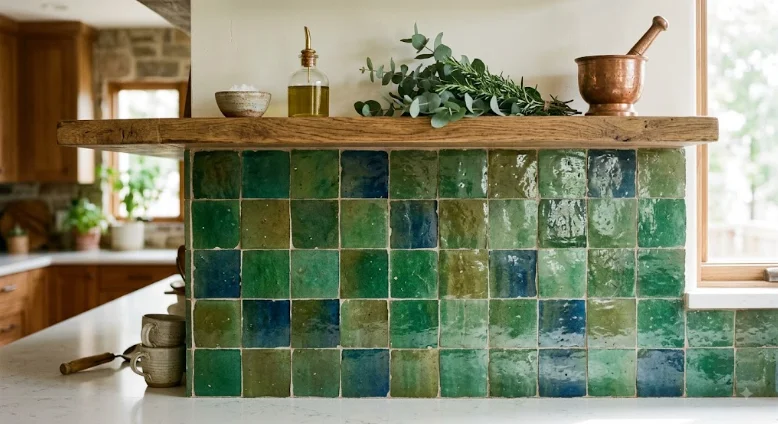
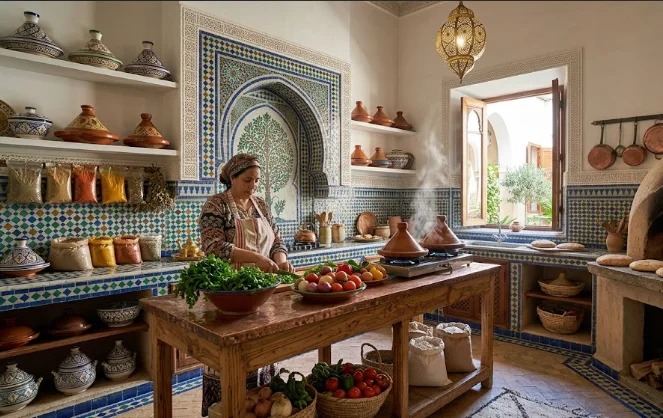
A zellige kitchen backsplash acts like a piece of living art. Instead of flat, clinical subway tile, zellige bounces sunlight throughout the day, shifting colors as morning turns to dusk. Currently, soft whites (Blanc de Fès), subtle creams, and charcoal grays are favorites for transitional and modern farmhouse kitchens.
Spa-Like Bathrooms
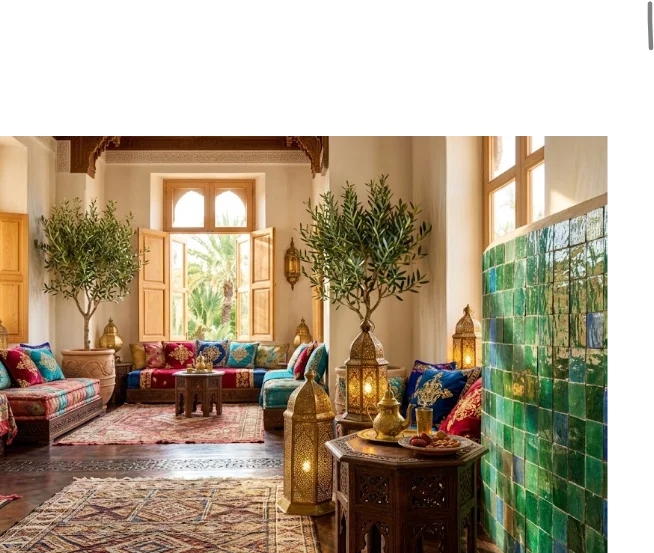
Because zellige tiles are completely resistant to water when properly sealed, they are ideal for walk-in showers and vanity walls. In fact, emerald green or deep blue zellige can transform a standard bathroom into a sanctuary reminiscent of a luxury Moroccan hammam. Discover more about recreating this wellness vibe at home in our article on The Traditional Moroccan Hammam Experience.
Feature Walls and Fireplaces
Using zellige to frame a fireplace or accentuate an entry wall creates an undeniable focal point. In addition, the textural depth eliminates the need for excess artwork, as the tile wall itself provides pattern, texture, and color.
Important Considerations for Moroccan Zellige Tile Installation
If you are planning to purchase Moroccan zellige tile for your home remodel, it is vital to understand that it behaves differently than standard ceramic or porcelain tile. Therefore, managing expectations is key to a beautiful outcome.
1. Expect Variations
When your tile boxes arrive, you will notice chips, hairline cracks, iron spots, and uneven surfaces. However, this is not defective tile. In fact, these features are highly sought after. For this reason, installers are generally advised to “blend” the tiles from multiple boxes before installing them to ensure an even distribution of color and thickness variations across the entire surface.
2. Hire an Experienced Installer
Installing zellige requires a specialist. Because the back edges are chiseled at an angle, the tiles are intended to be laid “butt-jointed”—meaning they are placed directly against each other with practically no spacers. Subsequently, a minimal, fluid grout is pushed into the hairline crevices to seal the wall.
3. Maintenance and Cleaning
True glazed zellige is remarkably non-porous and easy to clean. For daily maintenance, a simple wipe-down with mild, pH-neutral soap and warm water is all that is required. On the other hand, harsh chemical cleaners, acids, or abrasive scrubbing pads should be strictly avoided to protect the delicate glaze.
Summary Comparison: Authentic Moroccan Zellige Tile vs. Ceramic Imitations
| Feature | Authentic Moroccan Zellige Tile | Mass-Produced Ceramic Imitation |
| Origin | Handmade in Fez, Morocco | Factory-made globally |
| Material | 100% natural clay, kiln-fired | Synthetic composites or refined ceramic |
| Edges | Hand-chiseled (manqach), 45-degree bevel | Perfectly straight, rectified machine cuts |
| Color Depth | High tonal variation (nuance) | Uniform, flat color profiles |
| Grout Line | Virtually seamless (0-1mm) | Standard uniform lines (2-4mm) |
The Enduring Legacy of Moroccan Zellige Tile
In conclusion, the Moroccan zellige tile is far more than a passing interior design trend; it is an enduring celebration of human craftsmanship. By embracing imperfection, zellige injects life, history, and light into spaces that might otherwise feel sterile. Whether you are using a single row of soft white tiles for a quiet kitchen upgrade or covering an entire shower room in rich emerald green, you are participating in a creative lineage that has traveled across centuries from the narrow alleys of Fez directly into modern luxury architecture.
Frequently Asked Questions (FAQ) About Moroccan Zellige Tile
1. Is Moroccan zellige tile difficult to maintain?
No, it is relatively low-maintenance. Because the surface is covered in a vitreous glass glaze, it resists stains and liquids naturally. Therefore, regular cleaning with a soft cloth, warm water, and a pH-neutral cleaner is sufficient. However, avoid acidic cleaners or heavy bleach, which can dull the surface finish over time.
2. Can I use zellige tiles on floors?
Zellige is primarily recommended for wall applications like backsplashes, showers, and accent walls. Because the tiles are handmade and can sit at slightly uneven heights, walking on them barefoot over a large surface can feel uneven. On the contrary, small-format unglazed tiles (bejmat) are traditionally and successfully used for flooring applications in courtyards and bathrooms.
3. Why are there chips and cracks on my new zellige tiles?
These characteristics are an intrinsic part of authentic zellige. Specifically, the chips (called ébréchures) occur naturally during the manual hand-chiseling process. Thus, they are considered a hallmark of authenticity and contribute directly to the textured look of the completed installation.
4. Is zellige tile waterproof?
The glazed surface of a zellige tile is completely waterproof. Nevertheless, because the tiles are handmade and installed close together with minimal grout lines, water can potentially penetrate the narrow joints. Consequently, for wet environments like showers, a proper waterproof membrane must be installed behind the tile backing.
5. How can I tell if a zellige tile is authentic?
Authentic zellige will always be made from the distinctive grey-colored clay sourced from Fez, Morocco. Additionally, the back of the tile will look like raw, reddish-brown terracotta, and the edges will display irregular cuts from a chisel rather than smooth, perfectly straight factory edges.
6. Why is authentic Moroccan zellige tile so expensive?
Essentially, the price reflects the immense amount of skilled manual labor involved. Every single tile is hand-shaped, individually dipped in glaze, fired in traditional kilns, and meticulously cut by hand with a specialized iron hammer. Moreover, the logistical costs of shipping heavy clay products from Morocco to overseas markets also add to the retail price.