

What is Moroccan Zellige? Everything You Need to Know
- Moroccan Crafts Pottery & Zellige
 Maroc Fans
- 0
- 12 minutes read

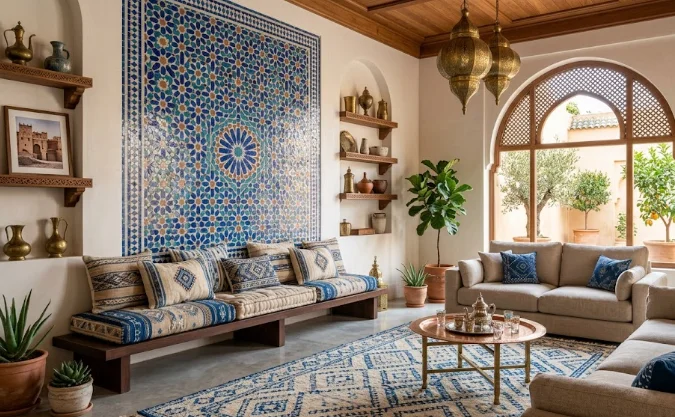
In the world of interior design, few materials possess the ability to instantly transform a space. Trends come and go. However, authentic craftsmanship never loses its charm. One such design element is Moroccan zellige. Recently, it has captured the hearts of architects, designers, and homeowners globally.
Characterized by its rich textures, Moroccan zellige is much more than a simple ceramic tile. It showcases uneven surfaces and mesmerizing color variations. Indeed, this tile is a living testament to centuries of North African history and artistic devotion. Whether you are planning a modern kitchen backsplash or a luxurious bathroom retreat, incorporating Moroccan zellige brings an organic warmth. Consequently, mass-produced tiles simply cannot replicate this unique look.
In this ultimate guide, we will explore the history and production process of these tiles. Furthermore, we will detail their design versatility and essential maintenance tips.
What is Moroccan Zellige?
At its core, Moroccan zellige is a traditional terracotta tile. It is completely handmade from natural, unrefined clay. Originating in Morocco during the 10th century, this historic art form achieved its peak dominance under the Marinid dynasty.
Historically, artisans used zellige to decorate palaces, mosques, and public fountains. The material is particularly famous for its intricate geometric mosaic configurations. Today, the term “Moroccan zellige” is also widely used to describe square or rectangular glazed tiles. These modern variations showcase a raw, shimmering finish.
What truly sets Moroccan zellige apart is its imperfection. Because every single tile is molded, glazed, and cut by hand, no two tiles are identical. Therefore, you will find subtle variations in thickness and small chips along the edges. You will also notice hairline cracks in the glaze. In the design world, these imperfections are not considered flaws. Instead, they are the very signature of luxury and authenticity.
The Sacred Making Process: How Authentic Moroccan Zellige is Created
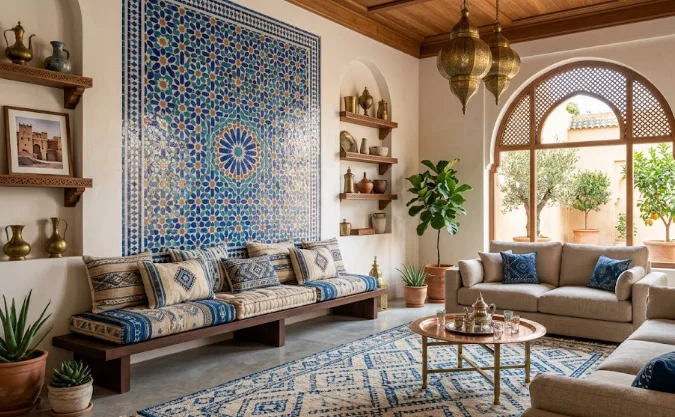
The production of Moroccan zellige is a highly specialized craft. This ancient knowledge is passed down through generations of master artisans known as Maâlems. Today, the epicenter of this industry remains the historic city of Fez. This location is ideal thanks to the unique properties of its local gray clay.
To begin with, the labor-intensive journey from raw earth to finished product follows a meticulous series of steps:
- Harvesting and Kneading: Initially, the clay is extracted from the hills of Fez. It is then soaked in water pits until it reaches a malleable consistency. Afterward, artisans knead the clay by hand and foot to remove air bubbles.
- Molding and Sun-Drying: Next, the clay is flattened into square slabs. Following this step, these wet slabs are left to dry naturally under the Moroccan sun.
- The First Bake: Once dried, the terracotta slabs are stacked inside traditional kilns. These wood-fired olive pit structures are used for the first firing.
- Glazing: Consequently, enamel glaze is applied to the top surface of the tiles. They are then placed back into the kiln for a second firing. Because temperatures vary throughout the kiln, the glaze emerges with beautiful color shifts known as flashing.
- Hand-Cutting (Bejmat and Zellige): Finally, once cooled, the glazed tiles are marked out using templates. A tile cutter skillfully chisels the edges at a 45-degree inward angle using a heavy hammer called a manquach. This reverse-beveled edge allows Moroccan zellige tiles to be laid incredibly close together. As a result, the grout lines become almost invisible.
Why Interior Designers Love Moroccan Zellige
Moroccan zellige has become a staple of high-end contemporary interior design. This popularity exists because it bridges the gap between old-world character and modern aesthetics. Here is why it remains a top choice for luxury spaces:
1. Organic Light Reflection
Because the surface of Moroccan zellige is slightly uneven, light does not bounce off it uniformly. Additionally, the glaze varies in thickness on each piece. Instead, it catches the light at different angles. This variation creates a shimmering, watery effect that dances across the room throughout the day.
2. High Versatility
While heavily associated with bohemian styles, Moroccan zellige works wonderfully in minimalist and industrial spaces. For instance, a neutral white tile adds texture to a stark modern kitchen. This texture prevents the room from feeling cold or clinical.
3. A Deep Connection to Nature
Homeowners are increasingly moving away from synthetic materials. Made entirely from earth, water, and mineral pigments, Moroccan zellige grounds an interior space. Consequently, it connects your home directly to natural elements.
Best Places to Install Moroccan Zellige Tiles
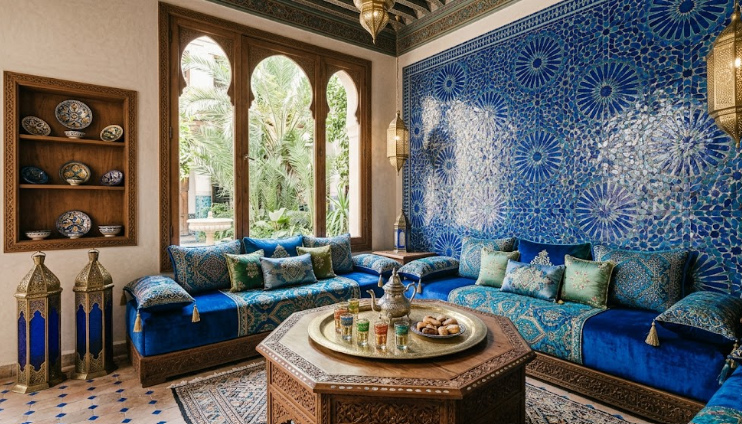
For instance, a kitchen backsplash featuring Moroccan zellige acts as a stunning piece of functional art behind a range. Furthermore, the water-resistant glaze makes these tiles a perfect fit for bathroom settings. Wrapping a walk-in shower in tonal zellige feels like stepping into a private Moroccan hammam. Moreover, the rich textures of the tiles accentuate the warmth of a fireplace surround. This creates a cozy focal point in living areas. Finally, you can transform a simple hallway or wet bar wall into a tactile masterpiece.
Installation and Maintenance Realities
If you choose to invest in Moroccan zellige, it is vital to know that installation requires an experienced hand. However, standard tiling methods do not apply here. Due to the hand-chiseled, reverse-beveled edges, authentic Moroccan zellige tiles must be installed butt-jointed. This means they are placed tightly against one another with minimal to no spacers. A fluid grout is then wedged into the tiny remaining crevices to lock them in place. Consequently, hiring a tile installer who specializes in handmade materials is highly recommended.
Maintenance Tips:
- Daily Cleaning: Simply wipe down tiles with a soft cloth or sponge. For best results, use mild, pH-neutral soap and warm water.
- Avoid Harsh Chemicals: Do not use abrasive scrubbers or acid-based cleaners. These aggressive products can dull or etch the glaze over time.
- Sealing: The glazed surface of the tile is naturally non-porous. Nevertheless, the unglazed clay edges and thin grout lines can absorb moisture. Therefore, if installed in a wet area like a shower, ensure your installer uses a high-quality sealer to protect the installation.
Final Thoughts
Moroccan zellige is not just a surface material. Instead, it is an emotional design choice. It honors ancient craft over mass automation by celebrating the beauty of the human touch. By choosing Moroccan zellige for your home, you bring a slice of architectural history into your life. You also gain an unparalleled play of light in your everyday living spaces.
Frequently Asked Questions (FAQ)
1. Why are Moroccan zellige tiles so uneven and chipped?
The chips, cracks, and uneven surfaces are an intentional outcome of the handmade process. Every tile is hand-molded from raw clay. Afterward, it is hand-chiseled with a traditional hammer. These variations give Moroccan zellige its famous organic texture and shimmering light-reflective qualities.
2. Can I use Moroccan zellige on the floor?
Glazed Moroccan zellige is ideal for walls. However, it can be used on low-traffic residential bathroom floors where people walk barefoot. For high-traffic floors or entryway spaces, it is best to use unglazed Moroccan tiles called Bejmat. These variations are thicker, denser, and slip-resistant.
3. Is authentic Moroccan zellige difficult to clean?
Not at all. The glazed surface of Moroccan zellige is naturally stain-resistant and easy to maintain. Regular wiping with a soft microfiber cloth is usually enough. Simply use warm water and a mild, neutral soap to keep them looking pristine. Always avoid acidic cleaner formulas or heavy abrasives.