

Moroccan Zellige kitchen: Secrets to the Perfect Reno
- Moroccan Crafts Pottery & Zellige
 Maroc Fans
- 0
- 11 minutes read

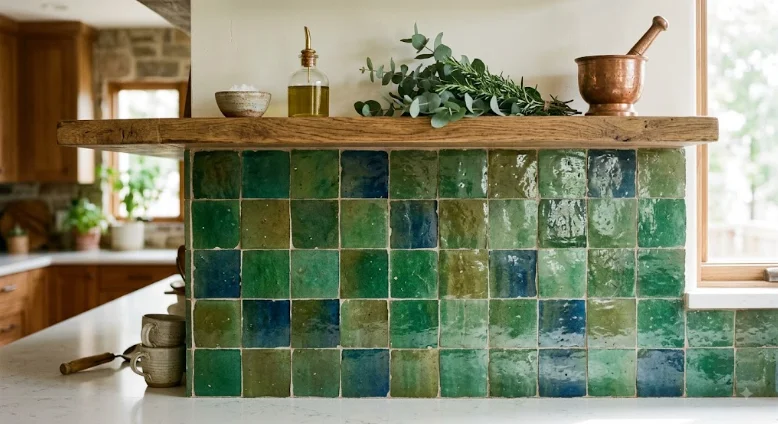
Few design elements capture the balance of historic craftsmanship and contemporary luxury quite like authentic Moroccan Zellige tiles. If you want to create a breathtaking Moroccan Zellige kitchen, these hand-chiseled terracotta pieces from the ancient city of Fez offer the perfect solution. Defined by their mesmerizing imperfections, no two tiles are identical; variations in tone, surface texture, and slight chips reflect the human hands that shaped them over centuries-old traditions.
Integrating this tilework into your home adds texture, warmth, and an undeniable soul to the space. Whether your aesthetic leans toward clean minimalism, rustic farmhouse, or vibrant bohemian, Zellige acts as a visual anchor.
In this guide, we will explore 15 inspiring design ideas, practical styling tips, and essential maintenance advice to help you master this timeless art form.
The Timeless Appeal of a Moroccan Zellige Kitchen
Before diving into design layouts, it is essential to understand what makes these tiles so captivating for the modern home. Unlike mass-produced ceramic alternatives, authentic Zellige undergoes a rigorous artisan process. Local clay is mixed with water, hand-shaped, sun-dried, glazed, and fired in olive-pit fueled kilns. The final step involves hand-cutting the tiles using a specialized hammer.
This process results in tiles that catch and refract light uniquely. A simple wall of these tiles can shift from crisp alabaster in the morning sun to a warm, pearlescent cream by candlelight. It is this organic interplay of light and shadow that makes a Moroccan Zellige kitchen so distinct and universally loved by interior designers.
15 Inspiring Moroccan Zellige Kitchen Concepts
1. The Classic Snow-White Backsplash
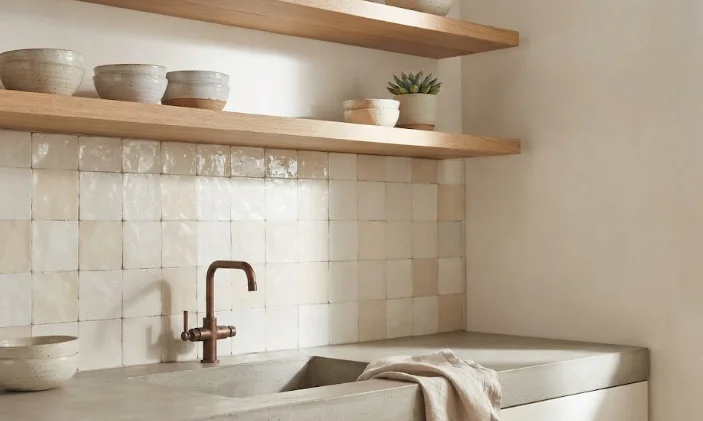
If you love a clean, bright space but want to avoid a sterile look, a white Zellige backsplash is the ultimate solution. The uneven surfaces prevent the palette from looking flat, providing a subtle, rich texture that pairs beautifully with open wooden shelving.
2. Deep Emerald Green for a Moroccan Zellige Kitchen
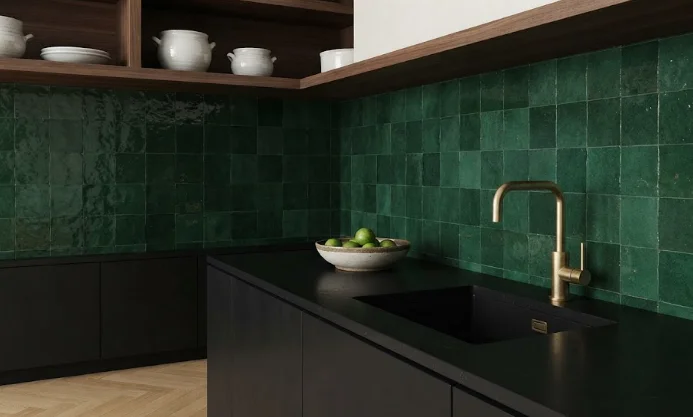
Green is one of the most traditional colors in Moroccan architecture. A deep emerald or forest green backsplash creates a striking focal point, especially when contrasted against matte black cabinets or rich walnut woodwork.
3. Creating a Floor-to-Ceiling Statement Wall
Take your design to the next level by tiling an entire wall from the floor right up to the ceiling. This works exceptionally well behind a range hood, turning a functional cooking area into a breathtaking architectural feature.
4. Coastal Blues in a Moroccan Zellige Kitchen
Bring a refreshing, coastal Mediterranean breeze into your home with soft blue, mint, or aquamarine tiles. These shades make the entire room feel airy, clean, and serene.
5. Warm Earth Tones for a Rustic Feel
For an authentic, rustic look, embrace unglazed Zellige or warm tones like ochre, terracotta, and burnt sienna. These earthy colors infuse the space with natural warmth, making it feel cozy and welcoming.
6. Dramatic Charcoal and Matte Black
For the modern minimalist, black Zellige tiles offer a masterclass in texture. A matte or satin-finished backsplash adds moodiness and sophisticated depth to your design.
7. Classic Herringbone Layouts
While square is the traditional shape, rectangular Zellige tiles (Bejmat) look incredible when arranged in a herringbone pattern. This layout adds movement and a contemporary architectural edge.
8. Mixed-Tone Mosaics for Custom Artistry
Embrace the variation of Moroccan craft by intentionally mixing complementary shades. Blending three different tones of cream and beige creates a soft, pixelated effect that looks entirely custom.
Planning Your Moroccan Zellige Kitchen Layout
| Kitchen Style | Recommended Zellige Color | Best Layout Pattern | Hardware Pairings |
| Modern Minimalist | Matte Black / Pure White | Vertical Stack | Matte Black / Chrome |
| Rustic Farmhouse | Warm Ochre / Terracotta | Traditional Square | Antique Bronze |
| Bohemian Chic | Emerald Green / Aquamarine | Herringbone | Unlacquered Brass |
| Transitional / Classic | Alabaster / Soft Gray | Brick Bond (Offset) | Brushed Nickel |
Essential Installation Tips for a Moroccan Zellige Kitchen
Installing these tiles is different from using standard ceramic options. To ensure your project turns out beautifully, keep these guidelines in mind:
- Hire an Experienced Installer: Make sure your tiler has experience working with handmade or irregular tiles.
- Embrace the “Zellige Wedge”: Authentic tiles are laid edge-to-edge; installers use small wedges to manage the natural variance in size.
- Expect “Blemishes”: Small chips and variations are not defects—they are the characteristics that create the famous shimmer.
- Mix the Boxes: Always mix tiles from different boxes to ensure color variations are distributed evenly.
- Grout Selection: Use a high-quality, flexible, non-sanded grout to seal the natural gaps.
Maintenance for Your Home
Glazed Zellige is incredibly durable and easy to care for. Because the surface is non-porous, it naturally resists stains and grease. For daily cleanup, a simple wipe-down with warm water and a mild, pH-neutral dish soap is all you need. Avoid harsh abrasive cleaners or acid-based chemicals.
Frequently Asked Questions
Do the tiles chip easily? While they may have minor, characteristic chips upon arrival, they are very durable once properly installed and sealed.
Is a Zellige backsplash durable? Yes, the glaze makes it highly resistant to water, stains, and grease splatters.
Is it hard to clean? No, the non-porous glaze ensures that grease and residue wipe away easily with a damp cloth.
Do you grout these tiles? Yes, minimally. A thin, non-sanded grout is used to seal the wall.
Why is it expensive? The tiles are entirely handmade using generational, labor-intensive techniques.
Can I install it myself? Unless you are a highly experienced DIYer, it is recommended to hire a professional contractor.