
Moroccan Handmade Products: 10 Traditional Crafts to Discover
- Home Décor & Traditional Crafts Moroccan Crafts
 Maroc Fans
- 0
- 23 minutes read

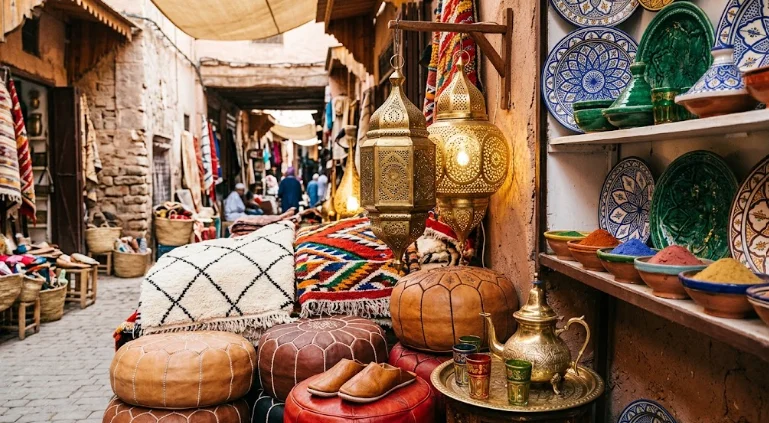
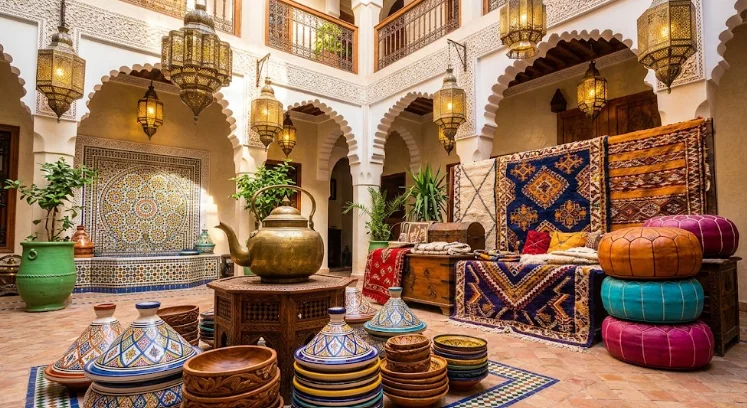
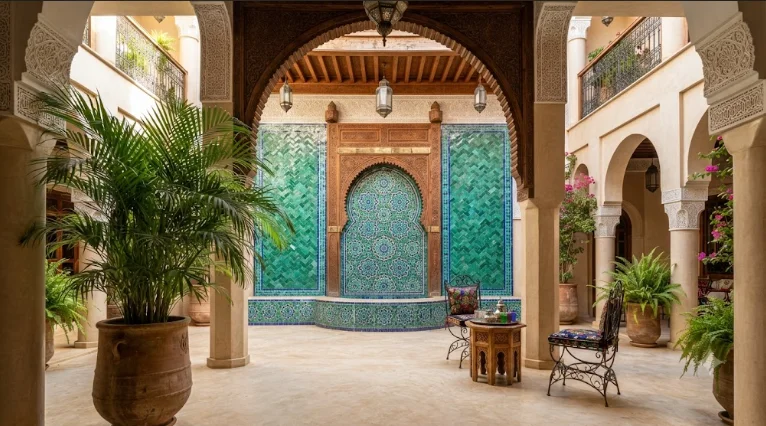
Morocco is a living museum of living heritage, where ancient craftsmanship flourishes alongside modern interior design. For centuries, Moroccan artisans—known locally as Maâlems—have preserved techniques passed down through generations. From the labyrinthine alleys of the Fes medina to the vibrant souks of Marrakech, moroccan handmade products represent a perfect blend of utility, spiritual geometry, and organic beauty.
Whether you want to enrich your home decor, invest in sustainable ethical fashion, or understand North Africa’s rich cultural tapestry, exploring authentic moroccan handmade products reveals an inspiring world of tactile artistry.
1. Moroccan Handwoven Wool Rugs (Beni Ourain & Azilal)
Moroccan carpets enjoy global celebration because artisans create them with distinctive geometric patterns, rich textures, and unmatched durability. Berber women in the High and Middle Atlas Mountains hand-knot these moroccan handmade products. In fact, these weavers use the pile as personal canvases where they weave story motifs, family symbols, and protection talismans directly into the fabric.
Key Characteristics & Regional Styles:
- Beni Ourain: Artisans craft these rugs from 100% natural, undyed sheep’s wool from the Middle Atlas range. They feature a plush, thick pile with minimal black or dark brown diamond motifs on a cream-white background.
- Azilal: Hailing from the steep Azilal province, these rugs combine soft wool construction with expressive, painterly pops of color made using vegetable dyes.
- Boucherouite: Eco-friendly rag rugs that weavers painstakingly hand-braide from recycled fabric strips, resulting in vibrant, abstract art pieces.
Artisan Insight: A genuine hand-knotted Atlas rug can take anywhere from 3 to 8 weeks of intensive manual labor to complete. Therefore, each piece remains entirely unique.
2. Zellige Tilework: Iconic Moroccan Handmade Products
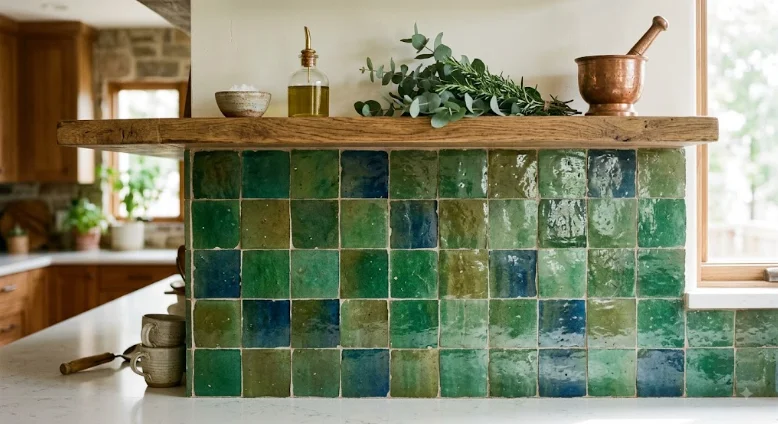
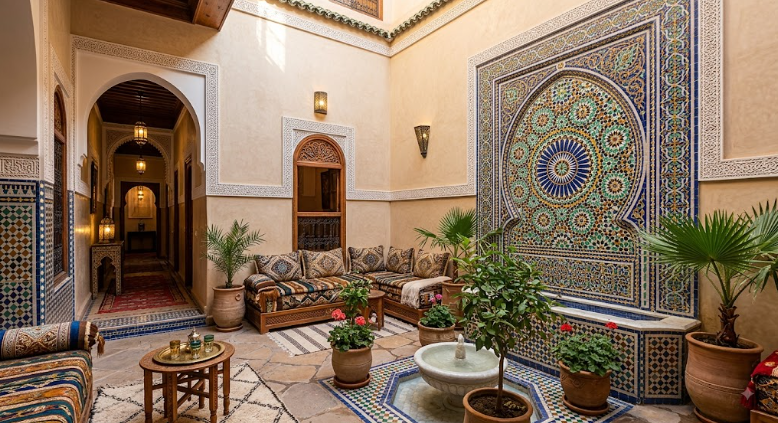
Few architectural elements evoke Islamic design as powerfully as Moroccan Zellige (Zillij). Artisans make these handmade terracotta tiles from unrefined gray clay unique to the Fes region. First, workers sun-dry and kiln-fire the clay. Then, craftsmen glaze the tiles with natural mineral oxides and meticulously chip them by hand using a heavy chisel hammer (Manqach).
The Artisanal Process:
- Clay Shaping: Artisans soak natural clay in stone basins and hand-mould it into flat slabs.
- Double Firing: Tiles undergo a primary firing before artisans apply a mineral glaze. Next, the tiles enter traditional olive-pit kilns for a second firing.
- Chiseling (Nqach): Craftsmen cut edge bevels at a $45^\circ$ angle. As a result, builders can fit the tiles seamlessly edge-to-edge without wide grout lines.
3. Artisanal Leather Goods & Babouches
Morocco’s leatherworking lineage reaches back over a thousand years. For instance, the iconic Chouara Tannery in Fes continues to treat hides using medieval, eco-friendly methods. Tanners eschew harsh industrial chemicals; instead, they rely on natural mixtures containing pigeon droppings, limestone, and vegetable dyes like poppy, saffron, and indigo.
Essential Leather Items:
- Leather Poufs: Stuffed with cotton or old textiles, hand-stitched leather poufs provide ergonomic floor seating.
- Babouches (Balgha): Artisans craft these traditional backless leather slippers with soft sheepskin or goat leather uppers and tough cowhide soles.
- Travel Bags & Satchels: Full-grain, vegetable-tanned bags develop a rich patina over years of use.
4. Fes & Tamegroute Ceramics
Moroccan pottery showcases incredible diversity across different geographic zones. While coastal Safi and royal Fes are famous for refined polychrome glazing, rural regions focus on ancient earthenware traditions. Consequently, collectors highly prize these moroccan handmade products worldwide.
Two Legendary Pottery Hubs:
- Fes Blue & Gold Ceramics: Artisans execute precise geometric painting using cobalt oxide—which turns deep blue during firing—on a clean white glaze base.
- Tamegroute Green Pottery: Hailing from a small village on the edge of the Sahara Desert, Tamegroute pottery features a unique local glaze formulation containing copper and silicon. Thus, it produces a rustic, emerald-green or olive-brown bubbly glaze.
5. Hand-Hammered Brass & Copper Metalwork
Step into the metalworking souks of Marrakech or Meknes, and you will hear the rhythmic ring of hammers shaping raw sheets of solid brass, copper, and German silver. Moroccan metalworkers create intricate fretwork lamps, tea trays, and bathroom fixtures. Moreover, these moroccan handmade products cast captivating geometric shadows across interior spaces.
Popular Metalwork Products:
- Pierced Metal Lanterns: Artisans hand-punch thousands of tiny holes into the metal to create dramatic ambient lighting patterns.
- Traditional Tea Trays (Siniya): Craftsmen carve these trays with intricate floral or geometric engravings, turning them into centerpieces for green tea ceremonies.
- Solid Brass Sinks: Hand-hammered vessel sinks introduce warmth and character to kitchens and powder rooms.
6. Sabra Silk (Cactus Silk) Textiles
Cactus silk, locally referred to as Sabra, is a luxurious plant-based fiber. Artisans harvest it from the Agave Americana plant grown across North Africa. First, workers extract long natural fibers from the fleshy leaves. Then, they spin them into threads, dye them with botanical colors, and weave them on wooden handlooms.
Why Sabra Silk Stands Out:
- Silky Luster: It offers a soft, shiny finish similar to silkworm silk while remaining 100% vegan.
- Sun-Faded Aesthetic: Artisans often stone-wash and sun-dry Sabra cushion covers to produce relaxed, pastel color palettes.
- Symbolic Embroidery: Artisans finish these moroccan handmade products with Berber needlework symbols representing fertility, protection, and harmony.
7. Hand-Carved Cedarwood & Moucharabieh
Moroccan woodcarvers work primarily with aromatic Atlas cedar, walnut, and lemonwood. Because cedarwood offers natural insect resistance, a warm grain, and a soothing scent, craftsmen select it for major architectural elements.
Artisans utilize two major woodworking techniques:
- Sculpted Relief (Naqsh ‘al-Khashab): Artisans deeply carve panels with calligraphic scripts or arabesque vines, which builders frequently install on doors and ceilings.
- Moucharabieh Lattice: Artisans construct these latticework screens from small, hand-turned wooden cylinders. Historically, people used them for climate control and privacy; however, design enthusiasts now use them as decorative room dividers and headboards.
8. Handcrafted Woven Basketry: Eco-Friendly Moroccan Handmade Products
In rural villages across southern Morocco, women utilize wild Doum palm leaves, reed, and esparto grass to weave functional storage baskets, tote bags, and floor mats. Indeed, these lightweight moroccan handmade products embody sustainable design principles.
Popular Woven Items:
- Storage Baskets: Artisans wrap these baskets with colorful wool threads or leather handles to hold laundry, plants, or toys.
- Market Shoppers: These eco-friendly straw bags serve daily errands, thereby reducing single-use plastics.
- Pendant Lights: Woven palm fiber lampshades cast soft, organic light across bohemian and minimalist interiors.
9. Traditional Moroccan Teapots (Berrad) & Glassware
Hospitality lies at the heart of Moroccan culture, and preparing Atay (mint tea) is a sacred ritual. Therefore, artisans craft the traditional Moroccan teapot (Berrad) specifically to withstand direct heat on stove burners.
An Authentic Tea Set Includes:
- The Berrad: Metalworkers craft this teapot from silver-plated brass or stainless steel. It features an elongated curved spout so hosts can pour tea from high above the glass to create a frothy crown (Ragwa).
- Hand-Painted Glasses: Artisans decorate small, colorful tea glasses with gilded geometric filigree or enamel painting.
10. Hand-Cut Bejmat Terracotta Tiles
While Zellige tiles are famous for their thin, glazed mosaic appeal, Bejmat represents their rustic, floor-grade sibling. Artisans make Bejmat tiles from the same clay as Zellige; however, they mold Bejmat into rectangular brick shapes ($15 \times 5\text{ cm}$) with straight, un-beveled edges.
Bejmat vs. Zellige Comparison:
- Natural Unglazed Finish: It offers an earthy terracotta texture that is naturally slip-resistant—thus making it ideal for patio floors, pool surrounds, and walkways.
- Glazed Bejmat: Artisans coat these bricks in rich, glossy glazes, making them perfect for heavy-duty kitchen floors and accent walls.
Comparative Table: Top 10 Moroccan Traditional Crafts
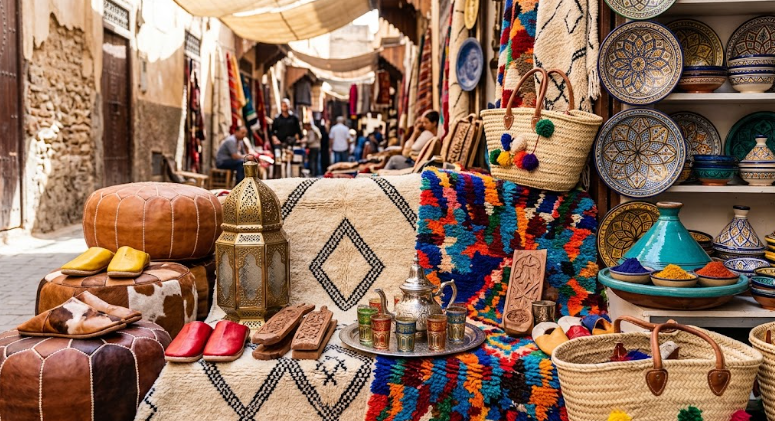
| Craft Category | Primary Materials | Key Artisanal Hubs | Primary Decorative Style | Ideal Interior / Practical Use |
| 1. Handwoven Rugs | Natural Sheep Wool, Cotton | Middle Atlas, Azilal, Haouz | Geometric diamonds, abstract tribal motifs | Living room anchor, bedroom warmth |
| 2. Zellige Tiles | Fes Gray Clay, Mineral Glazes | Fes, Meknes | Geometric mosaic stars (Girih) | Kitchen backsplashes, shower walls, fountains |
| 3. Leather Goods | Sheepskin, Goatskin, Cowhide | Fes (Chouara), Marrakech | Hand-stitched embroidery, natural patina | Floor seating, fashion footwear, travel bags |
| 4. Ceramics & Pottery | Terracotta, Copper/Cobalt Glazes | Fes, Safi, Tamegroute | Polychrome geometric prints, raw emerald glazes | Tableware, decorative vases, fruit bowls |
| 5. Brass & Metalwork | Solid Brass, Copper, German Silver | Marrakech, Fes | Hand-punched fretwork, chased engraving | Ambient lantern lighting, tea trays, vessel sinks |
| 6. Sabra (Cactus Silk) | Agave Plant Fibers, Botanical Dyes | Marrakech, Chefchaouen | Sun-washed pastel tones, Berber embroidery | Accent throw pillows, light blankets |
| 7. Cedar Woodwork | Atlas Cedarwood, Walnut | Fes, Tetouan, Essaouira | Relief carving, Moucharabieh lattice | Carved doors, headboards, room dividers |
| 8. Woven Basketry | Doum Palm Leaves, Reed, Wool | Southern Valleys, Essaouira | Wrapped wool accents, raw woven textures | Storage bins, tote bags, organic pendant lamps |
| 9. Tea Sets (Berrad) | Silver-plated Brass, Glassware | Sultanate Cities, Nationwide | Engraved arabesque, gilded glass paints | Tea ceremony serving, dining centerpieces |
| 10. Bejmat Tiles | Natural Clay Terracotta | Fes, Salé | Brick-like rectangular tiles, rustic natural earth | Courtyard flooring, high-traffic patio paving |
Reliable External Sources & Historical References
To explore the cultural preservation and history of North African arts and crafts:
- UNESCO Intangible Cultural Heritage: Learn about international efforts to safeguard artisanal traditions on the official UNESCO Intangible Cultural Heritage Portal.
- The Metropolitan Museum of Art (MetMu) – Islamic Art Collection: View historical Moroccan metalwork, ceramics, and woodwork in The Met’s Islamic Art Department.
- Institut du Monde Arabe (IMA): Discover educational exhibitions on traditional North African architecture and design at L’Institut du Monde Arabe.
- Victoria and Albert Museum (V&A): Research historical North African textiles and tilework through the V&A Museum Collections.
Frequently Asked Questions (FAQ)
How can I verify that a Moroccan product is genuinely handmade?
Genuine moroccan handmade products exhibit slight natural variations in tone, weight, and dimension. For example, authentic Zellige tiles feature subtle edge chips and color shades, while hand-knotted rugs show minor irregularities in knot spacing. In contrast, industrial mass-produced imitations appear completely identical and uniform.
Are natural leather products from Morocco eco-friendly?
Yes. Traditional tanneries like Chouara in Fes use centuries-old organic tanning processes. They rely on natural materials such as bark, poppy seed dyes, and limestone instead of toxic chromium or synthetic chemicals.
How do I clean and maintain Cactus Silk (Sabra) pillow covers?
Because artisans dye Sabra silk using natural botanical pigments, experts strongly recommend dry cleaning. Avoid applying water directly or machine washing because liquid causes natural vegetable dyes to bleed or fade unevenly.
What is the difference between Zellige and Bejmat tiles?
Zellige tiles are thinner and feature hand-chiseled $45^\circ$ beveled edges for near-seamless mosaic assembly; therefore, artisans use them primarily on walls. However, Bejmat tiles are thicker rectangular terracotta bricks ($15 \times 5\text{ cm}$) with straight edges, which makes them ideal for heavy-duty floor paving.
Conclusion
Discovering authentic moroccan handmade products offers a direct connection to a centuries-old heritage of artistic devotion, organic materials, and human ingenuity. From hand-knotted Atlas wool rugs to delicate pierced brass lamps and glowing Zellige mosaics, these traditional crafts bring soul, warmth, and timeless character into modern spaces.