
Beni Ourain Rugs: Secrets to the Perfect Home Decor
- Home Décor & Traditional Crafts Moroccan Crafts
 Maroc Fans
- 0
- 21 minutes read

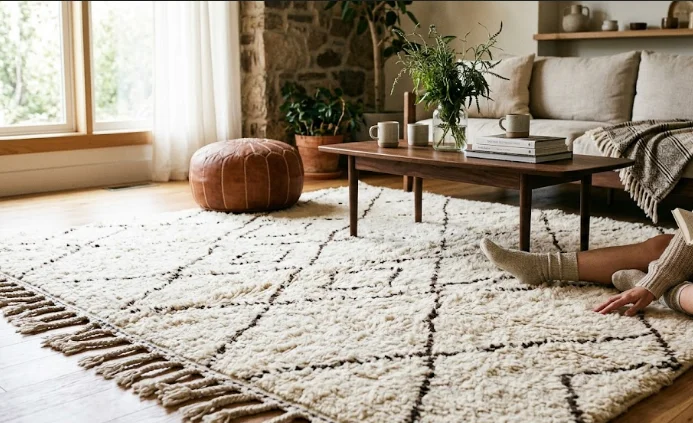
In the world of interior design, few handmade textiles carry the timeless prestige, tactile luxury, and effortless versatility of authentic Beni Ourain rugs. Characterized by their plush cream pile and striking geometric lines, these iconic Moroccan carpets have graced the living spaces of mid-century modernist icons, Scandinavian minimalism enthusiasts, and bohemian homeowners alike.
Yet, behind their sleek modern aesthetic lies a deep heritage rooted in the rugged slopes of Morocco’s Middle Atlas Mountains. Woven by indigenous Amazigh (Berber) women for centuries, a true Beni Ourain rug is not merely a floor covering—it is an unfiltered canvas of ancestral storytelling, spiritual protection, and artisanal mastery.
Whether you are looking to purchase your first genuine piece or simply wish to understand why these neutral plush treasures remain at the pinnacle of home decor, this comprehensive guide covers everything you need to know about Beni Ourain rugs.
What is a Beni Ourain Rug?
A Beni Ourain rug (sometimes spelled Beni Ouarain) is a hand-knotted wool carpet traditionally crafted by a confederation of 17 Amazigh tribes residing in the North-Eastern Middle Atlas region of Morocco, surrounding Taza and Fez.
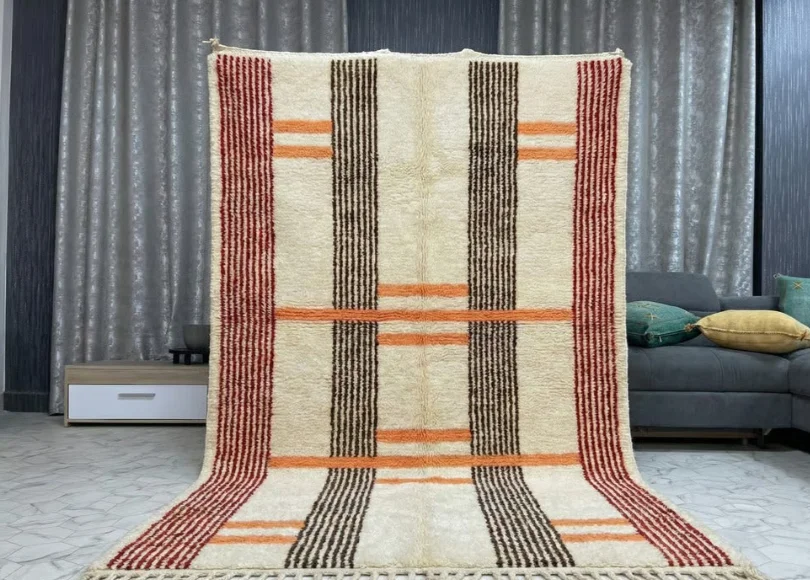
Unlike brightly dyed Moroccan textiles like Azilal or Boujaad rugs, classic Beni Ourain rugs feature an un-dyed, ivory or warm cream wool background patterned with dark brown, charcoal, or black geometric motifs.
Key Characteristics of Authentic Beni Ourain Rugs
- 100% Natural Wool: Hand-sheared, hand-spun wool sourced from local mountain sheep breeds (such as the ancient Marmoucha breed), known for high lanolin content and exceptional softness.
- Natural Un-Dyed Palette: The base palette consists entirely of natural shades—creams, off-whites, and natural dark wool for patterns.
- Thick, High-Pile Texture: Designed to withstand freezing winters in the high mountains, offering a plush, cloud-like feeling underfoot.
- Minimalist Geometry: Abstract lines, chevrons, and lozenges that flow in intentionally asymmetrical arrangements.
The History and Nomadic Heritage of Beni Ourain Rugs
To truly appreciate a Beni Ourain rug, one must look back at its functional origin in the Middle Atlas Mountains. The region experiences dramatic seasonal temperature drops, with heavy snowfall and biting winter winds. For the semi-nomadic tribes of the Beni Ourain confederation, weaving was born out of survival.
Historically, these rugs were not created as decorative floor pieces. Instead, they served as multi-purpose thermal insulation:
- Bedding & Blankets: Families slept directly on the plush pile or wrapped themselves in the heavy wool during freezing nights.
- Floor Insulation: Placed inside traditional tents or stone dwellings to block ground coldness.
- Cloaks & Wraps: Long pile wool protected pastoralists while tending sheep grazing on elevated mountain pastures.
Because they were designed to be folded and carried during seasonal migrations, traditional Beni Ourain rugs possess a pliable, soft structure rather than a rigid synthetic backing.
How Beni Ourain Rugs Conquered Western Modernism
In the early to mid-20th century, Western architects and designers discovered these remote mountain textiles and recognized something extraordinary: the minimalist geometric patterns created by Amazigh weavers mirrored the principles of Modernist art and architecture.
Legendary architects including Le Corbusier, Frank Lloyd Wright, Alvar Aalto, and Charles and Ray Eames began pairing sleek modern steel and glass interiors with soft, organic Beni Ourain rugs. The stark contrast between hard modern lines and rich, organic, hand-spun wool created a balanced visual harmony.
Historical Note: Modernist master Le Corbusier famously featured Beni Ourain carpets in his iconic modern interiors, noting how their uninhibited, hand-knotted geometry brought warmth and soul to sleek architectural spaces.
Decoding the Symbols in Beni Ourain Rug Patterns
Every genuine Beni Ourain rug tells an intimate story. In traditional Amazigh culture, weaving was an exclusively female practice passed down through generations. Lacking a formal written script in historic daily life, weavers embedded their personal narratives, hopes, prayers, and life events directly into the weave using a sacred symbolic language.
When you examine the irregular lines of an authentic Beni Ourain rug, you are reading a visual dialect.
| Symbol Motif | Local Term | Meaning | Cultural Significance |
| Lozenge / Diamond | Tazerzit | Femininity & Protection | Represents fertility and wards off negative energy (evil eye). |
| Zigzag Lines | Aman n tiḍas | Water & Life Journey | Symbolizes rivers, natural cycles, and personal paths. |
| X-Cross / Chevrons | Mas’ha | Male Presence | Represents physical strength, balance, and harmony. |
| Comb / Tree Motif | Taqasabt | Family Lineage | Denotes ancestral roots, unity, and agriculture. |
| Eight-Pointed Star | Timzra | Celestial Guidance | Symbolizes cosmic balance and spiritual wisdom. |
Because each rug is crafted without a written template or pre-printed chart, no two Beni Ourain rugs are ever identical. Variations in line width, subtle line shifts, and asymmetrical motifs reflect the weaver’s spontaneous artistic expressions.
Craftsmanship: How an Authentic Beni Ourain Rug is Made
Creating an authentic Beni Ourain rug is a detailed, physical process that can take anywhere from two to six months of continuous hand-knotting depending on size.
1. Wool Selection and Shearing
The process begins with high-grade virgin wool harvested from mountain sheep. Because the sheep live in high-altitude environments, their fleece develops thick fibers loaded with natural lanolin oils.
2. Cleaning and Hand-Spinning
The sheared raw wool is thoroughly washed in mountain rivers to remove dust while retaining the natural soft lanolin. Once dried, rural artisans spin the fibers by hand using traditional drop spindles to prepare resilient yarn for both warp threads and pile knots.
3. Loom Setup and Hand-Knotting
Using upright wooden looms constructed inside homes or village cooperatives, weavers warp the vertical cotton or wool strands. They tie thousands of individual Amazigh double knots across each row, securing the pile knot by knot with heavy horizontal rows of hand-passed wool threads.
4. Washing, Softening, and Drying
Once cut from the loom frame, the rug undergoes a multi-wash process in clear water, often treated with natural plant soaps to naturally soften the pile. It is then spread out to dry flat beneath the Moroccan sun, which naturally bleaches and softens the cream pile tone.
How to Identify Authentic Beni Ourain Rugs vs. Replicas
Due to immense global popularity, machine-made replicas from factory mills have flooded the market. While modern machine-made lookalikes may mimic the simple diamond aesthetic, they lack the durability, texture, value, and soul of a genuine hand-knotted treasure.
Use this checklist to verify authenticity before buying:
1. The Underside and Knot Structure
Flip the rug over to inspect its underside. On a genuine hand-knotted Beni Ourain carpet, the knots will display slight human irregularities in size and tension. Factory machine-made rugs feature perfectly straight, identical grid patterns with glued stiff synthetic backings.
2. Loom Fringe Construction
In authentic Moroccan rugs, the fringe is an extension of the structural vertical warp threads of the loom itself. It is usually found on one end (where the rug was completed and cut from the loom), though some weavers add braided warp endings to both sides. If the fringe is visibly sewn or glued onto the edges, it is synthetic.
3. Pure Wool vs. Synthetic Blends
Real Beni Ourain rugs are crafted from 100% pure wool.
- The Burn Test: Pull a small stray fiber from the pile and light it with a match. Pure wool burns slowly with an organic hair smell and leaves soft ash. Synthetic polyester or polypropylene fibers melt quickly into hard plastic beads.
4. Natural Color Nuance
Authentic Beni Ourain wool is never bleached stark blinding white. Instead, it exhibits subtle natural variations ranging from warm cream, ivory, to rich bone off-white. The dark lines are natural dark sheep fibers or mild vegetable dye.
Styling a Beni Ourain Rug in Modern Interiors
One of the main reasons interior architects love authentic Beni Ourain rugs is their unmatched versatility. The neutral cream background acts as a grounding canvas, while the black geometric lines add visual structure to any room.
- Scandinavian Minimalist: Pair the warm cream pile with pale oak flooring, light linen sofas, and sleek Nordic wood furniture. The soft wool pile brings crucial warmth to cool-toned modern spaces.
- Mid-Century Modern: Set your Beni Ourain rug underneath walnut furniture, cognac leather armchairs, and brass lighting accent pieces. The timeless geometry highlights mid-century furniture contours effortlessly.
- Warm Bohemian & Eclectic: Combine the rug with rich terracotta planters, leather Moroccan poufs, and lush indoor greenery. Layering vibrant vintage Middle Atlas textiles over a neutral Beni Ourain base creates an inviting space.
Care and Maintenance for Your Beni Ourain Rug
A genuine hand-woven wool rug is an heirloom piece built to last generations when properly cared for. Here is how to maintain your Beni Ourain rug in prime condition:
Regular Shake & Air Out
The best way to clear deep dust from thick wool rugs is the traditional way: take the rug outdoors every few weeks and shake it out firmly. Hanging it outside in a dry breeze helps eliminate trapped odors and naturally fluffs the fibers.
Vacuuming Rules for High-Pile Wool
Vacuum your Beni Ourain rug once a week, but always turn off the rotating beater bar brush. A rotating brush bar pulls and tears raw hand-spun wool fibers, causing unnecessary shedding. Use suction-only attachments.
Dealing with Accidental Spills
- Act Quickly: Blot liquids immediately with a clean, dry white cotton towel.
- Never Rub: Rubbing forces liquid deeper into the inner wool core and distorts knot pile fibers.
- Mild Cleanser: Spot clean using cold water mixed with a few drops of natural wool detergent or mild dish soap.
- Air Dry Fully: Elevate the damp section so air circulates beneath the base until completely dry.
Frequently Asked Questions About Beni Ourain Rugs
1. Why do Beni Ourain rugs shed, and how long does it last?
Because authentic Beni Ourain rugs are crafted from natural hand-spun un-trimmed virgin wool, light shedding is completely normal during the first 4 to 8 weeks. Regular suction-only vacuuming will quickly clear loose surface fibers.
2. Are Beni Ourain rugs pet and kid-friendly?
Yes! Natural sheep wool contains organic lanolin oils, making it surprisingly stain-resistant and durable against daily family traffic. The plush, soft pile provides a comfortable, warm play surface for toddlers.
3. What is the difference between Beni Ourain and Azilal rugs?
While both originate from Moroccan Amazigh tribes, Beni Ourain rugs rely on natural off-white wool with dark minimalist geometric lines. In contrast, Azilal rugs incorporate vibrant colorful dyed wools, featuring fine motifs and lower pile heights.
4. Are vintage Beni Ourain rugs better than new ones?
Vintage pieces (woven prior to the 1980s) possess historical patina, buttery soft wool, and rare tribal symbolism. However, modern authentic Beni Ourain rugs woven in traditional Middle Atlas artisanal cooperatives offer custom sizing, pristine clean wool bases, and identical hand-knotted durability.
5. Why do some Beni Ourain rugs have fringes on only one side?
Traditionally, weavers set up their looms from bottom to top. When the rug was finished, the top warp threads were cut and knotted to form a fringe, while the starting end at the bottom was neatly woven into a flat selvedge edge. Single-sided fringe is a classic hallmark of authentic Moroccan loom construction.
6. Can I use a Beni Ourain rug over floor heating systems?
Yes. Pure wool is a natural breathable fiber that handles radiant floor heating exceptionally well without emitting harsh chemical odors or melting, unlike synthetic backing materials.
Invest in Timeless Moroccan Heritage
An authentic Beni Ourain rug is far more than an interior decoration trend. It is an enduring piece of living history, hand-woven with skill, passion, and soul by Amazigh women in the high peaks of the Atlas Mountains. By inviting a genuine piece into your home, you support traditional artisan communities while bringing home an unbeatable combination of tactile warmth and quiet luxury.