
Authentic Moroccan Handicrafts: Secrets to Best Decor Trip
- Home Décor & Traditional Crafts Moroccan Crafts
 Maroc Fans
- 0
- 24 minutes read

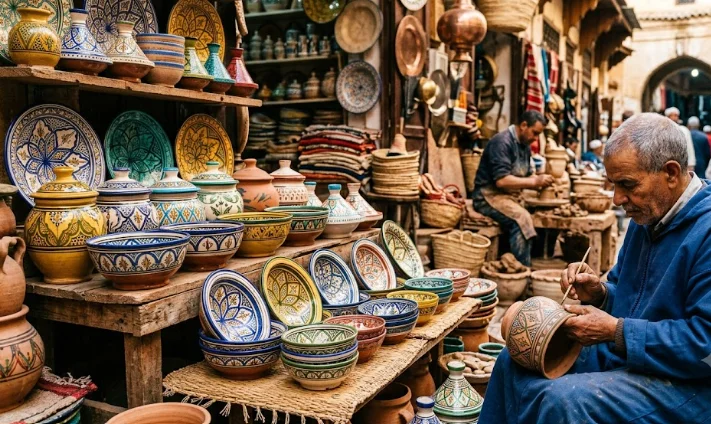
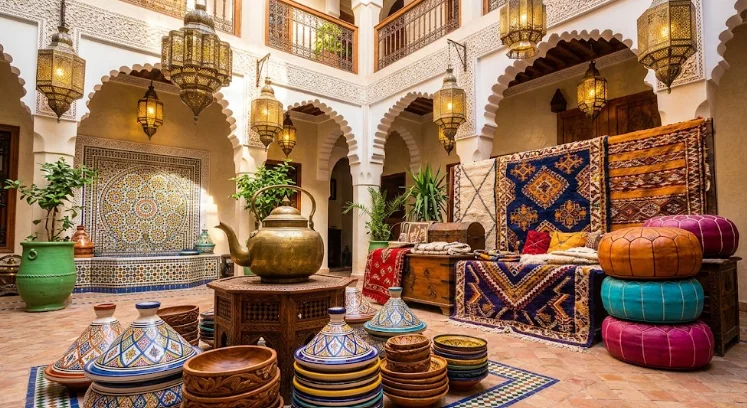
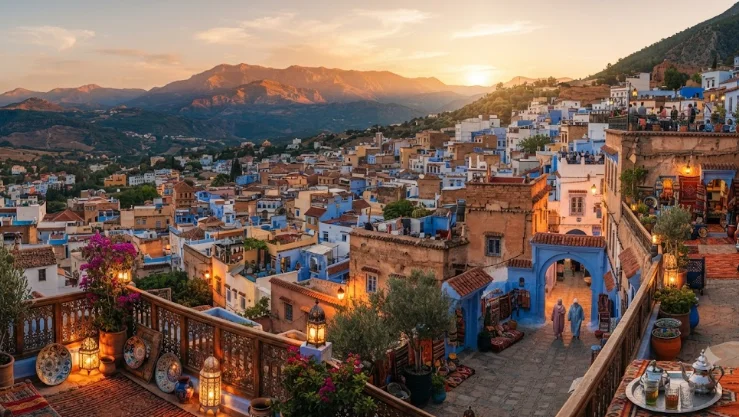
Stepping into a Moroccan medina is a sensory feast. Finding authentic Moroccan handicrafts amidst the vibrant displays—from handwoven carpets to gleaming brass lanterns—is the highlight of any trip to Morocco. The aroma of saffron and cedarwood floats through narrow alleyways, while intricate hand-painted ceramics line every stall. For centuries, Morocco’s master craftspeople—known as maâlems—have preserved ancestral techniques passed down through generations.
However, as global demand for Moroccan decor has soared, markets have been flooded with factory-made imitations, synthetic leather, and cheap imports. Consequently, knowing how to identify authentic Moroccan handicrafts ensures you bring home genuine heritage pieces that support local artisan families, rather than mass-produced replicas.
Whether you are navigating the winding souks of Fes, bargaining in Marrakech, or visiting rural women’s cooperatives in the High Atlas Mountains, this definitive guide walks you through every step to evaluate, spot, and purchase authentic Moroccan handicrafts.
The Moroccan Artisan Tradition: Regional Specialties
To make informed purchases, it helps to understand that Morocco’s handicraft heritage is deeply regional. Different cities and regions specialize in distinct raw materials, historical influences, and artistic techniques:
- Fes: The spiritual and craft capital of Morocco, famous for its 11th-century tanneries (Chouara), blue-and-white Fassi ceramics, hand-chiseled brass, and architectural zellige tilework.
- Marrakech: Renowned for supple leather goods (babouches, poufs, bags), hand-hammered copper lanterns, and curated collections of tribal textiles.
- Safi: The historic epicenter of Moroccan pottery, famous for its red-clay ceramics, cobalt blues, and mustard-yellow glazes.
- Essaouira: Known worldwide for its exquisite Thuya wood carvings inlaid with lemonwood, mother-of-pearl, and ebony, as well as Amazigh silver jewelry.
- Chefchaouen & the Rif Mountains: Famous for vibrant, handwoven striped wool blankets and woven straw goods.
- High & Middle Atlas Mountains: The heartland of handwoven Berber rugs, including Beni Ourain, Azilal, and Talsint tribal carpets.
Before planning your shopping itinerary, check out our detailed guide on navigating the historic Marrakech souks and our overview of the top things to do in Fes.
1. Spotting Authentic Moroccan Handicrafts in Textiles & Berber Rugs
Moroccan rugs—particularly Amazigh (Berber) tribal carpets—are among the most coveted authentic Moroccan handicrafts in interior design. From plush, minimalist Beni Ourain carpets to colorful Azilal and flat-weave Kilims, each rug tells a story written in geometric symbols.
How to Verify Rug Authenticity
- The Flame Test: Real Berber rugs are hand-knotted using 100% natural sheep’s wool, whereas synthetic rugs use polyester or acrylic. You can ask the dealer if you can pull a loose strand from the fringe and light it with a match. Pure wool self-extinguishes, smells like burning hair, and leaves a dark, soft ash. In contrast, synthetic yarn melts into a hard plastic bead and smells like chemicals.
- Examine the Backing and Knots: Turn the rug over. Authentic hand-knotted rugs exhibit slight irregularities in knot size and pattern alignment. On the other hand, machine-made rugs feature uniform, mechanically precise stitching across the back.
- Fringe Connection: On a genuine handwoven loom rug, the fringes are an extension of the rug’s warp threads. Conversely, if the fringe looks sewn or glued onto the edge after manufacturing, it is a factory product.
- Natural vs. Chemical Dyes: Traditional weavers use plant- and mineral-based dyes such as saffron (yellow), indigo (blue), henna (orange/brown), and poppy petals (red). Natural colors possess subtle depth and slight tonal shifts throughout the yarn, whereas synthetic dyes produce flat, overly vibrant hues.
Expert Tip: Expect authentic vintage rugs to bear signs of life, such as soft patina or minor asymmetrical variations. These are marks of history, not defects. For a complete breakdown of styles, read our guide on how to choose the perfect Berber rug for your home.
2. Authentic Moroccan Handicrafts in Leather: Real Leather vs. Synthetic Imitations
Moroccan leather has been legendary since the Middle Ages—the word maroquinerie in French literally stems from Morocco. Traditional leather bags, coats, and babouches (traditional leather slippers) are crafted from goat, sheep, or cow hides using natural vegetable tanning processes.
| Feature | Authentic Moroccan Leather | Fake / Factory Leather |
| Scent | Earthy, rich, natural leather | Strong chemical, petroleum, plastic |
| Texture & Feel | Soft, supple, natural grain variations | Stiff, perfectly uniform, slick |
| Stitching | Subtle unevenness, hand-stitched | Flawless machine-stitched rows |
| Edges | Raw, showing natural fiber layers | Glued or sealed plastic edges |
| Water Resistance | Absorbs water slowly (darkens) | Water beads off synthetic coating |
How to Spot Genuine Leather
- The Smell Test: Real vegetable-tanned leather treated in traditional tanneries carries a distinct, natural earthy aroma. Meanwhile, synthetic or chemically processed hides smell strongly of plastic, glue, or harsh kerosene.
- Inspect the Seams: Hand-stitched goods feature slight human variations in stitch tension and angle.
- Feel the Weight: Genuine leather feels substantial and breaks in softly over time.
3. Pottery & Zellige Ceramics as Authentic Moroccan Handicrafts
From cobalt-blue Fes bowls to rustic terra-cotta tagines from Safi, ceramics represent some of the most popular authentic Moroccan handicrafts for home decor.
Key Authenticity Indicators
- Imperfections in the Glaze: Hand-thrown clay fired in traditional wood-burning kilns naturally develops tiny glaze variations, subtle color shading, or minor crazing (fine hair-like lines in the glaze). Flawless, perfectly flat paint points to mass production.
- Unfinished Base: Flip the bowl or plate over. The base of genuine Moroccan pottery shows bare, fired clay with visible wheel marks or the signature stamp/etching of the artisan or cooperative.
- Zellige Backings: If you are buying handmade zellige tile mosaic tables, inspect the underside of the tile pieces. True zellige tiles are hand-chiseled at an angle using a specialized hammer (zhasha), leaving visible hand-chiseled facet marks on the reverse side.
Food Safety Warning: Decorative pottery in tourist markets may contain lead-based glazes. Therefore, if you plan to cook with a tagine or eat off ceramic plates, always verify that the item is labeled lead-free & food-safe or buy cooking tagines from certified artisan cooperatives. Learn more about authentic cooking utensils in our article on essential Moroccan kitchenware and spices.
4. Hand-Hammered Metalwork & Silver: Identifying Authentic Moroccan Handicrafts
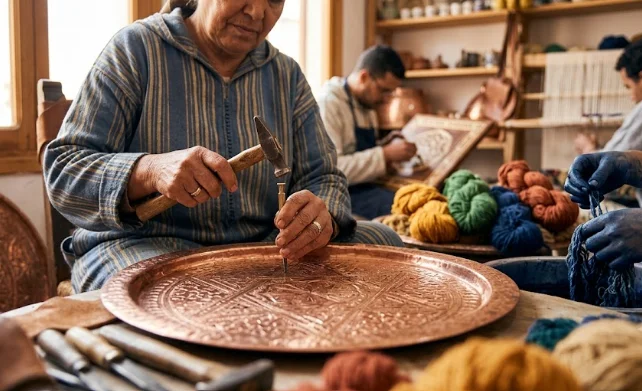
Moroccan brass lanterns create mesmerizing shadows across courtyards, while hand-chiseled trays are central to traditional tea ceremonies.
How to Test Metal Authenticity
- Weight Matters: Genuine brass and copper feel heavy and solid. Conversely, cheap knockoffs use thin aluminum or tin coated with yellow or reddish paint that scratches off easily.
- Hand-Chiseled Marks: Look closely at the cutouts on metal lamps or etched trays. Hand-hammered pieces display microscopic variations in depth and spacing where the artisan’s chisel struck the metal.
- Silver Jewelry: Amazigh silver jewelry from southern cities like Tiznit, Taroudant, and Agadir should feature an official purity hallmark stamp (such as the 800 or 925 silver mark). Fake silver often consists of nickel-plated brass that leaves a dark residue on your skin.
Where to Buy Authentic Moroccan Handicrafts
Where you choose to shop directly impacts both the quality of your purchase and the fair compensation of the craftspeople.
1. Traditional Medina Workshops (Ateliers)
Shopping directly in the workshop district allows you to watch the maâlem shape metal, weave yarn, or tan leather. As a result, you see the raw material transformed in front of your eyes, guaranteeing 100% authenticity.
2. State-Supported Ensemble Artisanal
Located in almost every major Moroccan city (Marrakech, Fes, Rabat, Casablanca, Essaouira), the Ensemble Artisanal is a government-regulated center designed to sell authentic Moroccan handicrafts.
- Pros: Fixed, fair prices clearly marked on every item; calm atmosphere with zero high-pressure selling; verified quality standards directly supporting artisan guilds.
- Best for: Travelers who want guaranteed quality without negotiating in the souks.
3. Certified Women’s Artisanal Cooperatives
Throughout rural regions—especially in the Atlas Mountains and Argan oil regions—women’s craft cooperatives provide fair wages, economic independence, and social welfare for rural women weavers and producers.
To identify real cooperatives, look for official registration numbers, clear provenance labels detailing who crafted the item, fixed prices, and transparent community programs.
The Art of Respectful Bargaining for Authentic Moroccan Handicrafts
Negotiating (haggling) in a Moroccan souk is not a hostile conflict—it is an enjoyable social ritual built on mutual respect and conversation.
- Research Baseline Prices: Do your homework before entering high-pressure shops. Visit an Ensemble Artisanal or a fixed-price store first to establish a realistic baseline for quality and cost across different materials.
- Let the Seller Name the First Price: Never reveal your maximum budget upfront. Browse comfortably, and when you find an item you love, ask the vendor for the price (Bchhal? in Darija). The initial asking price in tourist souks usually includes a negotiation margin.
- Make Your Counter-Offer With Good Humor: Maintain a friendly, lighthearted tone throughout the interaction. Start your counter-offer at roughly 40% to 50% of the vendor’s initial quote, depending on the item. Always keep the mood light, warm, and playful—smile, exchange polite pleasantries, and drink mint tea if offered.
- Meet in the Middle: Aim for a win-win outcome for both sides. Gradually adjust your offers toward a fair middle ground. Remember that a price difference of 50 MAD (~$5 USD) means far more to a local family than to a foreign traveler.
- Use the Walk-Away Technique Respectfully: Only walk away if you are genuinely prepared to leave. If the seller cannot meet your reasonable price limit, politely say “Shukran” (thank you) and walk away. If their offer was fair, they may call you back; if not, you have found the market floor.
National Quality Labels certifying Authentic Moroccan Handicrafts
To protect Morocco’s cultural heritage and guarantee authentic Moroccan handicrafts, the Ministry of Handicrafts and Maison de l’Artisan have established official national certification seals:
- Label Artisanat du Maroc: The umbrella national mark certifying genuine handmade craft produced within Morocco under fair labor standards.
- Madmoun: Quality certification label guaranteeing product safety, raw material authenticity, and high craftsmanship standards.
- Geographical Indications (GI): Regional labels protecting specific heritage goods, such as Tapis Aït Bouguemez (rugs), Poterie de Safi (pottery), or Huile d’Argan de Souss (Argan oil).
When shopping in higher-end boutiques or international showrooms, ask the merchant if their items carry official national craft certifications.
Packing, Customs, and Shipping Authentic Moroccan Handicrafts
Once you’ve purchased your handmade treasures, getting them home safely is the final step.
- Ceramics & Glass: Ask vendors to wrap fragile pottery in multi-layered bubble wrap. Furthermore, pack them in the center of your hardshell checked luggage, cushioned by soft wool rugs, jackets, or scarves.
- Leather Care: Store leather bags and poufs flat during travel. Upon arriving home, stuff poufs with old blankets or towels to restore their shape and air them out in a well-ventilated space.
- Rug Shipping: Major rug merchants in Marrakech and Fes routinely ship large carpets via international couriers (DHL, FedEx). Always insist on a written receipt detailing door-to-door tracking, insurance, and exact dimensions.
- Customs Documentation: Keep purchase receipts for high-value antiques, silver, or large furniture to present to customs officials if requested upon departure.
For more practical packing and travel logistics, consult our comprehensive Morocco travel packing checklist.
Frequently Asked Questions (FAQ)
1. How can I tell if a Moroccan rug is vintage or brand new?
Vintage rugs (usually 30+ years old) exhibit soft, natural wear, subtle fading from exposure to sunlight, and supple, relaxed wool backing. Newer rugs made to look old may have artificial chemical distressing or overly uniform fading. Ask the dealer about the specific tribe and origin story of the rug.
2. Is haggling mandatory when buying authentic Moroccan handicrafts?
No. Fixed prices are standard in government-run Ensembles Artisanal, modern concept stores, supermarkets, and certified fair-trade cooperatives. Haggling is customary primarily in traditional medina souk stalls.
3. Are ceramic goods bought in Morocco safe for food and microwave use?
Traditional glazed ceramics intended purely for decoration may contain lead in their glazes. Always explicitly ask the vendor for “lead-free food-safe pottery” if you intend to use items for serving or cooking food. Unglazed clay cooking tagines are always safe for slow cooking.
4. What is the average price of an authentic handwoven Berber rug?
Prices vary based on size, knot density, wool quality, and age. A medium-sized, high-quality modern Beni Ourain wool rug (2×3 meters) typically ranges from 2,500 MAD to 5,000 MAD ($250 to $500 USD) when purchased directly in cooperatives or souks. Rare vintage pieces can cost significantly more.
5. Why does real Moroccan leather sometimes have a strong smell?
Traditional vegetable tanning uses natural organic materials (such as pigeon poop, limestone, and bark) to soften hides without synthetic chemicals. A mild earthy smell is normal and dissipates within a few days when placed in a dry, ventilated area with direct sunlight.
6. Can I ship large items like lanterns or furniture directly to my home country?
Yes. Established dealers in major cities regularly handle international shipping. Ensure you obtain a clear receipt with a tracking number, insurance coverage, and confirmation of door-to-door delivery costs before paying.
Buying authentic Moroccan handicrafts is far more than acquiring a beautiful decorative piece—it is an investment in human culture, ancestral artistry, and sustainable local economies. By learning how to spot genuine craftsmanship, engaging respectfully with artisans, and supporting verified cooperatives, you carry home a piece of Morocco’s living history.