
Moroccan Handmade Crafts: Secrets to the Ultimate Shopping
- Home Décor & Traditional Crafts Moroccan Crafts
 Maroc Fans
- 0
- 24 minutes read

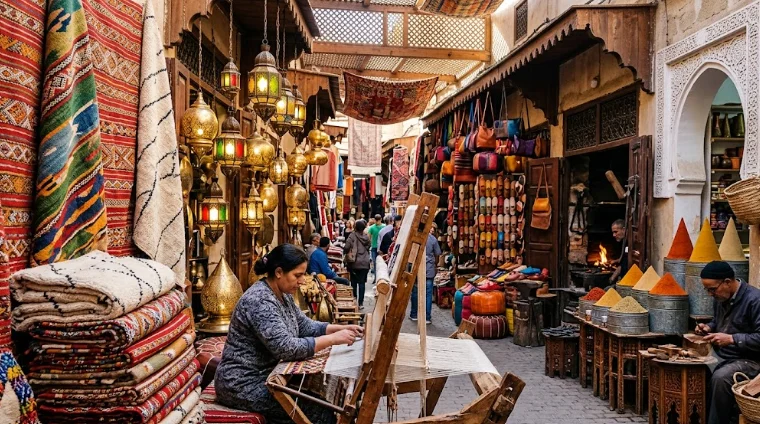
Exploring traditional markets for authentic Moroccan handmade crafts is one of the most thrilling and culturally rewarding experiences in North Africa. Across Morocco’s ancient walled medinas, bustling market quarters are organized by trade. Here, master craftspeople—known locally as maalems—hammer sheet metal, dye sheep wool in stone vats, hand-stitch leather footwear, and weave intricate Berber carpets using techniques passed down through generations.
Whether you are looking for hand-carved cedar wood, authentic leather bags, glowing brass lanterns, or geometric ceramic tiles, knowing where to find high-quality Moroccan handmade crafts makes all the difference. While every city boasts its own local markets, specific medinas specialize in distinct artistic trades. This ultimate guide walks you through the top souks across Morocco, what unique artisanal treasures to look for, and how to navigate these labyrinthine markets like a seasoned traveler.
What Makes Moroccan Handmade Crafts World-Famous?
The history of Moroccan handmade crafts is rooted in a rich tapestry of Amazigh (Berber), Arab, Andalusian, and Saharan influences. For centuries, the country’s strategic position at the crossroads of Africa, Europe, and the Middle East turned its walled cities into vital trading hubs.
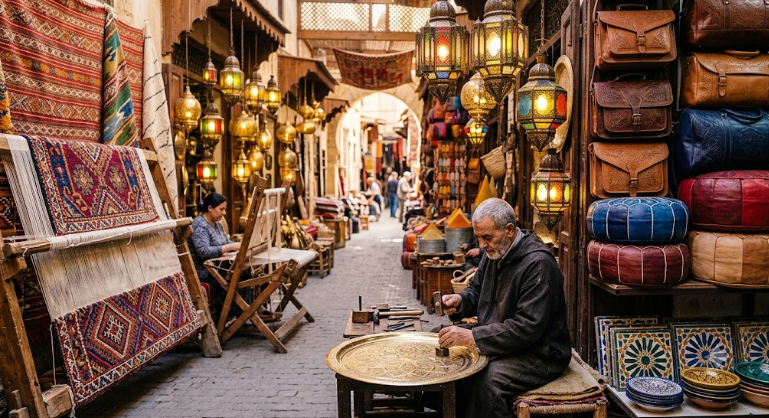
Unlike modern mass-production facilities, traditional Moroccan workshops operate on a medieval guild system. Artisans working in the same trade cluster together in designated quarters of the medina. When you walk down a narrow alley, you aren’t merely shopping at a retail store; you are stepping directly into an active workshop where raw materials are turned into functional works of art.
By purchasing authentic Moroccan handmade crafts, you directly support the preservation of intangible cultural heritage and sustain local artisan families. To get a complete overview of the country’s top destinations before planning your shopping itinerary, check out our comprehensive Guide to the Best Cities to Visit in Morocco.
Top Cities and Souks for Authentic Moroccan Handmade Crafts
1. Marrakech: The Empire of Color, Lanterns, and Carpets
Marrakech’s medina, a UNESCO World Heritage site, houses the largest and most vibrant selection of Moroccan handmade crafts in the entire country. Spiraling northward from the iconic Jemaa el-Fnaa square, tens of thousands of artisans work within a energetic maze of covered alleyways.
- Souk Semmarine: The main artery of the Marrakech medina, lined with high-end rug dealers, woven pashminas, leather bags, and antique brassware.
- Souk des Teinturiers (Dyers’ Souk): One of the most photogenic spots in the city, where vibrant skeins of freshly dyed wool and silk hang overhead to dry in the sun.
- Souk Haddaddine: The blacksmiths’ market, filled with the energetic rhythmic clinking of hammers shaping iron grillwork and copper vessels.
- Souk Smata: The dedicated leather slipper market, brimming with thousands of colorful hand-stitched babouches (traditional Moroccan shoes).
- Souk El Attarine: Renowned for glowing brass lamps, silver teapots, and aromatic spice towers.
What to buy here: Hand-punched brass lanterns, Berber wool carpets (Beni Ourain, Azilal, and Kilim), leather footwear, and wrought-iron home decor. If you are spending several days exploring the Red City, don’t miss our detailed Marrakech Travel Guide for insider itineraries.
2. Fes el-Bali: Medieval Masterwork in Leather, Brass, and Ceramics
While Marrakech is famous for its lively energy and accessibility, Fes el-Bali represents pure medieval authenticity. The car-free medina of Fes is the largest urban pedestrian zone on Earth, home to craftsmen whose production methods haven’t changed since the 12th century.
- Chouara Tannery Quarter: The most iconic artisan site in Fes. Surrounding shops overlook stone vats filled with natural dyes where leather workers process goat, sheep, cow, and camel hides using ancient organic methods.
- Place Seffarine: A small, picturesque square echoing with the sound of coppersmiths hand-hammering large brass pots, serving trays, and ceremonial cauldrons.
- Ain Nokbi Ceramic Quarter: Located just outside the central medina walls, this area is world-famous for handcrafted Fassi pottery, recognized by its distinct cobalt blue and white geometric patterns.
What to buy here: High-quality leather jackets and satchels, blue-and-white Fes ceramics, intricate zellige tiles, and hand-chased brassware.
3. Essaouira: Thuya Woodworking, Silver, and Coastal Art
Located on the Atlantic coast, Essaouira offers a relaxed contrast to the high-energy markets of Marrakech and Fes. Its breezy medina features wide, straight avenues lined with whitewashed walls and bright blue doors.
- Souk Jdid & The Skala Workshops: Nestled beneath the ramparts, artisan workshops specialize in Thuya woodcraft. Thuya is an aromatic hardwood native to the Atlas foothills, known for its burled grain and cedar-like aroma. Artisans carve ornate jewelry boxes, chess sets, and furniture inlaid with lemonwood, mother-of-pearl, and ebony.
- Jewelry Souk (Mellah): Historical Jewish craftsmanship left a lasting legacy in Essaouira, making it a key hub for delicate silver filigree jewelry and tribal ornaments.
What to buy here: Inlaid Thuya wood items, vintage silver jewelry, contemporary local canvas paintings, and certified organic argan oil.
4. Chefchaouen: Mountain Textiles and Handwoven Woolens
Nestled in the Rif Mountains, the famous “Blue Pearl” of Morocco is renowned for both its blue-washed alleyways and its unique textiles. The cooler mountain climate inspired distinct weaving traditions designed for warmth and durability.
- Plaza Uta el-Hammam and Surrounding Lanes: As you wander through Chefchaouen’s quiet, sloping streets, you will spot outdoor displays featuring heavy woolen blankets, striped Rif tribal shawls, and handmade thick wool djellabas (traditional robes).
What to buy here: Coarse handwoven mountain rugs, woolen garments, goat cheese, handmade soaps, and vibrant pigments.
5. Rabat and Tétouan: Refined Embroidery and Royal Caftans
For travelers seeking refined elegance and traditional urban crafts, Rabat and Tétouan offer exquisite specialty markets.
- Rue des Consuls (Rabat): Historically the street where foreign diplomats resided, this famous covered market is known for woven Rabat carpets, fine leather bookbindings, gold-embroidered caftans, and traditional silver filigree.
- Tétouan Medina: Strongly influenced by Andalusian-Moorish heritage, Tétouan’s markets are ideal for hand-carved painted wood (zouak), intricate gold thread embroidery, and fine leatherwork.
6. Tiznit and Taroudannt: Southern Silver and Berber Tribal Crafts
Heading south toward the Anti-Atlas region, the shopping experience shifts heavily toward Amazigh tribal traditions, particularly silver metalwork.
- Tiznit Silver Souk: Encased within pink pisé walls, Tiznit is recognized as Morocco’s premier silver capital. Artisans craft traditional Berber jewelry, fibula brooches, heavy bangles, and ceremonial daggers (koummya) using age-old enameling and filigree techniques.
- Taroudannt Souks: Often referred to as “Little Marrakech,” Taroudannt offers authentic Berber crafts, stone carvings, raw leather goods, and hand-hammered copper vessels without heavy tourist crowds.
Top Moroccan Handmade Crafts at a Glance
| Craft Type | Best Souk / City | Key Characteristics & Features |
| Leather Goods | Fes el-Bali (Chouara) & Marrakech | Naturally tanned hides, hand-stitched bags, jackets, babouches. |
| Berber Carpets & Rugs | Marrakech, Middle/High Atlas | Hand-knotted wool, tribal geometric patterns (Beni Ourain, Azilal). |
| Ceramics & Zellige | Fes (Ain Nokbi) & Safi | Intricate cobalt blue designs, glazed clay tajines, zellige tile mosaics. |
| Thuya Woodwork | Essaouira | Fragrant burled wood, lemonwood and mother-of-pearl inlays. |
| Silver Jewelry | Tiznit & Essaouira | Authentic Amazigh filigree, enamel detailing, silver bangles. |
| Brass & Copper Lamps | Marrakech & Fes | Hand-punched metal lattice creating warm ambient shadows. |
Comprehensive Breakdown of Popular Moroccan Handmade Crafts
To ensure you bring home authentic, high-quality items, here is a detailed breakdown of Morocco’s premier artisan products and how to evaluate quality:
                     ┌────────────────────────────────────────┐
                     │        Moroccan Handmade Crafts        │
                     └───────────────────┬────────────────────┘
                                         │
     ┌──────────────────┬────────────────┴───────────────┬──────────────────┐
     ▼                  ▼                                ▼                  ▼
┌─────────┐    ┌─────────────────┐             ┌──────────────────┐  ┌──────────────┐
│ Leather │    │ Textiles & Rugs │             │ Metal & Woodwork │  │ Pottery &    │
│ Goods   │    │                 │             │                  │  │ Spices       │
└─────────┘    └─────────────────┘             └──────────────────┘  └──────────────┘
1. Moroccan Rugs and Tribal Carpets
Moroccan rugs are coveted worldwide for their artistic beauty and texture. They broadly fall into two main categories:
- Urban Rugs (Fes and Rabat): Feature dense, fine knots, central medallions, and delicate floral border patterns inspired by Ottoman and Persian traditions.
- Tribal Berber Rugs (Atlas Mountains): Feature plush, thick pile wools with asymmetrical geometric lines, telling personal stories of womanhood, nature, and tribal identity.
Buyer’s Tip: Perform the burn test if you are unsure of the fiber quality—pure natural sheep’s wool singes slowly and smells like burnt hair, whereas synthetic fibers melt quickly into hard plastic beads. For a deeper breakdown on evaluating vintage vs. new pieces, dive into our complete Moroccan Carpet Buying Guide.
2. Hand-Tanned Leather Goods
Moroccan leatherwork is world-renowned, especially items made in Fes and Marrakech. Look for soft goat skin (ideal for bags and poufs) or durable camel leather (great for shoes and travel bags). Quality leather should feel supple and retain a natural earthy aroma rather than a harsh chemical smell.
3. Hand-Punched Metalwork and Lanterns
Crafted from sheet copper, brass, or nickel silver, Moroccan lanterns feature hundreds of tiny geometric perforations. When lit, they project mesmerizing shadows across walls. Inspect solder joints to ensure sturdy construction and verify whether the metal is solid brass or plated tin.
4. Spices and Culinary Products
While searching for Moroccan handmade crafts, you will inevitably cross paths with spice vendors whose colorful conical displays feature cumin, paprika, saffron, and Ras el Hanout.
How to Buy Authentic Moroccan Handmade Crafts & Haggling Etiquette
Shopping in traditional markets is as much a social exchange as a transaction. Haggling (négociation) is expected and deeply rooted in local commerce.
1. The Art of Bargaining
- Remain Warm and Friendly: Smiling, greeting shopkeepers with “Salam Alaikum” (peace be upon you), and engaging in polite small talk sets a positive tone.
- Let the Seller Name the First Price: Never state your budget or offer a number first.
- Counter with a Reasonable Anchor: A general rule of thumb is to counter with roughly 30% to 50% of their initial opening price, then slowly negotiate upward until you reach a mutually agreeable middle ground.
- Know Your Walk-Away Price: Decide what an item is worth to you before negotiations begin. If the seller cannot match your maximum price, politely decline and walk away—you will often find similar items further down the street.
2. Practical Shopping Tips
- Carry Cash in Dirhams (MAD): While large rug showrooms and leather shops accept credit cards, smaller street artisans and independent workshops only take cash. Keep small bills handy for easier exchanges.
- Shop Early in the Morning: Visiting markets around 9:00 AM to 10:30 AM allows you to avoid peak crowds, enjoy cooler temperatures, and occasionally secure a “first sale of the day” discount (Baraka), which many shopkeepers view as good luck.
- Distinguish Handmade from Mass-Produced: Take time to inspect stitch uniformity, hand-beaten metal irregularities, and natural weave variations. Authentic Moroccan handmade crafts possess subtle, unique imperfections that give each piece character.
- Hire a Certified Medina Guide: If navigating narrow medina lanes feels overwhelming, consider hiring an official guide certified by the local tourism board. Avoid unofficial “false guides” who offer unsolicited help in exchange for commissions at specific shops.
Frequently Asked Questions (FAQ)
1. Where can I find the best Moroccan handmade crafts?
Marrakech and Fes are the primary destinations for Moroccan handmade crafts. Marrakech offers the widest variety, vibrant energy, and high accessibility for travelers. Fes el-Bali provides an authentic, ancient environment renowned for leatherwork, ceramics, and metalwork.
2. Is haggling required for all Moroccan handmade crafts?
Haggling is standard practice in almost all traditional medina markets. However, fixed-price artisan cooperatives (often run by municipal craft associations or women’s collectives) display non-negotiable price tags. These cooperatives are great reference points for gauging fair market prices.
3. How can I tell if a Moroccan rug is made from real wool?
Authentic Moroccan carpets are made from pure sheep’s wool or cotton. You can test carpet fibers by pulling a tiny loose thread and burning it with a lighter: natural wool burns slowly with an organic smell, while synthetic fibers melt quickly into hard plastic beads.
4. Can I ship heavy Moroccan handmade crafts back home?
Yes. Major carpet dealers, ceramics cooperatives, and brass workshops routinely ship items internationally via DHL, FedEx, or national postal services. Always ensure you receive a signed invoice detailing shipping insurance and tracking information before leaving the shop.
5. What is the best time of day to shop for handmade crafts in Morocco?
Early morning (between 9:00 AM and 11:00 AM) is ideal. Market lanes are less congested, shopkeepers have more time to talk, and vendors often offer favorable prices for their first sale of the day.
6. Are credit cards accepted when buying Moroccan handmade crafts?
Credit cards are accepted at larger establishments like carpet showrooms, high-end leather stores, and antique galleries. However, small artisan stalls, street vendors, and food stalls operate exclusively in cash (Moroccan Dirham).
7. What is the most unique regional handmade craft in Morocco?
Essaouira’s Thuya woodcraft is one of the most unique regional crafts. Artisans harvest the burled roots of the indigenous Thuya tree to craft fragrant, inlaid boxes, tables, bowls, and decorative items found nowhere else in the world.
Shopping for Moroccan handmade crafts offers far more than a simple souvenir run—it is an immersive dive into living history, centuries-old artistry, and authentic Moroccan hospitality. By taking time to observe master artisans at work, learning the stories behind each handcrafted piece, and bargaining with a warm smile, you will take home far more than beautiful objects: you bring back unforgettable memories and a genuine connection to Morocco’s rich cultural heart.