
Moroccan Metal Art: Secrets to the Ultimate Shopping
- Home Décor & Traditional Crafts Moroccan Crafts
 Maroc Fans
- 0
- 22 minutes read

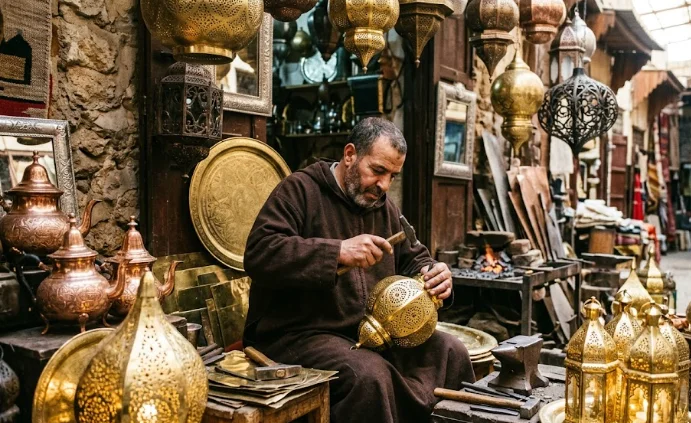
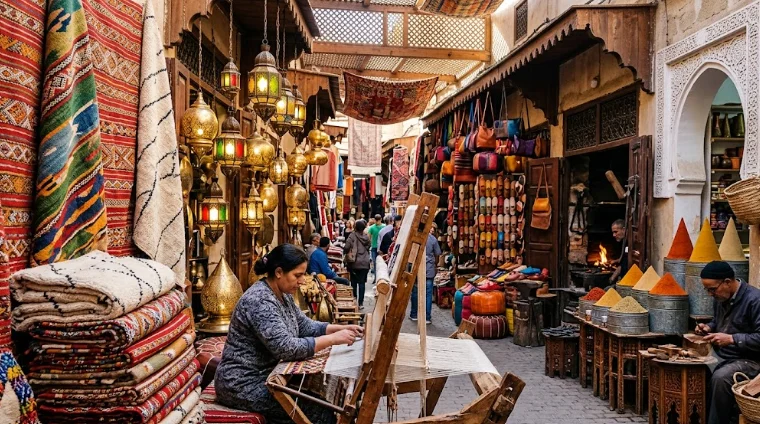
When you walk through the alleyways of ancient Moroccan medinas, rhythmic hammering echoes through the air. This hypnotic sound comes from the Saffarine artisans. For centuries, these master craftsmen have preserved one of the most intricate metal traditions in the world. From delicate pierced brass lanterns to hand-engraved copper tea sets, Moroccan metal art blends history, utility, and timeless beauty.
In modern interior design, handcrafted decor from Morocco has become a global favorite. Whether your home is modern, minimalist, or rustic, authentic Moroccan metal art adds warmth, texture, and character to any space.
In this complete guide, you will discover the rich heritage of North African craftsmanship. We will also explore iconic decorative pieces, traditional techniques, and simple care tips for your artisanal treasures.
The Rich History of Moroccan Metal Art
The story of traditional metalworking in Morocco is rich and ancient. It combines Amazigh (Berber) traditions, Andalusian elegance, and Islamic geometric precision.
For generations, metalworking guilds operated as close-knit communities. Master craftsmen passed down secret techniques to young apprentices through oral tradition. As a result, several Moroccan cities became famous hubs for metal crafts:
- Fez: This city is the historic heart of Moroccan metal art. Artisans here excel at fine brass engraving, copper casting, and nickel carving.
- Marrakech: Craftsmen in Marrakech specialize in wrought iron furniture, bronze casting, and colorful lantern making.
- Taroudant and Tiznit: These southern towns are world-famous for Berber silver jewelry and delicate filigree ornamentation.
Trade routes brought raw metals directly into the busy medinas. Then, master craftsmen (Maâlems) turned basic metal sheets into functional art. Unlike factory products, traditional metal crafts highlight human craftsmanship and deep cultural heritage.
Essential Materials Used in Moroccan Metal Art
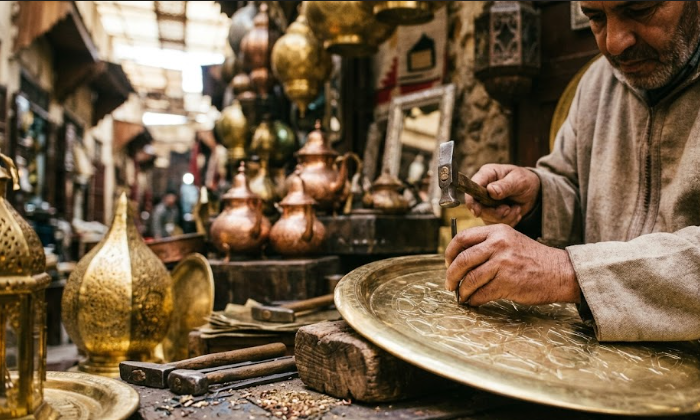
Understanding the metals used in artisanal decor will help you choose the best pieces for your interior style.
| Material | Unique Appearance | Popular Decor Uses |
| Yellow Brass | Warm golden shine with soft reflection | Pierced lanterns, mirrors, and tray tables |
| Red Copper | Rich reddish tone that ages gracefully | Teapots, bath basins, and wall platters |
| Wrought Iron | Dark, sturdy, and architectural | Window grilles, mirror frames, and patio sets |
| Maillechort | Silvery, sleek, and elegant sheen | Tea sets, sugar pots, and metal frames |
1. Yellow Brass (Al-Nahas Al-Asfar)
Yellow brass is the most popular material in Moroccan metal art. People love it for its warm golden color. In addition, brass is flexible enough for fine hand-piercing. As brass ages, it develops a natural antique patina that looks stunning in modern rooms.
2. Pure Copper (Al-Nahas Al-Ahmar)
Copper plays an important role in North African craftsmanship. People value copper for its warm reddish-pink tone. Moreover, artisans use it for kitchenware, bath basins, and large platters. Over time, unpolished copper naturally develops a beautiful rustic finish.
3. German Silver (Maillechort)
Maillechort is a traditional alloy of copper, nickel, and zinc. It offers a bright silver shine without the high cost of pure silver. Therefore, artisans use it to craft ceremonial tea trays, mirror frames, and luxury door handles.
4. Wrought Iron (Al-Hadid)
Artisans forge wrought iron over intense fires to create structural decor. Consequently, this material provides strong lines and solid structures. Craftsmen bend and hammer iron by hand to create intricate floral patterns and sturdy home items.
Signature Pieces of Moroccan Metal Art for Your Home
North African metalwork offers many beautiful items for your living spaces. Here are the most popular handcrafted pieces for home decor.
1. Hand-Pierced Brass Lanterns (Kandil)
Nothing creates atmosphere quite like a handcrafted lantern from the world of Moroccan metal art. Master artisans use tiny chisels and hammers to punch thousands of small holes into brass sheets. They form intricate geometric patterns and floral shapes.
When you light these lanterns from within, they project mesmerizing shadows across your walls. Consequently, they make excellent focal points for dining rooms, entryways, or outdoor patios.
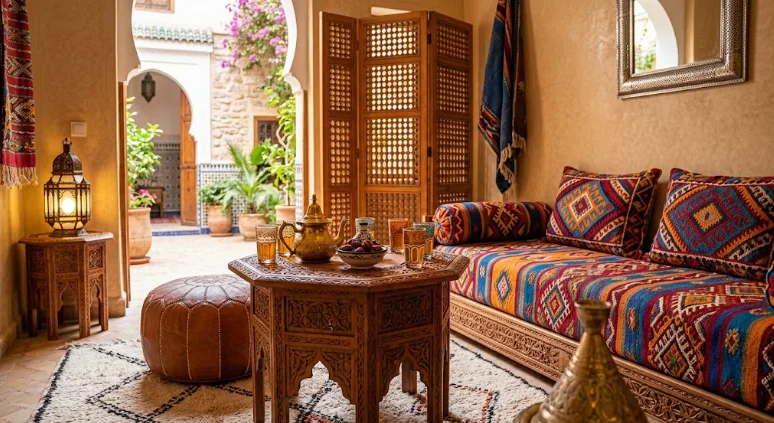
Styling Tip: Place your metal lanterns near textured Handwoven Moroccan Rugs or soft Moroccan Leather Poufs to create a cozy reading nook.
2. Engraved Teapots (Berrad) and Tea Trays (Siniya)
The Moroccan tea ritual represents hospitality. Naturally, these tea sets display exquisite metal craftsmanship.
- The Berrad Teapot: This traditional teapot features a long pouring spout and a dome lid. Artisans cover the exterior with hand-carved floral patterns.
- The Siniya Tray: This round brass tray features raised edges. Often, people place it on carved wooden legs to use it as a low coffee table.
Together, these items work as functional tea sets for entertaining guests. Furthermore, they serve as elegant display pieces on kitchen counters and sideboards.
3. Hammered Wall Mirrors (Miraya)
Wall mirrors are essential elements in authentic Moroccan metal art. Craftsmen craft frames from brass, nickel, or wrought iron. Often, these frames match the shape of Moorish archways (Bab). Because of this shape, they reflect natural light while adding architectural style to plain walls.
For an eclectic look, hang a metal mirror next to colorful ceramic plates or patterned tiles.
4. Hammered Copper and Brass Sinks
Brass and copper sinks are luxury favorites for kitchens and bathrooms. Each sink features thousands of subtle hammer marks. As a result, the surface reflects light in a soft, unique way that machine-made sinks cannot match.
Master Craftsmanship Techniques Behind Moroccan Metal Art
To appreciate handcrafted metalwork, you should understand the complex methods used by master artisans.
        +-------------------------------------------------+
        |           Raw Metal Sheet Selection             |
        +-------------------------------------------------+
                                |
                                v
        +-------------------------------------------------+
        |      Hand-Annealing & Flattening over Fire      |
        +-------------------------------------------------+
                                |
                                v
        +-------------------------------------------------+
        |      Pattern Drafting & Geometric Tracing       |
        +-------------------------------------------------+
                                |
        +-----------------------+-------------------------+
        |                                                 |
        v                                                 v
+-------------------------------+       +---------------------------------+
|   Repoussé & Chasing (Nqch)   |       |   Hand-Piercing (Thaqb)         |
|   (Relief & Engraved Detail)  |       |   (Perforated Light Patterns)   |
+-------------------------------+       +---------------------------------+
        |                                                 |
        +-----------------------+-------------------------+
                                |
                                v
        +-------------------------------------------------+
        |      Assembling, Soldering & Polishing          |
        +-------------------------------------------------+
1. Repoussé and Chasing (Al-Nqch)
First, the artisan uses repoussé. They hammer the metal from the back to push out raised patterns. Second, they use chasing. The craftsman works from the front with fine chisels to sharpen details and add texture around the design.
2. Hand-Piercing Methods (Al-Thaqb)
Artisans use small steel punches to cut tiny holes into metal sheets. However, this process requires patience and extreme accuracy. Indeed, a single wrong punch can ruin days of detailed work in Moroccan metal art.
3. Cold Hammering Techniques
Craftsmen shape heavy copper pots and sinks using cold hammering. First, they heat the metal over charcoal to soften it. After that, they hammer the metal over special anvils to form smooth, seamless curves.
How to Style Moroccan Metal Art in Modern Interiors
Artisanal metalwork is surprisingly versatile. Therefore, you do not need a fully bohemian home to use these decor accents. Here is how you can style Moroccan metal art in popular interior designs:
Minimalist Interiors
In simple spaces with neutral colors, one piece of metal decor makes a striking impact.
- Hang a large brass tray (Siniya) on a white wall as an abstract wall accent.
- Install a simple brass pendant light over your kitchen island for a touch of warm color.
Bohemian Spaces
Bohemian interiors focus on rich textures, warm colors, and unique travel pieces.
- Group three brass lanterns of different heights in a living room corner.
- Pair wrought iron mirror frames with green indoor plants and soft seating.
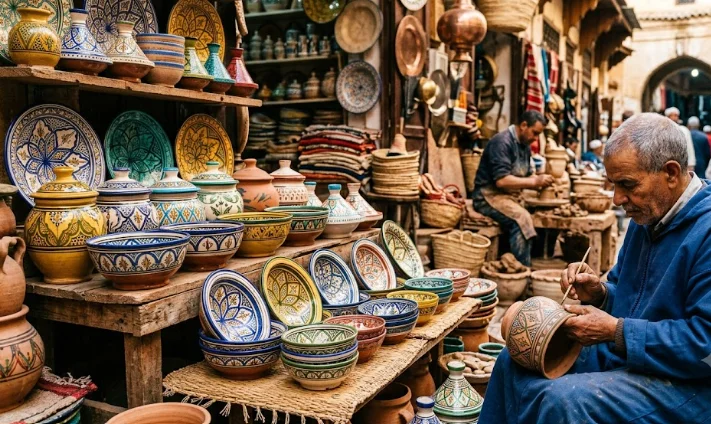
- In addition, mix warm brass trays with hand-painted ceramic pots.
Coastal Homes
Coastal designs look great with cool silver tones and warm copper elements.
- Use silver maillechort trays and bowls to reflect sunlight.
- Place an antique copper vase with dried branches on your entry console.
Spotting Authentic Pieces vs. Mass-Produced Counterfeits
Factory-made copies are common today. However, you can spot authentic Moroccan metal art by checking a few details:
- Check the Weight: Genuine handcrafted metalwork feels heavy and solid. Conversely, cheap factory imitations feel lightweight and bend easily.
- Inspect the Patterns: Machine-stamped decor shows identical patterns with no variations. On the other hand, authentic hand-pierced pieces feature slight human variations in punch spacing.
- Look at the Seams: Handcrafted items show visible hammer marks or silver solder joints. In contrast, factory pieces feature smooth machine welds or plastic coatings.
- Test the Tarnish: Real brass and copper age over time and give off a faint metallic scent when polished. However, plated plastic or fake metal will chip and peel over time.
Care and Cleaning Guide for Your Metal Decor
Proper maintenance ensures your handcrafted treasures stay beautiful for decades.
Cleaning Shiny Brass and Copper
If you like a bright, polished finish:
- Apply a gentle metal cleaner with a soft cloth.
- Alternatively, create a natural paste using lemon juice and baking soda. Apply it gently, wait for two minutes, rinse with warm water, and dry immediately.
Preserving Natural Antique Patina
If you prefer a dark, rustic look:
- Avoid harsh chemical cleaners and abrasive sponges.
- Dust your decor regularly using a soft brush to clean out small pierced holes.
- Rub a tiny drop of mineral oil onto the surface once a year to protect it from moisture.
Maintaining Wrought Iron
- Keep iron items dry to stop rust from forming.
- Clean outdoor iron furniture with mild soapy water. Afterwards, dry it completely and apply a clear protective wax coat each season.
Frequently Asked Questions About Moroccan Metal Art
What makes Moroccan metal art unique?
Moroccan metal art combines Amazigh tribal motifs, Andalusian geometry, and Islamic art. Furthermore, Moroccan crafts feature micro-punched hole patterns and unique local alloys like Maillechort.
Will my brass lantern rust over time?
Solid brass cannot rust. However, brass oxidizes naturally when exposed to air and humidity. If you prefer a bright look, quick polishing restores its original shine easily.
Can I use traditional teapots on a stove?
Traditional teapots made of brass or copper can handle direct heat. Nevertheless, check if your teapot is meant for brewing or purely for display before using it.
How do I remove dust from hand-pierced lanterns?
Pierced lanterns collect dust inside tiny holes. Therefore, use a soft paintbrush, a canister of compressed air, or a vacuum brush attachment to remove dust gently.
Is authentic Moroccan metal art eco-friendly?
Yes, Moroccan metal art is very sustainable. Artisans mostly use recycled brass and copper. Additionally, they work with simple hand tools and charcoal fires, which keeps carbon emissions extremely low.
Where can I buy authentic Moroccan metal decor?
You can buy genuine pieces directly from artisan cooperatives in Fez and Marrakech. Alternatively, you can order from specialized online stores that partner directly with verified Moroccan craftsmen.
Moroccan metal art is more than basic home decoration. It is a living tradition of culture, skill, and timeless design. Whether you hang a small brass lantern in your hallway or place an engraved copper tray on your coffee table, these handcrafted pieces add warmth, soul, and character to your home.