

Moroccan Rugs: Secrets to the Ultimate Shopping Trip
- Home Décor & Traditional Crafts Moroccan Crafts
 Maroc Fans
- 0
- 23 minutes read

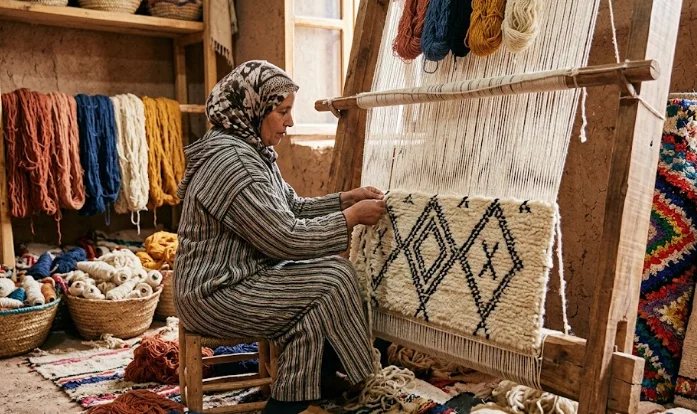
Moroccan rugs are far more than stylish home decor pieces. Indeed, they are living artifacts of cultural heritage, woven by hand through generations of Amazigh (Berber) women across the Atlas Mountains and rural regions of Morocco. Each knot tells a story, carrying symbolic motifs of protection, fertility, nature, and personal life journeys.
Whether you are navigating the bustling souks of Marrakech or browsing online boutiques from home, finding the perfect piece can feel overwhelming. Given the diverse regional styles, varying wool qualities, and synthetic machine-made imitations flooding the market, knowing how to spot true craftsmanship is essential.
Consequently, this comprehensive guide breaks down everything you need to know: the most famous styles, how to verify genuine hand-woven quality, fair pricing expectations, and essential care tips to make your investment last a lifetime.
Why Authentic Moroccan Rugs Are Unique
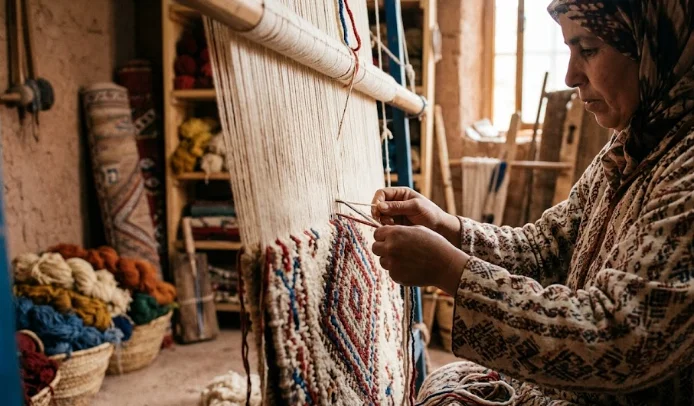
Unlike factory-made carpets produced on industrial looms, traditional Moroccan rugs are crafted entirely by hand using vertical wooden looms.
Craftsmanship Process:
Hand-Spun Wool / Upcycled Fabrics ➔ Natural Dyes ➔ Hand-Knotting ➔ Washing & Sun Drying
Several key factors explain what sets them apart:
- 100% One-of-a-Kind Designs: Weavers work from memory and personal artistic intuition rather than printed templates. As a result, no two authentic pieces are ever identical.
- Natural Materials: Traditional artisans rely exclusively on high-grade, hand-spun sheep’s wool, unbleached cotton, or recycled textiles.
- Cultural Heritage: Furthermore, the geometric symbols, diamond patterns, and abstract motifs form an ancient visual language preserved across generations.
Top Types of Moroccan Rugs
Before starting your search, it helps to understand the distinct styles originating from different geographic regions of Morocco.
1. Beni Ourain Moroccan Rugs
- Origin: Middle Atlas Mountains
- Style: Plush, thick pile crafted with natural ivory or cream wool and simple black or dark brown geometric diamond lines.
- Best For: Scandinavian, contemporary, and minimalist living rooms or bedrooms.
- Characteristics: These carpets are exceptionally soft underfoot because they are made from high-grade virgin wool, which was originally designed to protect against harsh mountain winters.
2. Boucherouite Moroccan Rugs
- Origin: Rural Moroccan communities
- Style: Vibrant, eco-friendly rag rugs crafted from upcycled fabric scraps (cotton, yarn, wool, and colorful textiles).
- Best For: Eclectic interiors, children’s rooms, entryways, or bold pop-of-color accents.
- Characteristics: They offer highly artistic and vibrant color compositions. Moreover, they remain remarkably durable and easy to clean.
3. Azilal Moroccan Rugs
- Origin: Azilal region, High Atlas Mountains
- Style: Single-knot wool construction featuring a neutral cream background decorated with vibrant abstract or geometric tribal symbols.
- Best For: Creative interiors, art lovers, and bohemian spaces.
- Characteristics: This style expertly combines the plush comfort of a Beni Ourain with the expressive color play of dyed wool.
4. Boujad Moroccan Rugs
- Origin: Haouz region (Central Morocco)
- Style: Warm color palettes featuring rich shades of pink, red, orange, deep purple, and terracotta.
- Best For: Cozy seating areas, dining spaces, and artistic focal points.
- Characteristics: Over time, these pieces often age gracefully into soft pastel tones. Additionally, they feature looser geometric patterns and medium piles.
5. Zanafi & Kilim Moroccan Rugs (Flat-Weaves)
- Origin: High Atlas and Anti-Atlas regions
- Style: Flat-woven without a plush pile, typically displaying crisp black-and-white or multicolored geometric motifs.
- Best For: High-traffic areas, dining rooms, warm climates, and placement under heavy furniture.
- Characteristics: Lightweight and reversible, these thin textiles are highly durable for daily use.
Comparison Table: Choosing Moroccan Rugs
| Style | Primary Material | Pile Height | Primary Color Palette | Ideal Room Location |
| Beni Ourain | 100% Sheep’s Wool | High / Thick | Cream, Off-White, Dark Brown | Bedroom, Living Room |
| Azilal | Wool & Natural Dyes | Medium | White base + Multicolor motifs | Living Room, Creative Spaces |
| Boujad | Wool | Low to Medium | Pink, Red, Orange, Terracotta | Living Room, Dining Room |
| Boucherouite | Recycled Fabrics | Variable | Multicolored / Rainbow | Kitchen, Nursery, Entryway |
| Kilim / Zanafi | Wool or Cotton | Flat-weave (No pile) | Black, White, Earth Tones | High-traffic zones, Dining |
How to Spot Authentic Moroccan Rugs vs. Machine Replicas
As demand for authentic decor has grown worldwide, synthetic factory reproductions have become increasingly common. Therefore, here is how you can inspect a carpet like an expert:
1. Inspect the Knots on the Back
First, flip the carpet over. On a real hand-knotted piece, the knots will feature slight variations in size, alignment, and tension. Conversely, perfect mechanical uniformity across identical rows indicates machine manufacturing.
2. Examine the Fringe of Moroccan Rugs
On authentic pieces, the fringe is a natural extension of the warp threads running through the structure. Frequently, traditional items only have fringe on one end (where the weaver finished the piece). However, if the fringe is sewn on separately as a border strip, it is definitely a factory production.
3. Material Verification
Authentic products rely on natural wool or recycled cotton blends, whereas synthetic replicas rely heavily on polypropylene or polyester.
The Burn Test (In-Person Souk Tip):
Gently pull a loose fiber from the reverse side and light it carefully with a flame. Pure wool burns slowly, smells like burnt hair, and leaves a dark ash. In contrast, synthetic fibers melt quickly into a hard plastic bead while producing chemical smoke.
4. Feel the Texture and Weight
Real wool has a substantial weight and feels supple due to natural lanolin. Thus, if a plush carpet feels artificially slick, weightless, or squeaky between your fingers, it is almost certainly made of synthetic yarn.
Sizing and Room Placement for Moroccan Rugs
Selecting the right dimensions ensures your piece anchors your space in a balanced and proportional way.
+-----------------------------------------------------------+
|                      LIVING ROOM                          |
|   +---------------------------------------------------+   |
|   |                   SOFA / COUCH                    |   |
|   |   +-------------------------------------------+   |   |
|   |   |           RUG (Front Legs On)             |   |   |
|   +---|-------------------------------------------|---+   |
|       |              COFFEE TABLE                 |       |
|       +-------------------------------------------+       |
+-----------------------------------------------------------+
- Living Room: Aim for a layout where at least the front legs of your seating sit comfortably on the textile (typically 8×10 ft or 9×12 ft).
- Bedroom: Position a large option (8×10 ft) perpendicular under the lower two-thirds of a Queen or King bed. Alternatively, frame the sides with two matching vintage runners.
- Hallways & Kitchens: Long Amazigh runners (typically 2.5 to 3 ft wide by 8 to 12 ft long) add texture while offering acoustic dampening to high-foot-traffic corridors.
Price Expectations for Moroccan Rugs
Pricing varies based on age (vintage vs. contemporary), knot density, material quality, and overall dimensions.
- Small Accent / Boucherouite (3×5 ft): $100 – $250
- Medium Vintage or New Wool (5×8 ft): $300 – $700
- Large Authentic Beni Ourain / Boujad (8×10 ft+): $800 – $2,500+
- Rare Antique Collector Pieces: $3,000+
Shopping Tip: If you are purchasing directly in local souks, polite bargaining is expected. Generally, you should start negotiating around 40–50% below the merchant’s initial opening quote, working gradually toward a fair middle ground.
Maintenance: Keeping Moroccan Rugs in Peak Condition
With basic care, high-quality Moroccan rugs can easily last for generations.
Regular Care Routine
- Shaking Out: Taking your carpet outdoors every few weeks to shake out loose dust and sand remains the most effective traditional technique.
- Vacuuming: Vacuum across the width (not the length) without using a high-powered rotating beater bar. Otherwise, you risk snagging hand-tied knots and pulling at fringes.
Spot Cleaning Techniques
- Treat spills immediately by blotting (never rubbing) liquid using clean paper towels or a dry cloth.
- Next, clean gently with lukewarm water mixed with a few drops of mild wool detergent or neutral baby shampoo.
- Finally, elevate the cleaned section so air can circulate underneath until completely dry, preventing moisture buildup.
Professional Deep Cleaning
Wash wool textiles professionally every 2 to 4 years. Furthermore, ensure the specialists use dedicated wool-washing techniques rather than harsh dry-cleaning chemicals.
Where to Buy Authentic Moroccan Rugs
- In Morocco (Marrakech, Fez, Essaouira): Purchasing directly from artisanal cooperatives or established carpet houses allows you to inspect weave texture and weight in person.
- Direct-to-Consumer Brands: Choose businesses that partner directly with rural weaving cooperatives, thereby providing fair wages and transparent sourcing.
- Vintage Dealers: Specialized interior decor boutiques and curated vintage marketplaces offer verified antique options with established provenance.
Frequently Asked Questions (FAQ)
1. Do authentic Moroccan rugs shed?
Yes, high-pile wool items naturally shed fine fibers during their first few months of use. However, regular and gentle vacuuming without a beater bar will significantly reduce shedding over time.
2. What distinguishes vintage Moroccan rugs from new ones?
A piece is generally considered vintage if it is over 20 to 30 years old. Additionally, vintage items typically feature a soft color patina, organic wear, and supple hand-spun wool, whereas new versions showcase brighter hues and crisp backgrounds.
3. Are Moroccan rugs suitable for homes with pets and kids?
Absolutly. Natural sheep’s wool contains lanolin, which provides inherent stain resistance and durability. Consequently, flat-weave Kilims or colorful Boucherouite styles are especially practical for active households.
4. How can I tell if a Beni Ourain rug uses natural wool?
Real Beni Ourain pieces feature warm cream or off-white tones rather than brilliant bleached white. Besides inspecting the reverse side for knot variations, you can perform a quick flame test on a loose strand.
5. Why do many Moroccan rugs only have fringe on one end?
Traditionally, weavers secure their warp threads at the bottom of the loom before weaving upward. Once complete, the upper loops are cut to release the carpet, which creates a fringe on the top edge while the bottom edge remains braided.
6. Can I wash Moroccan rugs in a standard washing machine?
Standard wool options should never be placed in a washing machine, as hot water and heavy spin cycles cause severe shrinkage. On the other hand, small Boucherouite rag rugs made from cotton scraps can occasionally handle a delicate cold cycle.
7. How do I transport large Moroccan rugs home from Morocco?
Most established carpet shops regularly ship internationally via DHL, FedEx, or UPS. Specifically, they compress, vacuum-seal, and package your purchase, delivering it directly to your home address within 5 to 10 business days.
Final Thoughts
Investing in authentic Moroccan rugs means bringing an enduring piece of heritage, artistic tradition, and tactile warmth into your home. By understanding regional styles, evaluating hand-knotted construction, and practicing proper care, you can select a central decor piece that enhances your interior space for decades to come.