

Safi Pottery: Secrets to the Ultimate Shopping Trip
- Moroccan Crafts Pottery & Zellige
 Maroc Fans
- 0
- 14 minutes read

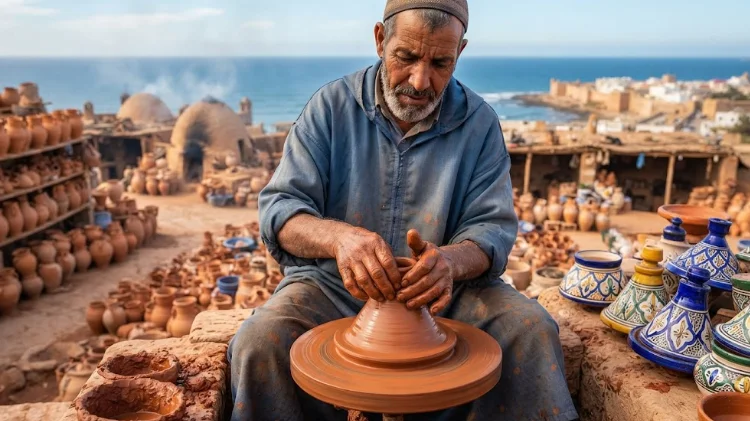
Have you ever admired a glazed tagine, a colorful bowl, or a painted plate in the souks of Marrakech, Fes, or Casablanca? Chances are, that piece was born in Safi. Nestled along Morocco’s Atlantic coast, Safi is an industrial port city with a rich heritage. It holds a prestigious title: the ceramic capital of Morocco. Fes is famous for fine blue-and-white porcelain and intricate zellige tiles. However, Safi stands apart with bold, expressive earthenware. Here, daily life revolves around the potter’s wheel, wet red clay, and wood-fired kilns. This guide explores the history, styles, and craft of Safi pottery. Discover why this ancient art form still captivates travelers today.
The History and Heritage of Safi Pottery
Moroccan pottery roots go back thousands of years. The art combines Berber traditions, Islamic designs, and Andalusian influences.
Safi’s position as an Atlantic port gave its ceramics a global touch. During the Almohad and Marinid dynasties, Safi became a key trading hub. Later, the Portuguese occupation in the 15th century added new commercial links. Today, the old Portuguese citadel (the Kechla) houses Morocco’s National Ceramics Museum.
For centuries, master artisan families (maalems) passed down their secrets. They taught their children unique glazing recipes, layouts, and throwing skills. What started as simple cooking pots grew into a world-famous art form.
Colline des Potiers: The Epicenter of Safi Pottery
You cannot explore Safi pottery without visiting Colline des Potiers (The Potters’ Hill). Overlooking the ocean, this neighborhood is the heart of the local craft scene.
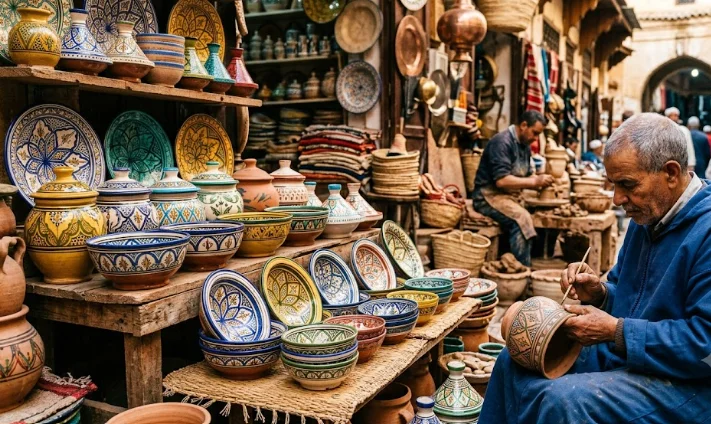
Walking through the hill feels like stepping back in time. Dozens of family workshops cling to the slopes. Smoke rises from domed kilns. Artisans sit on the ground, turning red clay into art with traditional potter’s wheels.
The setting is raw and real. Unlike tourist shops in big medinas, these workshops offer an authentic look at the potter’s craft.
Unique Characteristics of Safi Pottery
What makes Safi pottery stand out? Unlike other regional styles, Safi ceramics feature distinct colors, motifs, and metalwork.
1. The Iconic Color Palette
Traditional Safi ceramics rely on bright, natural colors:
- Cobalt Blue and Black: Deep blue lines paired with black geometric accents create a classic look.
- Saffron Yellow and Ochre: Warm yellows reflect the Moroccan sun.
- Copper Greens and Earthy Browns: Natural mineral oxides give these pieces their organic tones.
2. Metal Inlay Techniques
Safi potters often incorporate metal wire—like tin or copper—into etched grooves on the clay surface. Artisans carve patterns, fill them with glazes or metal details, and fire the piece. This creates a striking mosaic contrast.
3. Bold Geometric and Floral Motifs
Fes pottery uses fine, delicate floral lines. In contrast, Safi pottery is bold and dynamic. Look for geometric stars, fish scales, sunbursts, and traditional Berber zig-zags.
The Step-by-Step Safi Pottery Production Process
Creating Safi pottery takes time, physical skill, and patience. Every single piece is shaped by hand.
[ Clay Extraction ] ➔ [ Sifting & Kneading ] ➔ [ Wheel Throwing ] ➔ [ First Firing ] ➔ [ Glazing & Painting ] ➔ [ Second Firing ]
- Clay Sourcing: Artisans harvest iron-rich red clay from local coastal deposits. They wash, sift, and knead the clay to make it smooth.
- Shaping on the Wheel: The potter places clay on the wheel, shaping tagines, vases, and plates by hand.
- Drying: Fresh pieces dry in the sun until they reach a firm, “leather-hard” state.
- First Firing (Bisque): Dried items go into kilns heated between 900°C and 1,200°C to harden.
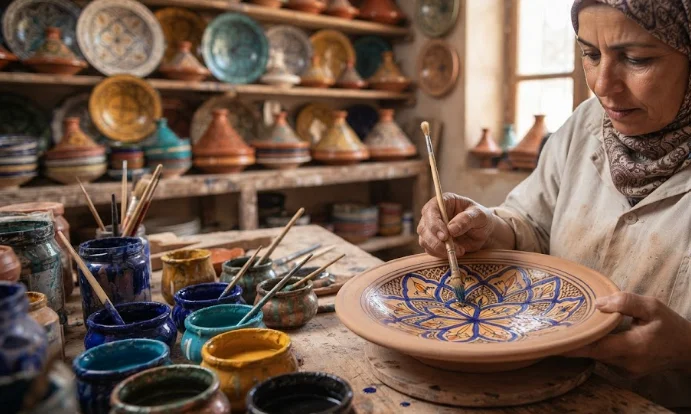
- Glazing and Hand-Painting: Painters apply custom glazes made from mineral oxides. They paint complex designs freehand without stencils.
- Final Glaze Firing: A second high-heat firing melts the glaze, creating a glossy, waterproof finish.
Safi Pottery vs. Other Moroccan Ceramic Hubs
Here is how Safi pottery compares to other famous Moroccan craft centers:
| Region | Primary Clay Type | Signature Color Scheme | Artistic Style & Focus |
| Safi | Red Terracotta | Cobalt Blue, Yellow, Black | Bold earthenware, metal inlay, geometry |
| Fes | White Kaolin / Fine Clay | White & Deep Cobalt Blue | Refined, intricate botanical patterns |
| Tamegroute | Rustic River Clay | Deep, Iridescent Dark Green | Raw, rustic, highly textured, natural flaws |
| Salé & Tetouan | Mixed Local Clays | Multicolored Polychrome | Blend of urban elegance and folk utility |
Buying and Caring for Safi Pottery
Bringing Safi ceramics into your home adds a piece of Moroccan heritage to your space. Here is how to choose and maintain your collection.
Tips for Buying Authentic Safi Pottery
- Shop Direct: Visit the workshops on Colline des Potiers. You can buy museum-quality pieces at lower prices than in tourist centers.
- Check the Base: Master artisans often sign their work. Look for signatures from famous pottery families like the Serghinis.
- Confirm Use: If you plan to cook with a tagine, make sure it is made for heat. Decorative glazes can crack on stoves.
Care and Maintenance for Safi Ceramics
- Wash by Hand: Avoid dishwashers. Wash your ceramics gently with warm water and mild soap.
- Avoid Sudden Temperature Changes: Do not move glazed pieces directly from cold storage to high heat. Rapid shifts can crack the glaze.
Frequently Asked Questions (FAQ)
1. What makes Safi pottery different from Fes pottery?
Safi pottery uses red clay, bold colors, and metal inlays. Fes pottery uses fine white clay with delicate blue-and-white patterns.
2. Is Safi pottery safe for serving food?
Yes. Traditional Safi serving bowls use non-toxic, food-safe glazes. However, always keep items marked “decorative only” away from food.
3. Can I cook with a Safi tagine on a stove?
Only if the tagine is specifically made for cooking. Always use a heat diffuser on gas burners to prevent thermal cracking.
4. Where is the main pottery district in Safi?
The main district is Colline des Potiers (The Potters’ Hill). It sits near the historic medina and overlooks the Atlantic Ocean.
5. Are all Safi ceramics handmade?
Yes. From kneading raw red clay to hand-painting and firing, every step relies on skilled artisans.
6. What are the signature colors of Safi pottery?
Signature colors include cobalt blue, charcoal black, saffron yellow, copper green, and natural terracotta red.
7. Can I visit the workshops in Safi?
Yes! Visitors are welcome at Colline des Potiers to watch potters work on traditional wheels and kilns.
8. How should I clean my Safi ceramic items?
Wash pieces by hand with warm water and mild soap. Avoid harsh scrubbers and extreme temperature shifts.