

Moroccan Handicrafts: Heart of the Medinas
- Moroccan Crafts Moroccan Culture Morocco Guide
 Maroc Fans
- 0
- 9 minutes read

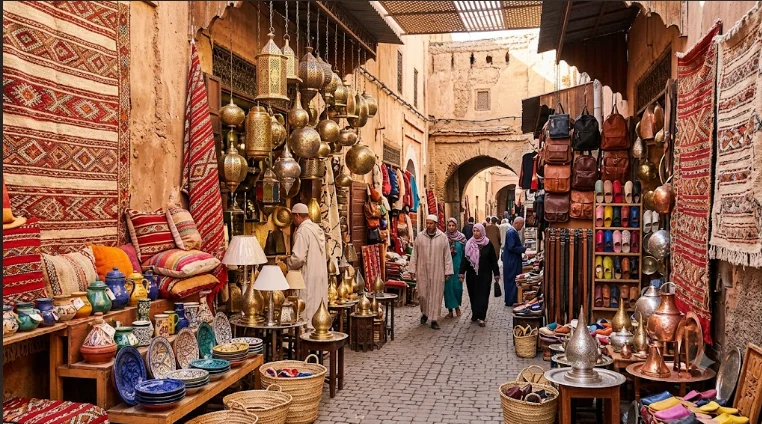
If you have ever wandered through the bustling alleys of a medina in Marrakech, Fez, or Essaouira, you were instantly captivated by an explosion of colors, textures, and aromas. Indeed, at the very center of this living spectacle lies a national treasure: Moroccan handicrafts (or Artisanat Marocain). Far more than the mere production of utilitarian or decorative objects, craftsmanship in Morocco reflects a thousand-year-old history. Consequently, it stands as a crossroads of Berber, Arab, Andalusian, and African civilizations, representing a family heritage passed down from generation to generation.
Why do Moroccan handicrafts fascinate people all over the world so deeply? How do artisans manage to preserve ancestral techniques while adapting to contemporary interior design trends? Therefore, let’s embark on a sensory and cultural journey to the heart of Moroccan handmade artistry.
The Essential Pillars of Moroccan Handicrafts
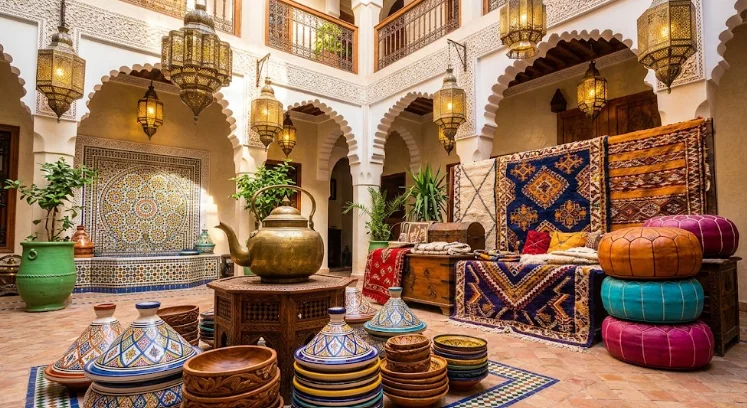
Moroccan handicrafts encompass a multitude of disciplines, each tied to a specific region, raw material, and unique know-how. In fact, here are the most iconic expressions of this art form.
1. The Moroccan Rug: A Story Woven by Hand
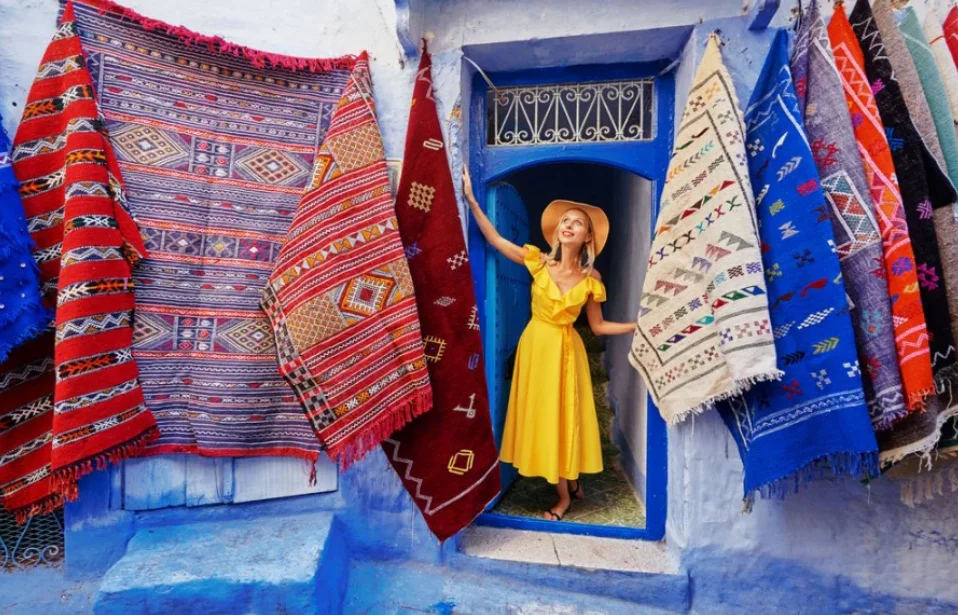
The Moroccan rug is probably the most famous ambassador of the country’s culture worldwide. In general, there are two main categories:
- The Berber Rug (such as the famous Beni Ourain or Azilal): Made in the Atlas Mountains, it is woven from pure virgin wool. Moreover, its minimalist, geometric black or brown patterns on a cream background tell the life stories, daily routines, and emotions of the weaver. Thus, every single piece is a unique work of abstract art.
- The Urban Rug (such as the Rabat rug): More structured, it draws inspiration from Oriental and Andalusian patterns. For instance, it features a central medallion and bright colors like royal blue, deep red, or vibrant green.
2. Pottery and Zellige: Mastering Earth and Fire
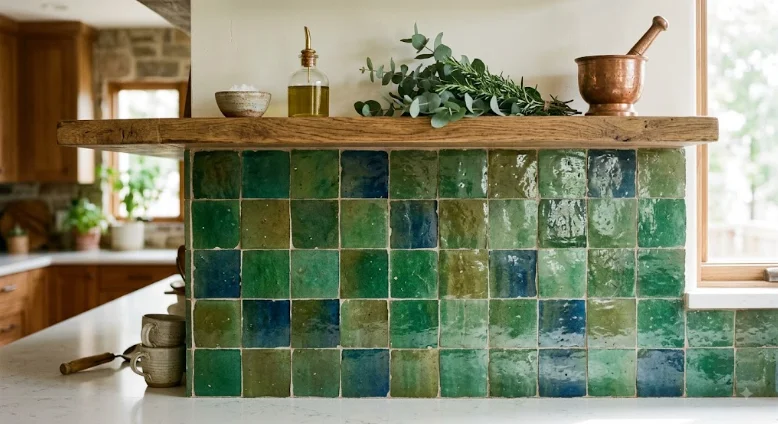
From the iconic blue pottery of Fez to the vibrant ceramics of Safi, Moroccan terracotta combines utility with aesthetics. Furthermore, Zellige—the mosaic of colored terracotta tile chips individually hand-cut by master artisans—is the crown jewel of Islamic and Moroccan architecture. As a result, found on fountains, riad walls, and palaces, it showcases mind-boggling mathematical precision.
3. Leatherwork: The Heritage of Bab el-Makina
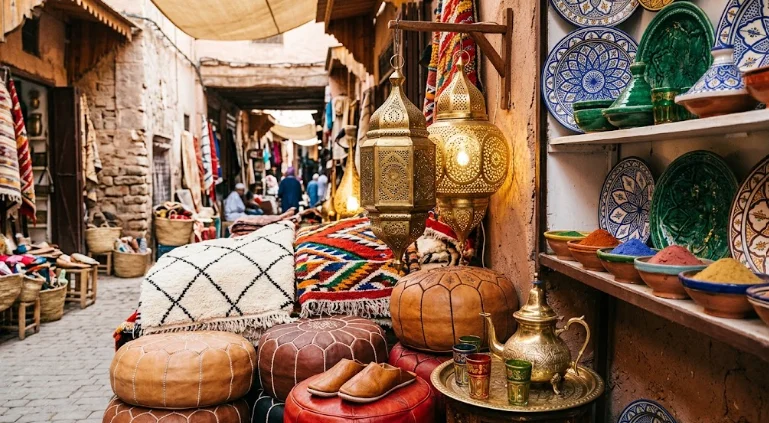
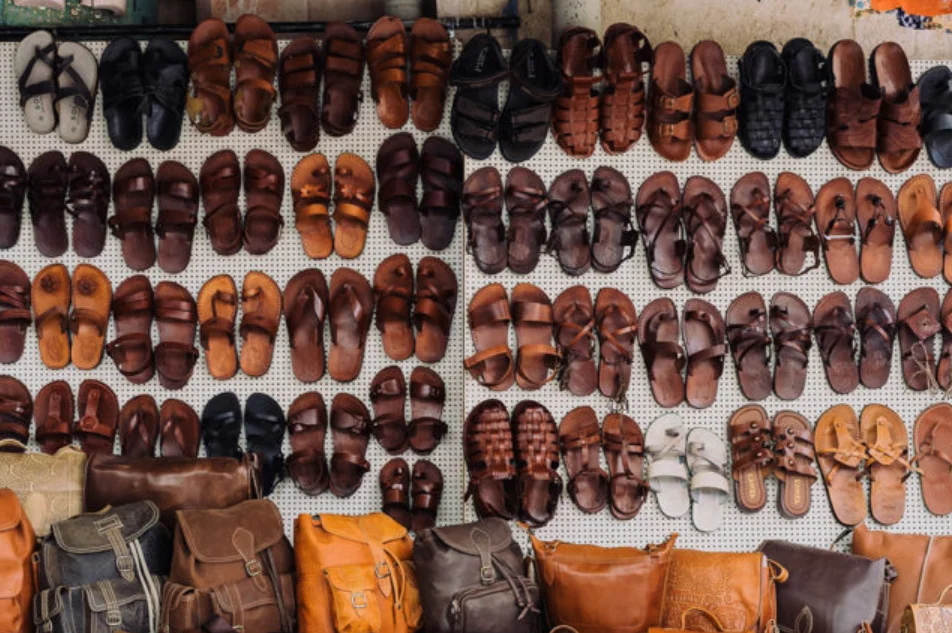
The traditional tanneries of Fez (such as the Chouara Tannery) operate today exactly as they did in the Middle Ages. In addition, poufs, slippers (babouches), bags, and jackets are fashioned from incredibly supple goat, sheep, or camel leather. Subsequently, they are dyed using natural pigments like poppy, indigo, and saffron.
4. Metalwork and Copperware: Chiseled Light
Copper, brass, and wrought iron come to life under the metalworker’s hammer. Specifically, Moroccan lanterns, intricately pierced with thousands of tiny holes, project magical, starry shadows onto walls as soon as a lightbulb or candle is placed inside. Undoubtedly, it is the ultimate element for creating a warm, cozy atmosphere.
Why Moroccan Handicrafts Dominate Modern Interior Design
In recent years, Moroccan handicrafts have undergone a true revolution. No longer confined to local souvenir stalls, they have established themselves as an absolute reference in the international interior design world (Boho chic, warm minimalism, ethnic style).
First of all, the secret charm lies in perfect imperfection. In an era of mass industrial production, people crave authenticity. For example, an irregularity in the weave of a rug or a slight color variation on a zellige tile proves that the object has a soul.
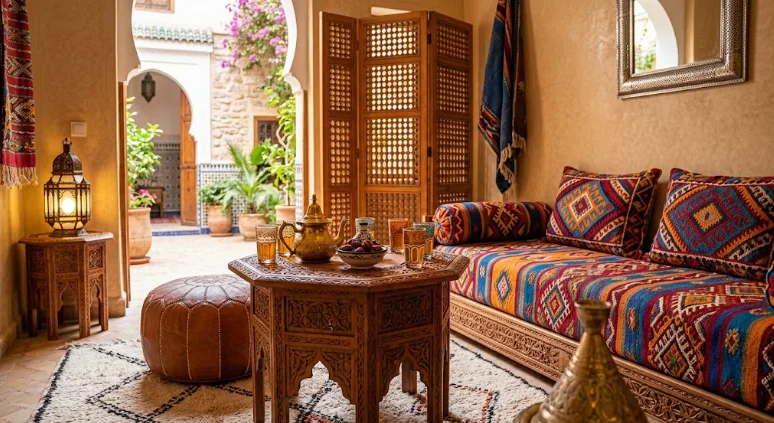
Secondly, contemporary designers increasingly collaborate with master artisans (Maâlems) to clean up lines, modernize color palettes, and adapt formats to Western homes. Consequently, a raw leather pouf or a Beni Ourain rug now easily finds its rightful place in a Parisian loft, a Scandinavian apartment, or a Californian villa.
A Vital Economic and Social Sector
Behind the sheer beauty of these objects lies a crucial human reality. Crucially, Moroccan handicrafts support millions of families in Morocco. The sector accounts for a significant share of the national GDP. Meanwhile, it serves as a vital safeguard against rural exodus, particularly for women in rural areas who gather in cooperatives to weave rugs or produce argan oil.
In addition to this, supporting Moroccan craftsmanship means embracing fair trade and sustainable development. Because the materials used are predominantly natural (wool, clay, leather, thuya wood), the manufacturing processes have a very low carbon footprint, relying almost entirely on human energy and traditional hand tools.
How to Spot Authentic Moroccan Handicrafts
Given the global success of Moroccan handicrafts, industrial counterfeits (often mass-produced in factories abroad) flood the market. Therefore, to buy ethically and authentically, keep these tips in mind:
- The Smell and Touch: A real wool rug smells like natural wool, not synthetic plastic. Similarly, genuine Moroccan leather has a distinct, rich smell that beautifully bellows over time.
- The Irregularities: If every single pattern on a ceramic plate or a wicker basket is mathematically identical to the millimeter, be skeptical. On the contrary, handcrafted items always feature subtle human variations.
- The Flip Side: Always look at the back of a rug or textile. Indeed, uneven knots and loose threads are the undeniable signature of genuine manual work.
Embracing the Soul of Ancestral Artistry
Moroccan handicrafts are not an art form frozen in the past; rather, they are a living, breathing tradition that constantly reinvents itself. By welcoming a piece of Moroccan craft into your home, you aren’t just buying a decorative object. Instead, you are adopting a piece of history, a fragment of Moroccan sunshine, and the soul of an artisan who spent days, sometimes months, bringing your piece to life. Ultimately, it is an invitation to travel the world, right from the comfort of your living room.