
Moroccan Babouche – Tradition, style, and comfort
- Moroccan Crafts Moroccan Culture Morocco Guide
 Maroc Fans
- 0
- 9 minutes read

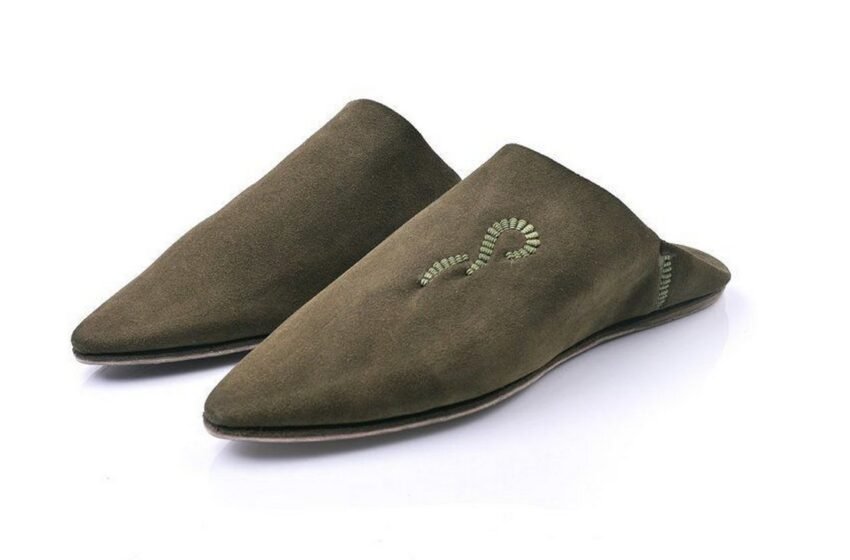
Moroccan Babouche are a symbol of Moroccan culture and craftsmanship, combining comfort, elegance, and authenticity. They accompany Moroccans in their daily lives and on special occasions, and appeal to an international audience for their unique style and artisanal quality.
History and cultural heritage of the babouche
Babouches originated in Morocco’s imperial cities such as Fez, Marrakesh, and Meknes, where they were initially worn by the elite and royal families.
- Handcrafted from high-quality leather, they symbolize social status and local craftsmanship.
- Today, they are internationally recognized and offered as cultural souvenirs.
💡 Fun fact: Some traditional slippers are decorated with Amazigh motifs, telling a local story.
The different models of slippers
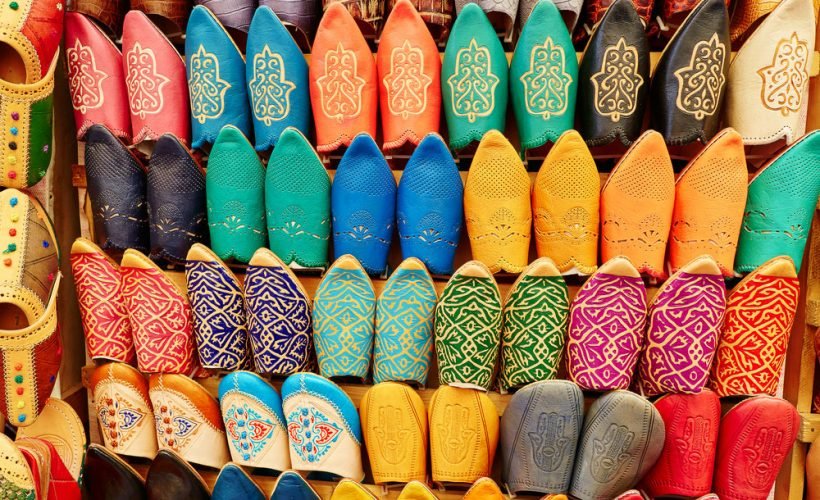
- Classic leather slippers – Soft and comfortable for everyday use.
- Colorful embroidered slippers – Ideal for traditional ceremonies and celebrations.
- Open-toe slippers or mules – Modern and practical for summer.
- Contemporary slipper – A fusion of tradition and Western style.
How to wear Moroccan slippers
- With a caftan or gandoura for traditional celebrations.
- With jeans or casual pants for a modern look.
- Choosing the right size is essential because slippers are flexible and adapt to the foot.
Where to buy authentic Moroccan slippers
- Souks and traditional markets: Marrakech, Fez, Essaouira.
- Online craft shops for international customers.
- Check the quality of the leather and the finish: a sign of genuine Moroccan craftsmanship.
Moroccan slippers and tourism
- Discover the leather workshops in Fez.
- Option to customize your pair with colors and patterns.
- Buying slippers becomes a vivid and authentic memory.
Why Moroccan slippers are captivating the world
- Exceptional comfort
- Unique crafts
- Fashion and tradition
- Cultural memory
💡 Bonus: Some vegan or synthetic leather models are now available for the international market.
FAQs about Moroccan slippers
Q1 : What is a Moroccan babouche?
It is a traditional leather shoe, soft and comfortable, a symbol of Moroccan craftsmanship.
Q2 : What are the different types of slippers?
Classic, embroidered, open-toe/mule, and contemporary, suitable for all occasions.
Q3 : Where can I buy authentic babouche slippers?
In Moroccan souks and markets or in online craft shops.
Q4 : How to wear Moroccan slippers?
With traditional clothing such as a caftan, or in a modern way with jeans or casual pants.