

Moroccan Handcrafted Furniture: Styles & Buying Guide
- Home Décor & Traditional Crafts Moroccan Crafts
 Maroc Fans
- 0
- 25 minutes read

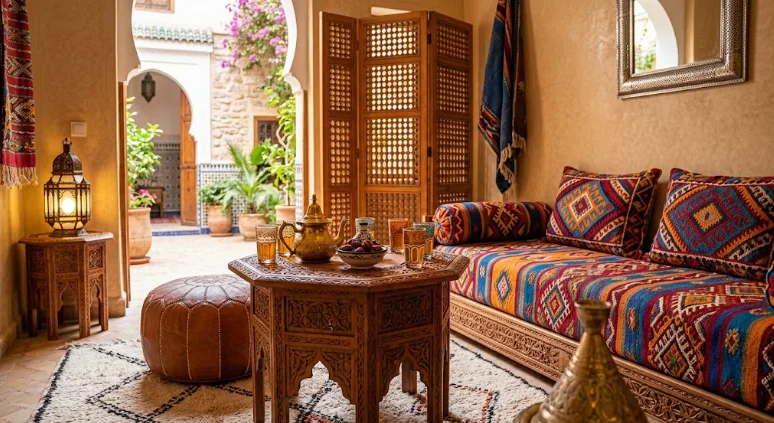
Moroccan interior design is globally celebrated for its warmth, intricate detail, and deep cultural heritage. At the absolute heart of this aesthetic lies Moroccan handcrafted furniture—a centuries-old trade preserved by master artisans across historic medinas from Marrakech to Fes. Far from mass-produced seasonal trends, genuine Moroccan furniture offers timeless character, exceptional longevity, and unmatched soul.
Whether you are designing an authentic bohemian lounge, adding a subtle Mediterranean accent to a modern living room, or outfitting a luxury riad-style patio, navigating the rich world of Moroccan craftsmanship requires an understanding of traditional styles, native materials, and modern quality standards. This comprehensive guide breaks down everything you need to know to identify, select, and care for authentic Moroccan handcrafted furniture.
1. The Heritage of Moroccan Handcrafted Furniture
The story of Moroccan handcrafted furniture is rooted in the history of the Maâlem (master artisan). For generations, craft techniques have passed orally and practical hands-on apprenticeship from master to student within guild-like workshops in cities like Fes, Marrakech, Essaouira, and Meknes.
Moroccan furniture design represents a unique cultural crossroads where several historic influences converge:
- Amazigh (Berber) Traditions: Primitive geometric patterns, raw wood carving, robust organic forms, and functional simplicity originating from the Atlas Mountains.
- Andalusian-Arab Aesthetics: Intricate geometric woodwork (Moucharabieh), elaborate bone and mother-of-pearl inlays, fluid arabesques, and vibrant paintwork brought to North Africa during the Moorish period.
- Saharan & Sub-Saharan Influences: Leatherwork, hammered metal finishes, and bold textural contrasts crafted for nomadic utility and resilience.
Unlike modern Western furniture designed around rigid structural symmetry, classic Moroccan pieces emphasize handcrafted texture, functional versatility, and intricate ornamentation. A single piece—such as a hand-carved cedar trunk or an inlaid tea table—often requires hundreds of hours of manual work using hand chisels, traditional kilns, and manual metal-smithing tools.
2. Key Architectural & Furniture Styles
When exploring Moroccan handcrafted furniture, you will encounter distinct stylistic categories rooted in specific regions, historic eras, and functional purposes.
Zouak (Hand-Painted Woodwork)
Zouak is the ancient art of painting intricate geometric and floral arabesques onto wood surfaces. Artisans apply natural pigments directly onto regional woods like cedar, fir, or poplar.
- Key Characteristics: Deep cobalt blues, saffron yellows, emerald greens, and terracotta reds outlined in black or gold detailing.
- Common Uses: Ceilings, room dividers, armoires, daybed frames, and decorative wall mirrors.
- Best Fit: Bohemian, maximalist, and classic Andalusian-Moroccan interiors.
Moucharabieh (Latticework)
Originating as a functional architectural solution to provide ventilation while maintaining privacy in private residences, Moucharabieh consists of hundreds of hand-turned wood joints assembled into complex lace-like screens.
- Key Characteristics: Delicate geometric patterns, light play, structural transparency.
- Common Uses: Room dividers, headboards, cabinet doors, and window shutters.
- Best Fit: Contemporary interiors seeking architectural texture and subtle light filtration.
Bone & Mother-of-Pearl Inlay
A hallmark of coastal and luxury urban furniture crafting (particularly prominent in Fes and Marrakech), bone inlay involves meticulously carving small pieces of camel bone, wood, or iridescent mother-of-pearl and embedding them into solid wood frames.
- Key Characteristics: High contrast, intricate repeated tile-like motifs, luxurious tactile finish.
- Common Uses: Console tables, side tables, mirror frames, and chest of drawers.
- Best Fit: Modern glam, eclectic, and transitional interiors.
Berber / Atlas Primitive Style
Originating in the High Atlas regions, Moroccan handcrafted furniture in the Berber style prioritizes raw durability, natural organic shapes, and minimalist geometric carving over heavy paint or polish.
- Key Characteristics: Unstained or lightly oiled woods, visible joinery, heavy structural legs, tribal motifs.
- Common Uses: Low benches, stools (khbiza), solid wood dining tables, and storage chests.
- Best Fit: Rustic, Japandi, Wabi-Sabi, and modern Scandinavian interiors.
Hammered Metalwork & Zellige Fusion
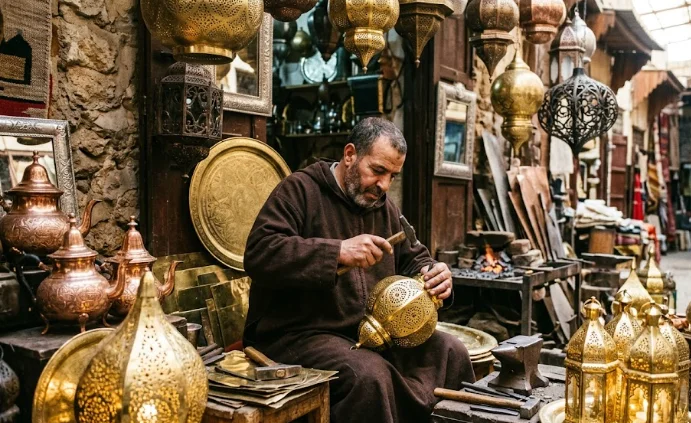
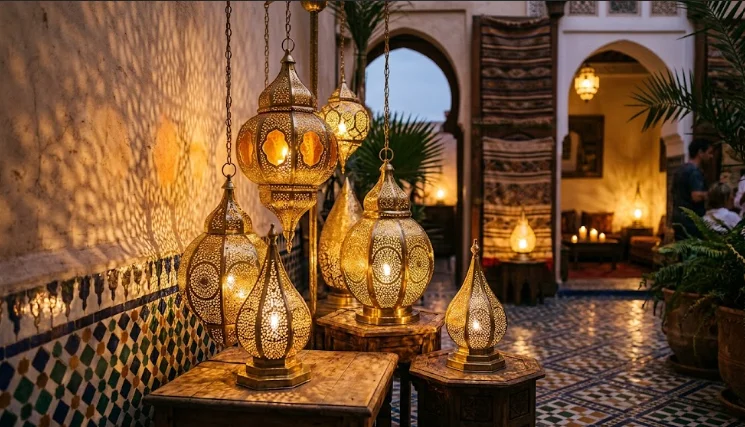
Metal furniture crafting leverages Morocco’s famed brass, copper, and wrought iron trades. Frequently, hammered metal frames are combined with Zellige (hand-cut geometric ceramic tiles) to produce iconic outdoor and dining furniture.
- Key Characteristics: Intricate filigree piercing, hand-chased relief work, weatherproof tile mosaics.
- Common Uses: Bistro tables, patio seating, lantern bases, and tea service trays.
- Best Fit: Mediterranean gardens, sunrooms, and indoor-outdoor dining areas.
3. Traditional Materials in Moroccan Handcrafted Furniture
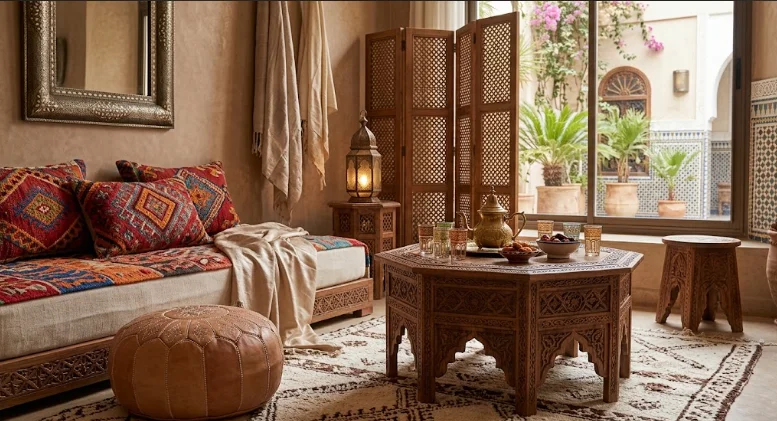
The quality and value of Moroccan handcrafted furniture depend fundamentally on the natural materials harvested across Morocco’s diverse landscapes.
Regional Woods
- Atlas Cedar (Cèdre de l’Atlas): The undisputed king of Moroccan woodwork. Native to the Middle and High Atlas mountains, cedar is prized for its natural insect resistance, dimensional stability, rich reddish-brown tone, and distinct aromatic fragrance.
- Thuya Wood (Bois de Thuya): Harvested almost exclusively near the coastal city of Essaouira from the burl of the Tetraclinis articulata tree. Known for its dense, highly figured grain patterns, deep amber hue, and natural oils.
- Lemon & Walnut Wood: Frequently used for fine structural inlay work and accent detailing due to their contrasting light and dark grains.
Metals
Metalwork plays a vital structural role in Moroccan handcrafted furniture, leveraging the country’s famed brass, copper, and wrought iron trades:
- Solid Brass (Laiton): Hand-hammered or pierced to create tea tables, lamp structures, and decorative hardware. It develops a rich, warm patina over time.
- Wrought Iron (Fer Forgé): Shaped over traditional blacksmith forges to build durable table frames, headboards, and outdoor benches.
- Copper & Maillechort (German Silver): Used for decorative inlay work, cabinet handles, and polished table tops.
Natural Textiles & Leather
- Sabra (Cactus Silk): Extracted from the agave plant, hand-spun, and dyed with natural plant extracts to create soft, lustrous upholstery fabric for cushions and poufs.
- Full-Grain Goat & Sheep Leather: Vegetable-tanned in historic tanneries (such as Chouara Tannery in Fes) to create iconic round leather poufs, stool upholstery, and bench cushions.
- Wool & Kilims: Antique Berber carpets and flat-weave kilims are frequently repurposed to upholster modern armchairs, ottomans, and daybeds.
4. Materials & Styles Comparison Table
To help you decide which style fits your functional and aesthetic needs, reference this direct breakdown:
| Style / Material | Dominant Features | Durability & Care | Ideal Room Placement | Price Point |
| Zouak Woodwork | Hand-painted colorful geometric motifs on solid wood. | Medium; keep away from direct sunlight and moisture. | Living rooms, bed frames, entrance consoles. | Mid to High |
| Bone Inlay | Hand-carved bone fragments embedded in wood matrix. | High; wipe with dry microfiber, avoid harsh chemicals. | Bedrooms, formal lounges, accent entryway. | Premium |
| Atlas Cedar | Aromatic, insect-resistant, dense natural wood grain. | Exceptional; minimal maintenance, highly durable. | Dining tables, wardrobes, structural benches. | High |
| Thuya Burl Wood | Swirling burl grain, deep amber finish, high natural oils. | High; polish occasionally with natural beeswax. | Coffee tables, jewelry boxes, desk accents. | Premium |
| Zellige Mosaic & Iron | Hand-cut glazed tiles set into forged iron frames. | Maximum; weatherproof for indoor/outdoor use. | Gardens, patios, sunrooms, kitchen nooks. | Mid Range |
| Leather Poufs & Sabra | Natural vegetable-dyed hides or silky agave fibers. | Medium; condition leather, dry clean Sabra covers. | Floor seating, footrests, casual lounges. | Accessible |
5. Styling Moroccan Handcrafted Furniture in Modern Interiors
Incorporating Moroccan handcrafted furniture into modern living spaces does not require turning your home into a traditional riad. Modern interior design favors thoughtful contrasts—pairing sleek contemporary silhouettes with rich, textured handmade pieces.
1. The Anchored Accent Strategy
Instead of outfitting an entire room in ornate patterns, select one hero piece to act as an artistic centerpiece:
- Pair a hand-carved Moucharabieh daybed with minimalist modern lighting and neutral walls.
- Place a high-contrast bone inlay chest of drawers inside a clean, modern entryway.
- Frame a contemporary sofa with a pair of antique hammered brass tea tables.
2. Balance Complex Patterns with Solid Textures
Moroccan woodwork and tilework feature busy, complex geometric rhythms. Balance these visually by surrounding them with neutral linens, plain plaster walls (such as Tadelakt finishes), and solid-colored area rugs.
3. Mix Raw Organic Woods with Metal
Combine the rustic warmth of an Atlas cedar bench with modern architectural elements like matte black steel lamps or concrete flooring. This mix highlights the natural grain and organic imperfections of hand-loomed wood.
6. Buying Guide: How to Identify Authentic Quality
As global demand for authentic decor grows, mass-produced synthetic imitations have flooded the market. Use these expert guidelines to ensure you are investing in genuine Moroccan handcrafted furniture.
1. Inspect the Wood Joinery & Grain
- Authentic: Hand-carved cedar or walnut displays subtle variations in grain, visible hand-chiseled mark edges, and traditional mortise-and-tenon joinery. Cedar will emit a subtle resinous pine-like scent even years after production.
- Imitation: Synthetic MDF, particleboard, or lightweight plywood coated with printed veneers or thin plastic laminates.
2. Examine Hand-Painted Work (Zouak)
- Authentic: Genuine Zouak artwork shows minute variations in brushstroke weight, subtle pigment layering, and tiny natural imperfections characteristic of handwork.
- Imitation: Screen-printed motifs, uniform vinyl transfers, or machine-sprayed stencils with flat, lifeless color fields.
3. Verify Leather & Tanning Quality
- Authentic: Real Moroccan leather poufs are vegetable-tanned, yielding a rich, organic earthy scent (which fades over a few weeks) and minor color variations across panel hides.
- Imitation: Chemical-tanned faux leather (PU/PVC) feels cold, smells plastic-like, and lacks the structural aging capability (patina) of real leather.
4. Check Weight and Structural Hardware
Genuine Moroccan ironwork, brass tables, and solid cedar armoires are significantly heavy. Light, flimsy metals or hollow, ringing brass tops usually indicate cheap factory reproductions designed for fast export rather than longevity.
7. Moroccan Handcrafted Furniture Care & Maintenance
Proper maintenance ensures your Moroccan handcrafted furniture gains a beautiful patina over time rather than deteriorating.
- Wooden Furniture (Cedar, Thuya, Zouak): Dust weekly with a soft, dry cotton cloth. Wax raw or unsealed wood twice a year using natural beeswax. Keep painted Zouak out of direct, intense sunlight to prevent pigment fading.
- Bone Inlay Furniture: Keep away from radiators or heat vents, as extreme dry heat can shrink the wood base and loosen the inlay tiles. Wipe clean with a slightly damp microfiber cloth—never submerge or soak.
- Brass & Copper Tables: If you prefer a bright shine, polish regularly with a dedicated brass cleaner and soft cloth. If you prefer an authentic antique finish, allow the metal to naturally oxidize over time, wiping only to remove dust.
- Outdoor Zellige Tables: Before freezing winter conditions set in, cover your tile mosaic tables or store them indoors. Water freezing inside microscopic tile grout cracks can cause structural tile popping.
8. Frequently Asked Questions (FAQ)
What makes Moroccan handcrafted furniture unique compared to modern factory-made furniture?
Moroccan handcrafted furniture is built individually by skilled artisans (Maâlems) using traditional hand tools, natural local materials, and centuries-old techniques. Each piece carries organic variations, structural character, and cultural motifs that cannot be replicated by automated mass-production assembly lines.
Is Atlas Cedar wood durable for everyday dining and storage furniture?
Yes, Atlas Cedar (Cèdre de l’Atlas) is one of the most durable and structurally sound woods available in North Africa. It possesses natural high density, resists warping and decay, repels wood-boring insects due to its aromatic natural oils, and matures into a deep, beautiful tone over decades of use.
Can Moroccan mosaic tile (Zellige) tables stay outdoors year-round?
Zellige and iron tables are designed for outdoor resilience in warm and temperate climates. However, in regions subject to freezing temperatures, moisture trapped within the concrete grout can freeze and expand, potentially cracking the tiles. In sub-zero winter climates, keep mosaic tables covered or stored in a sheltered location.
How can I tell if a Moroccan bone inlay table is genuine?
Genuine bone inlay features individually hand-carved fragments of natural camel bone set within a solid wood frame and resin matrix. You will observe slight natural shade variations, tiny hand-carving marks on individual pieces, and substantial structural weight. Cheap reproductions use flat, printed plastic sheet overlays.
How do I eliminate the smell from a new authentic leather pouf?
Authentic Moroccan leather is vegetable-tanned using traditional natural processes, which leaves a distinct organic leather scent when freshly unpacked. To clear it quickly, air the pouf in a well-ventilated, dry room out of direct sunlight for 3 to 5 days, or place a small sachet of baking soda inside the pouf casing overnight.
Investing in Moroccan handcrafted furniture is more than an interior decoration choice; it is an appreciation of living architectural history, sustainable natural materials, and master craftsmanship. By selecting authentic pieces—whether an intricate bone inlay console, an aromatic cedar dining table, or a hand-chipped Zellige patio setting—you introduce timeless warmth, character, and texture into any living space.