
Fes Travel Guide: Uncover Morocco’s Hidden Magic
- Activities & Experiences Destinations Morocco Guide Travel in Morocco
 Maroc Fans
- 0
- 20 minutes read

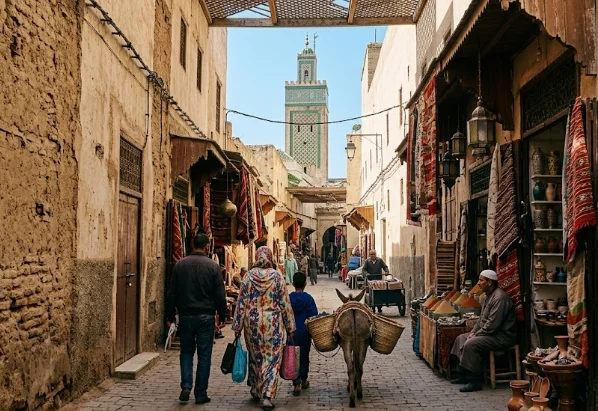
While Marrakech often claims the tourist spotlight with its glamorous energy, Fes stands proud as the beating historical soul of Morocco. Therefore, we created this comprehensive Fes Travel Guide to help you explore this imperial giant. Founded in the late 8th century, the city remains the country’s cultural, spiritual, and intellectual capital. As a result, stepping through its ancient stone ramparts is not just a change of location. Instead, it is an immediate transport back to the Middle Ages.
As the world’s largest car-free urban area, Fes is an assault on the senses in the most magnificent way possible. For instance, the smell of cedarwood mixes with sharp mint and pungent leather. Meanwhile, the calls to prayer echo across ancient rooftops, and the brilliant cobalt-blue tiles shimmer under the North African sun.
Whether you are a seasoned adventurer or planning your first Moroccan escape, this ultimate Fes Travel Guide will help you confidently navigate the labyrinth. Furthermore, it will show you how to skip the tourist traps and uncover the magic of this living medieval masterpiece.
Understanding the Layout: Three Cities in This Fes Travel Guide
Before diving into the alleyways, it helps to understand that Fes is actually divided into three distinct zones. Each area represents a different era of the city’s rich history.
1. Fes el-Bali (The Old Medina Fes Travel Guide Core)
This is where you will spend 90% of your time. Founded by Moulay Idriss I, Fes el-Bali is the world-famous medieval core. Today, it remains a dense, walled maze of over 9,000 narrow streets, crowded souks, and historic monuments. No cars are allowed here. Consequently, everything is transported by foot, handcart, or donkey.
2. Fes el-Jdid (The New City from the 13th Century)
Do not let the name fool you. Built by the Marinid Sultanate in the 1200s, Fes el-Jdid features the stunning Royal Palace (Dar al-Makhzen). In addition, you will find the historic Jewish Quarter (Mellah) and the peaceful Jnan Sbil Gardens here.
3. Ville Nouvelle (The Modern City)
Designed by the French during the protectorate era in the early 20th century, this area features wide boulevards and modern cafes. It also offers contemporary hotels and a distinctly European atmosphere. Thus, it provides a calm, modern contrast to the frantic energy of the old medina.
Top Things to Do: Essential Fes Travel Guide Sights
Fes is a city designed for wandering. However, there are several iconic landmarks you absolutely cannot miss during your stay. This section of our Fes Travel Guide highlights the absolute best spots.
1. Enter Through Bab Boujeloud (The Fes Travel Guide Blue Gate)
Your journey into the old world should begin at Bab Boujeloud, the monumental western entrance to Fes el-Bali. Built in 1913, the outer facade of the gate is adorned with vibrant blue ceramic tiles, which is the signature color of Fes. Interestingly, if you look at the gate from the inside of the medina, the tiles are green. This color represents the traditional color of Islam.
2. Witness History at the Chouara Tannery
The Chouara Tannery is arguably the most iconic—and pungent—image of Fes. Operating continuously since the 11th century, it is a vast network of stone vessels filled with various dyes and liquids.
Local craftsmen still treat leather using centuries-old techniques. For example, pigeon droppings and cow urine are used to soften the hides. After that, the skins are plunged into brilliant natural dyes like indigo, saffron, and poppy.
Insider Tip: To view the tanneries, you will need to walk through one of the surrounding leather shops to access their rooftop terraces. The owners will hand you a sprig of fresh mint to hold under your nose to combat the intense smell. While entry to the terraces is technically free, a small tip (10-20 MAD) is polite if you choose not to purchase any leather goods.
3. Marvel at the Al-Qarawiyyin Mosque and University
Founded in 859 AD by a wealthy refugee woman named Fatima al-Fihri, Al-Qarawiyyin holds a prestigious title. Indeed, it is recognized by UNESCO and the Guinness World Records as the oldest continuously operating university in the world.
However, non-Muslims are strictly prohibited from entering the sacred mosque and prayer halls. Nevertheless, you can peek through the magnificent open doorways to admire the sprawling marble courtyards, intricate woodwork, and stunning Andalusian-Moroccan geometry.
4. Explore the Intricate Historical Madrasas
Unlike the active mosques, Fes’s historic Islamic schools (madrasas) welcome international travelers. Specifically, two structures stand out above the rest:
- Madrasa Bou Inania: Built in the mid-14th century, this is one of the few religious buildings in Morocco featuring its own minaret. The central courtyard is a masterclass in Islamic architecture. For instance, it boasts walls covered in hand-carved cedarwood, delicate stucco work, and vibrant zellij tilework.
- Madrasa Al-Attarine: Located near the Al-Qarawiyyin complex, this smaller madrasa is celebrated worldwide. It has some of the most intricate and tightly detailed geometric tile art in North Africa.
5. Catch the Sunset at the Marinid Tombs
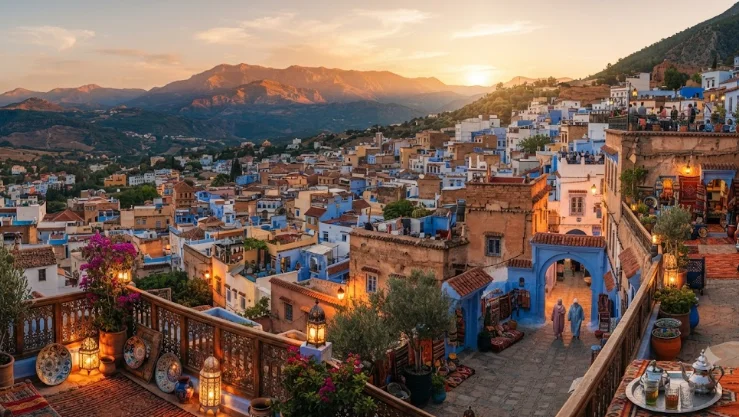
For the ultimate panoramic view of Fes el-Bali, take a short red petit taxi up the hill just north of the medina. There, you will find the ruins of the 14th-century Marinid Tombs. As the sun sets behind the mountains, the city lights begin to twinkle across the valley. Simultaneously, the simultaneous calls to prayer bounce beautifully across the thousands of rooftops below.
Souks and Shopping: A Fes Travel Guide to Haggling
Shopping in Fes is an incredible cultural ritual. Generally, the souks are organized by trade. First, you will stumble upon Place Seffarine, where metalworkers loudly hammer copper pots. Next, you will find the Achebine Souk, filled with natural remedies and spices. Finally, you will reach the textile quarters where silk threads are spun before your eyes.
When purchasing high-value items like handmade Berber carpets, authentic leather jackets, or famous Fassi cobalt-blue pottery, remember that haggling is expected. Therefore, use these quick rules:
- The Rule of Thirds: As a general baseline, counter the merchant’s initial asking price with roughly one-third or one-quarter of that amount. Then, negotiate up until you meet in a comfortable middle.
- Keep it Friendly: Haggling is a social interaction, not a battle. Consequently, you should smile, joke with the shopkeeper, and drink the hot mint tea they offer you.
- Walk Away: If the price isn’t right, politely say goodbye and walk away. More often than not, they will call you back with a significantly lower offer.
What to Eat: Culinary Highlights in This Fes Travel Guide
Fes is the culinary heart of traditional Moroccan cooking. The local cuisine is famous for blending sweet and savory flavors. As a result, chefs create complex, slow-cooked dishes that you won’t easily find anywhere else.
| Dish Name | Primary Ingredients | Flavor Profile |
| Pastilla (Bastilla) | Shredded chicken (or pigeon), almonds, eggs, saffron, layered in flaky warka pastry, dusted with powdered sugar and cinnamon. | The ultimate sweet-and-savory Fassi classic. |
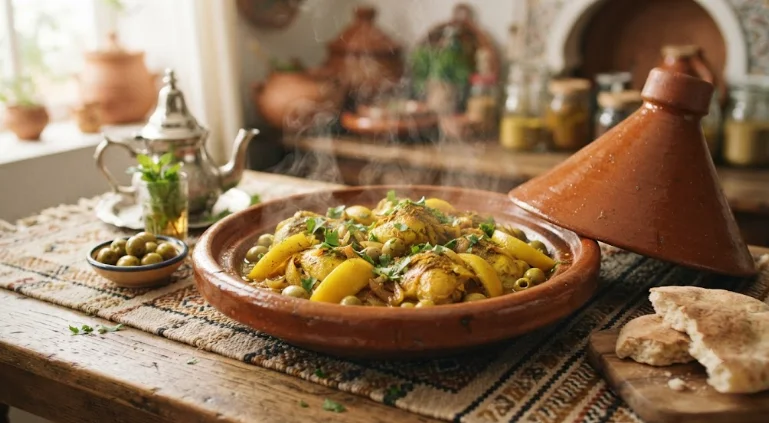
| Tagine | Slow-cooked meats (lamb, beef, or chicken) stewed with seasonal vegetables, prunes, apricots, or preserved lemons. | Hearty, deeply aromatic, and served piping hot in clay pots. |
| Harira | A rich, comforting soup made from tomatoes, lentils, chickpeas, meat, and fresh herbs. | Traditionally used to break the fast during Ramadan, but eaten year-round. |
| Zaalouk | Roasted eggplant, tomatoes, garlic, olive oil, cumin, and sweet paprika. | A delicious, smoky dip served cold or warm with crusty bread. |
Practical Survival Tips for Your Fes Travel Guide
To ensure your trip to Fes is smooth and memorable, keep these essential survival tips in mind :
- Download Offline Maps: Standard GPS navigation apps like Google Maps easily get confused inside the deep, narrow stone alleys of Fes el-Bali. Therefore, download an offline mapping app like Maps.me or Organic Maps. These apps have much more accurate trail markings for the medina’s inner arteries.
- Hire a Licensed Guide: For your very first morning in Fes, it is highly recommended to hire an official, licensed tour guide. You can find one through your riad or the local tourism office. They will help orient you to the layout of the city. Furthermore, they share rich historical context and protect you from persistent street hustlers or fake guides (faux guides).
- Carry Cash in Small Bills: Cash is king inside the medina. Most small food stalls and artisan shops do not accept credit cards. Thus, keep plenty of 10, 20, and 50 Moroccan Dirham (MAD) notes handy. This is important because merchants struggle to break large 200 MAD bills.
- Be Aware of Friday Closures: Friday is the holy day in Islam. While the medina does not completely shut down, many artisan workshops, souk stalls, and major historical sites close for the day. Alternatively, they shut down entirely between noon and 4:00 PM for afternoon prayers.
Where to Stay: The Riad Fes Travel Guide Experience
To truly experience Fes, skip the modern Western-style hotels in the Ville Nouvelle. Instead, book a room in a traditional Riad or Dar inside the old medina.
A riad is a traditional Moroccan home or palace built around an open-air central courtyard or garden. From the outside, a riad presents nothing but plain, windowless mud-brick walls. This is a deliberate architectural design meant to protect family privacy and keep out the street noise.
Once you step inside, however, you are greeted by stunning interior oases filled with orange trees, trickling fountains, and exquisite mosaic tiles. In addition, many mid-range and luxury riads in Fes feature breathtaking rooftop terraces. There, you can enjoy traditional Moroccan breakfasts while overlooking the ancient skyline.
Easy Day Trips to Include in Your Fes Travel Guide
If you plan to stay in Fes for more than two or three days, the city makes an excellent base. For instance, you can easily explore the surrounding regions of northern and central Morocco using this Fes Travel Guide plan.
- Meknes and Volubilis: First, take a 40-minute train ride to the fellow imperial city of Meknes. After that, catch a taxi to Volubilis, which contains Morocco’s most expansive and beautifully preserved ancient Roman ruins.
- Chefchaouen: Take a day trip to the world-famous “Blue Pearl” of Morocco, nestled high in the Rif Mountains. However, note that the journey takes about 3.5 to 4 hours each way via bus or private car transfer.
- Ifrane and the Middle Atlas: Escape the desert heat by heading up into the Middle Atlas mountains. First, visit Ifrane, a unique alpine town known as “The Switzerland of Morocco.” Afterward, make a stop in the cedar forests of Azrou to see the wild Barbary macaque monkeys.
Fes Travel Guide: FAQ
Is Fes safe for tourists according to this Fes Travel Guide?
Yes, Fes is generally very safe for international travelers. Violent crime is rare. However, petty crimes like pickpocketing can occur in crowded souks. Therefore, be mindful of your belongings. Also, avoid walking deep into dark, isolated alleyways alone late at night. Finally, ignore overly persistent strangers offering to show you “secret shortcuts.”
How many days do I need in Fes?
To see the main highlights without rushing, 2 to 3 full days is the perfect amount of time. This timeframe allows you one full day for a guided historical walking tour. After that, you have one day to relax, shop, and visit a traditional hammam. Lastly, you can use an extra day for a side excursion.
What should I wear in Fes?
Fes is a deeply traditional and religious city. To show respect for the local culture and avoid unwanted attention, both men and women should dress conservatively. For this reason, aim to keep your shoulders and knees covered. Loose, breathable fabrics like linen are ideal for staying cool while respecting local norms.
Can non-Muslims enter mosques in Fes?
No. With very few historical exceptions (such as the Madrasa Bou Inania), active mosques and religious shrines in Fes are strictly closed to non-Muslim visitors. However, you are always welcome to admire the beautiful architecture from the open doorways.
When is the best time to visit Fes?
The best windows to visit Fes are during the shoulder seasons of Spring (March to May) and Autumn (September to November). During these months, the weather is warm and pleasant.