


Moroccan Couscous: How to Make the Traditional Dish at Home
- Moroccan cuisine Moroccan Culture
 Maroc Fans
- 0
- 10 minutes read

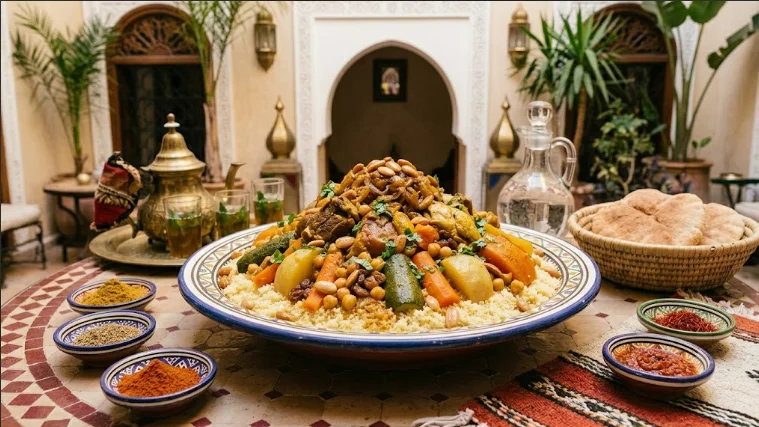
Couscous marocain, known in English as Moroccan couscous, is a cherished dish that brings together families and friends across North Africa and beyond. This traditional meal is celebrated for its delicate steamed semolina grains, vibrant vegetables, and a symphony of aromatic spices that create a truly unforgettable flavor.
From festive gatherings to everyday meals, it holds a special place in the hearts and kitchens of many. Therefore, whether you’re curious about its origins or looking for the secrets behind its delicious taste, this guide will walk you through everything you need to know about making authentic Moroccan couscous at home.
The History and Cultural Significance of Moroccan Couscous
This culinary masterpiece has a rich history that dates back centuries, rooted deeply in North African culture. Traditionally served on Fridays and during special occasions, it represents hospitality and togetherness. Although each region in Morocco adds its own twist, the essence remains the same: a comforting, communal dish that brings people together.
How It Became a Global Culinary Icon
Over time, the dish has gained international fame thanks to its unique blend of flavors and textures. Consequently, its popularity has spread across Europe and the Americas, making it a staple in many world cuisines. Today, it’s enjoyed both in traditional homes and at global restaurants specializing in Mediterranean cuisine.
Essential Spices for Authentic Flavor
The magic of couscous marocain lies in its aromatic blend of seasonings. These ingredients not only add depth and warmth but also define the signature taste of the dish. For instance, commonly used spices include cumin, coriander, cinnamon, ginger, turmeric, and saffron. Each element contributes to the rich, layered flavor profile that makes the meal so memorable.
How to Blend Spices for Moroccan Couscous
Creating the perfect spice blend is all about balance. First, start with a base of ground cumin and coriander. Next, add a pinch of cinnamon and ginger for warmth, and finish with a hint of saffron for a touch of luxury. Finally, adjust the proportions to suit your taste, and don’t be afraid to experiment with additional options like paprika or black pepper.
Traditional Moroccan Couscous Recipe: Step-by-Step Guide
Preparing this authentic meal at home is easier than you might think. The key is to steam the semolina grains until they are light and fluffy, then top them with a hearty stew of vegetables and meat. This recipe will guide you through each step for a truly traditional experience.
Tips for Perfectly Fluffy Grains
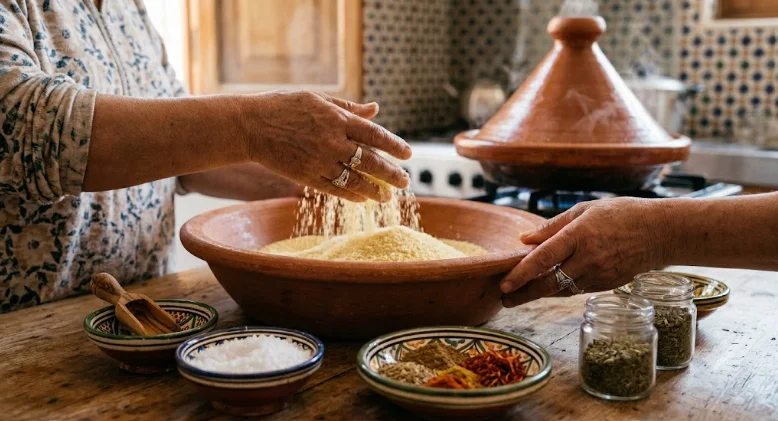
To achieve the classic fluffy texture, steam the semolina in a traditional couscoussier or use a fine-mesh steamer. Moreover, make sure to fluff the grains with a fork between steamings and avoid over-soaking to prevent clumping. These simple steps ensure your dish turns out light and airy every time.
Vegetarian and Vegan Variations
Fortunately, the recipe can easily be adapted for vegetarian or vegan diets. To do this, simply omit the meat and focus on seasonal vegetables, chickpeas, and an even richer blend of spices. This version is just as delicious and perfect for those seeking a plant-based option.
Serving and Enjoying the Dish at Home
Traditionally, the dish is served on a large communal platter, with the semolina forming a mound in the center and the stew ladled over the top. Since it is often enjoyed with family and friends, it stands as the ultimate comfort food for gatherings and celebrations.
Popular Side Dishes and Garnishes
Classic accompaniments include harissa (a spicy chili paste), preserved lemons, and fresh herbs like cilantro or parsley. In addition, these sides enhance the flavors and allow everyone to customize their plate to their liking.
Health Benefits of Moroccan Couscous and Spices
Besides being delicious, this meal is highly nutritious. For example, the semolina provides energy and fiber, while the vegetables add essential vitamins and minerals. Furthermore, ingredients like turmeric and ginger have anti-inflammatory properties, making this a wholesome choice for any meal.
Why These Traditional Seasonings Are Good for You
Many seasonings used in the recipe are known for their health benefits. For instance, cumin aids digestion, cinnamon helps regulate blood sugar, and saffron is rich in antioxidants. Thus, incorporating these flavors into your diet can boost both taste and wellness.
FAQ
What are the key Moroccan spices used in couscous? The essential spices include cumin, coriander, cinnamon, ginger, turmeric, and saffron. Together, they create the dish’s signature aroma and flavor.
How do you make traditional Moroccan couscous at home? To prepare it, you need to steam the semolina grains until fluffy, cook a hearty stew of vegetables and meat with traditional spices, and serve everything together on a large platter.
Can this dish be made vegetarian or vegan? Yes, it can easily be adapted by focusing entirely on root vegetables, chickpeas, and a rich blend of traditional seasonings.
What is the difference between Moroccan couscous and other types? Moroccan couscous uses fine semolina grains and is typically steamed multiple times, while other types like Israeli or Lebanese varieties use larger grains and different cooking methods.
Are there health benefits to eating this meal? Yes, it is high in fiber and nutrients. Additionally, the spices used—such as turmeric and ginger—offer proven anti-inflammatory and antioxidant benefits.
What are the best side dishes to serve? Popular sides include harissa, preserved lemons, fresh herbs, and sometimes a simple green salad to complement the rich flavors.
How can I get the perfect fluffy texture? In order to achieve a light, airy texture, steam the semolina in stages and fluff it thoroughly with a fork between each steaming session.
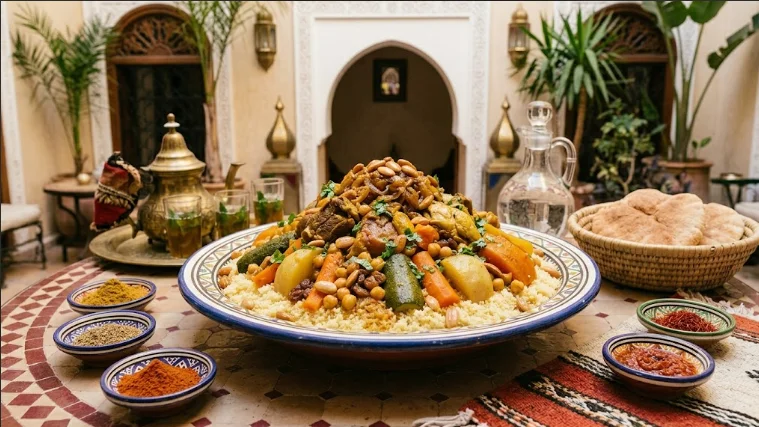
In conclusion, Moroccan couscous is a flavorful, versatile dish that brings people together with its comforting taste and aromatic heritage. Whether you’re hosting a festive gathering or simply looking to try something new, making it at home is a rewarding culinary adventure. Try it today and experience the magic of authentic Moroccan cuisine in your own kitchen!