

Moroccan Leather: Secrets to the Ultimate Shop Trip
- Leather & Leather Goods Moroccan Crafts
 Maroc Fans
- 1
- 19 minutes read

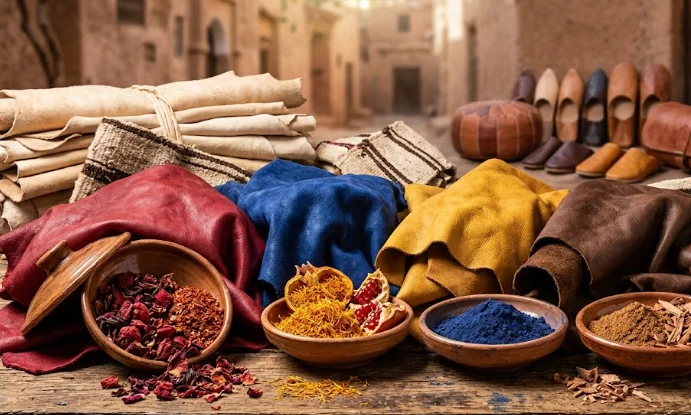
When you walk through the bustling, maze-like alleys of the ancient medinas of Morocco, your senses are immediately awakened. Vibrant spices tint the air, hand-woven carpets line the walls, and the distinctive scent of cured hides guides you toward one of the kingdom’s most iconic treasures: Moroccan leather.
For centuries, Morocco has been celebrated across the globe as a premier producer of high-quality leather goods. From royal courts in medieval Europe to high-fashion runways in Paris and Milan, leather from Morocco has held a legendary status. But what exactly makes Moroccan leather so exceptional? Why has this age-old craft managed to thrive in a world dominated by fast fashion and synthetic mass production?
In this comprehensive guide, we will dive into the fascinating history, painstaking traditional process, unmatched quality, and modern relevance of Moroccan leather—and why it continues to captivate artisans, fashion enthusiasts, and travelers worldwide.
The Rich History of Moroccan Leather
The reputation of leather crafting in Morocco spans over a thousand years. During the Middle Ages, Moroccan leatherwork became so famous in Europe that the word “Maroquin” in French (and similar terms in other European languages) became the official root word for fine leather goods (maroquinerie).
The art of leatherworking blossomed under various Islamic dynasties, particularly during the Marinid and Almoravid eras. Craftsmen in historic cities like Fes, Marrakech, and Tetouan perfected tanning and dyeing techniques that were far superior to those found elsewhere.
By the 16th century, Moroccan leather was highly sought after by European bookbinders. Books bound in fine goat hide from Morocco—known as “Morocco leather”—were prized by nobility, scholars, and collectors for their durability, rich textures, and bright, non-fading colors. This prestigious legacy laid the foundation for the global acclaim Moroccan leather enjoys today.
The Secret Behind the Quality: Ancient Tanning Techniques
To understand why Moroccan leather stands out, one must look at the traditional production process. Unlike modern industrial tanneries that rely heavily on harsh chemicals like chromium, classic Moroccan tanneries still use 100% organic and natural methods handed down from generation to generation.
The Iconic Tanneries of Fes and Marrakech
The most famous center for leather production is the Chouara Tannery in Fes, established in the 11th century. Visiting Chouara is like stepping back in time. Dozens of stone vessels filled with various liquids and vibrant dyes resemble a giant artist’s palette, unchanged for nearly a millennium.
       [ Hides & Skins ]
               │
               ▼
   [ Soaking in Pigeon Dung & Lime ]  <-- Softens and cleans the hides
               │
               ▼
     [ Natural Dye Vats ]            <-- Saffron, Poppy, Indigo, Henna
               │
               ▼
     [ Sun Drying & Softening ]       <-- Hand-scraped and conditioned
               │
               ▼
   [ Handcrafting Masterpieces ]     <-- Babouches, Bags, Poufs, Jackets
The Step-by-Step Traditional Process
- Soaking and Cleaning: Fresh hides (usually sheep, goat, cow, or camel) are soaked in a natural mixture containing pigeon dung, lime, and water. The pigeon dung provides ammonia, which softens the leather, making it pliable and receptive to dyes, while lime removes excess hair and flesh.
- Scraping: Maâlems (master artisans) scrape the hides clean by hand using curved knives to prepare the smooth surface.
- Vegetable Tanning: The hides are soaked in vats of natural vegetable tannins derived from plants, such as mimosa bark, pine bark, and pomegranate seeds. This natural curing process preserves the leather without polluting water systems with synthetic toxins.
- Natural Dyeing: The hides are submerged in colorful dye vats made exclusively from natural ingredients:
- Red: Poppy flowers or paprika
- Yellow: Saffron or pomegranate peel
- Blue: Indigo
- Green: Mint
- Brown: Cedar wood or henna
- Drying and Finishing: Finally, the leather is spread out under the intense Moroccan sun to dry. Once dried, it is treated with oil and hand-beaten to achieve its legendary softness and supple texture.
Key Characteristics of Authentic Moroccan Leather
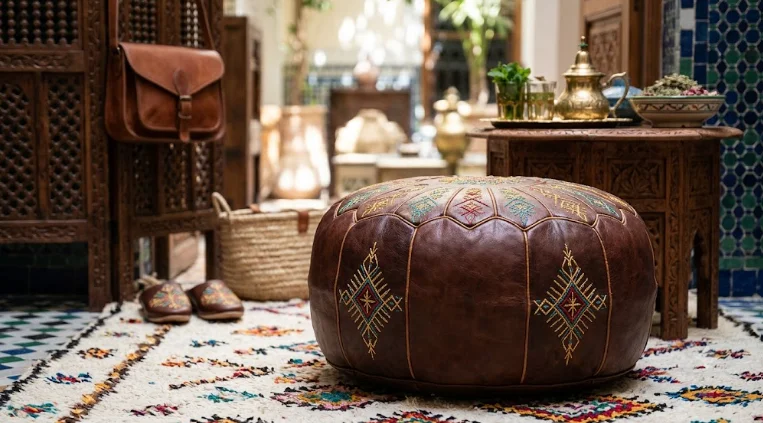
What separates authentic Moroccan leather from commercial alternatives? Here are the hallmark qualities that make it world-famous:
- Incredible Durability: Thanks to vegetable tanning and organic processing, Moroccan leather does not easily crack or deteriorate over time.
- Unmatched Softness: Goat and sheepskins processed in Morocco are renowned for their silky, flexible feel, making them perfect for garments, shoes, and luxury goods.
- Unique Patina: As Moroccan leather ages, it absorbs natural oils and light, developing a rich, distinctive character (patina) that enhances its beauty over time.
- Eco-Friendly Craftsmanship: Traditional tanning relies on biodegradable ingredients and natural pigments, avoiding the heavy metal pollution associated with modern chrome tanning.
Famous Moroccan Leather Products
Moroccan leather isn’t just a raw material; it is shaped into iconic handcrafted items that serve both aesthetic and functional purposes around the globe.
| Product | Description | Popular Style |
| Moroccan Leather Poufs | Hand-stitched round or square ottomans decorated with intricate embroidery. | Natural tan, deep brown, or vibrant dyed shades. |
| Babouches (Balgha) | Traditional backless leather slippers worn daily across Morocco. | Pointed-toe (Fes style) or rounded-toe (Berber style). |
| Handbags & Satchels | Vintage-inspired bags, totes, and backpacks featuring natural grain. | Raw distressed leather with brass hardware. |
| Leather Jackets & Vests | Tailored jackets showcasing the buttery softness of Moroccan lambskin. | Modern biker cuts and classic tailored designs. |
Moroccan Leather in Modern Fashion and Home Decor
In recent decades, global interior designers and fashion houses have rediscovered the charm of Moroccan craftsmanship.
Home Decor
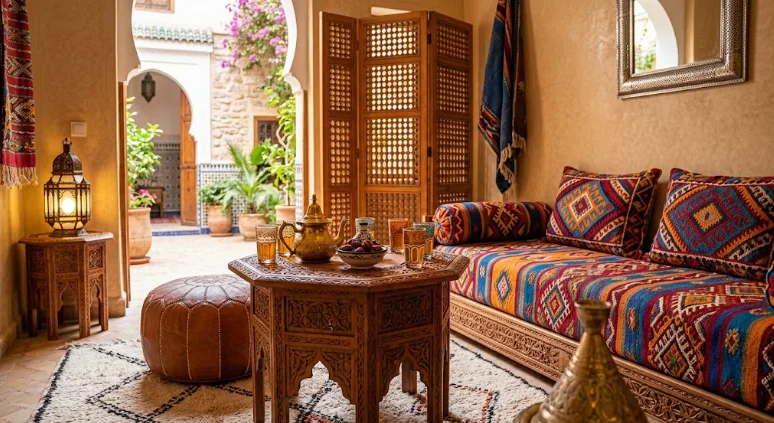
The Moroccan leather pouf has become a staple in bohemian, modern, and Scandinavian interior design. Beyond its functional use as a footstool or extra seating, it adds an artisanal warmth and tactile texture to living rooms worldwide.
Global Fashion Trends
High-end fashion designers frequently incorporate elements of Moroccan leatherwork into their collections. Modern Moroccan designers are also fusing traditional techniques with contemporary silhouettes, creating modern leather bags, jackets, and accessories that appeal to an international luxury market.
Artisan Insight: Every handmade Moroccan leather product carries small, unique imperfections. These are not flaws—they are proof of authentic handiwork and human craftsmanship, making each piece one-of-a-kind.
Sustainable and Ethical Value of Moroccan Leather
As consumers around the world become increasingly conscious of sustainability and ethical fashion, Moroccan leather offers a compelling alternative to fast fashion:
- Zero-Waste Ethos: Leather in Morocco is a byproduct of the meat industry. Nothing goes to waste; hides that would otherwise be discarded are transformed into lifelong treasures.
- Biodegradable Materials: Because traditional Moroccan leather relies on organic vegetable tannins and natural plant dyes, it is far better for the environment than synthetic faux leather or chrome-tanned real leather.
- Supporting Artisan Communities: Purchasing genuine Moroccan leather directly supports generations of skilled artisans, preserving tangible cultural heritage and providing fair wages to local families.
How to Spot Genuine Moroccan Leather vs. Fake Imitations
Due to its global popularity, counterfeit or low-quality leather products are widespread. Here are key tips to ensure you are buying high-quality, authentic Moroccan leather:
- Check the Smell: Authentic Moroccan leather tanned naturally has a distinct, earthy, natural scent. If it smells strongly of synthetic chemicals, plastic, or petroleum, it is likely mass-produced or synthetic.
- Inspect the Texture and Grain: Natural leather has subtle variations in grain, tone, and texture. Synthetic leather looks unnaturally uniform and smooth.
- Examine the Stitching: Authentic Moroccan products like poufs and bags are hand-stitched with heavy-duty thread. Look for tight, unevenly human stitches rather than flawless machine stitching.
- Water Drop Test: Place a small drop of water on the surface. Real, unsealed vegetable-tanned leather will slowly absorb the moisture, while fake or synthetic leather will repel it completely.
Frequently Asked Questions (FAQ)
1. What makes Moroccan leather different from other types of leather?
Moroccan leather is unique because of its centuries-old vegetable tanning and natural dyeing techniques. Instead of harsh industrial chemicals, artisans use natural ingredients like pomegranate peel, indigo, henna, and mimosa bark, resulting in softer, highly durable, and eco-friendly leather.
2. Why does authentic Moroccan leather have a strong scent at first?
Traditional tanning methods use organic ingredients, including pigeon dung (which contains natural ammonia to soften the leather). While the hides are thoroughly cleaned and washed, new leather products may retain an earthy scent initially. This smell naturally fades over a few weeks when left in a well-ventilated area.
3. Are all leather tanneries in Morocco chemical-free?
While historic tanneries like Chouara in Fes and those in Marrakech strictly follow centuries-old natural methods, some modern industrial facilities outside medina walls may use chemical chrome tanning. To ensure you get authentic organic leather, buy directly from medina artisans or certified traditional workshops.
4. How long does genuine Moroccan leather last?
With proper care, high-quality Moroccan leather goods can last for decades. Thanks to natural vegetable tannins, the leather becomes softer and develops a beautiful, rich patina over time without cracking.
5. How should I clean and maintain my Moroccan leather pouf or bag?
Keep your leather items out of direct moisture and extreme heat. Clean them using a soft, slightly damp cloth, and apply a high-quality leather conditioner or natural oil (like olive or argan oil in tiny amounts) once or twice a year to keep the leather soft and hydrated.
6. Is Moroccan leather ethically sourced?
Yes, leather in Morocco is sourced as a natural byproduct of livestock farming (sheep, goats, cows, and camels) used for food. The traditional tanning process uses local, organic, and biodegradable materials, supporting fair-wage artisan cooperatives.
7. What is the most famous city for leather production in Morocco?
Fes is world-famous for its leather, particularly the Chouara Tannery, which dates back to the 11th century. However, Marrakech and Tetouan are also renowned centers for fine leatherwork and artisanal markets.
Final Thoughts
Moroccan leather is far more than just a durable material—it is a living symbol of history, culture, and artistic pride. In an age dominated by mass production and fleeting trends, the ancient tanneries of Fes and Marrakech remind us of the beauty of handcrafted patience and sustainable tradition.
Whether you are investing in a classic leather pouf for your living room, slipping into comfortable handcrafted babouches, or wearing a timeless leather jacket, owning a piece of Moroccan leather means holding a story that spans over a thousand years.
1 Comment
[…] along the Oued Fes (Fez River) in order to secure a constant water supply necessary for leather […]