
Driving in Morocco: Don’t Make These 3 Costly Mistakes!
- Morocco Guide Travel Tips
 Maroc Fans
- 0
- 20 minutes read

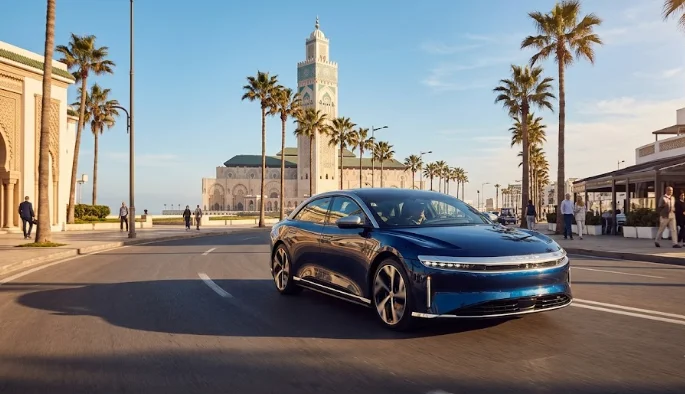
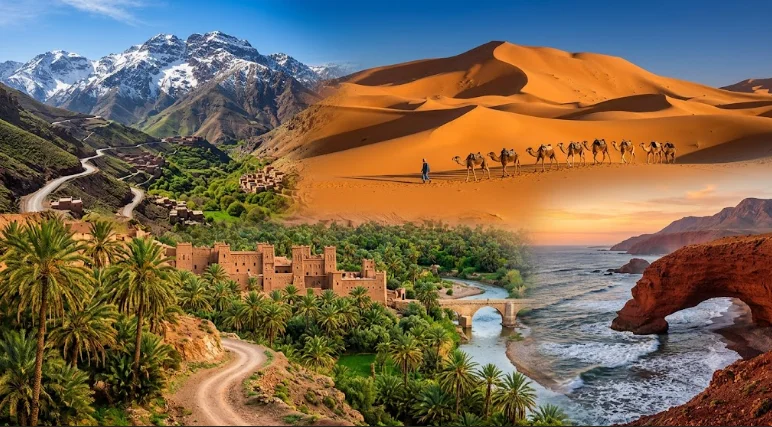
Morocco is a country of breathtaking transitions. One moment you are navigating the ancient, bustling streets of a historic imperial city, and the next, you are cruising past the snow-capped Atlas Mountains or watching the sun dip below the golden dunes of the Sahara. Consequently, driving in Morocco is one of the most rewarding ways to experience this incredibly diverse landscape.
While public transport and guided tours can get you to major destinations, nothing beats the sheer freedom of a Moroccan road trip. Indeed, a rental car allows you to explore off-the-beaten-path Berber villages, stop at panoramic viewpoints, and travel entirely on your own schedule. However, driving in a foreign country can sometimes feel intimidating. For instance, you might have heard rumors of chaotic city traffic, aggressive drivers, or tricky mountain passes. Therefore, this comprehensive guide covers everything tourists need to know to feel completely confident while driving in Morocco.
1. Legal Requirements for Driving in Morocco
Before you sit behind the wheel, make sure you have the correct paperwork. Morocco is very welcoming to tourists, but the local police and gendarmerie are strict about checking documentation. Consequently, to ensure a smooth experience when driving in Morocco, you must meet and carry the following:
- A Valid Driver’s License: You can drive in Morocco using your domestic driver’s license (from the US, UK, EU, Canada, etc.) for up to 12 months as a tourist.
- International Driving Permit (IDP): While not always strictly required by every rental company if your license is in French, English, or Arabic, it is highly recommended. Furthermore, carrying an IDP alongside your national license ensures you will not face any language barrier issues at police checkpoints.
- Your Passport: Always carry your original passport when driving.
- Car Rental Agreement & Insurance Documents: Additionally, ensure the rental agency provides you with the vehicle’s registration (often called the Carte Grise), valid insurance papers, and the rental contract.
- Minimum Age Limit: The legal driving age in Morocco is 18. However, most car rental agencies require drivers to be at least 21 (and sometimes 23 or 25) and to have held their license for at least one to two years.
2. Car Rental Tips for Driving in Morocco
Renting a car in Morocco is straightforward, with major international brands (like Hertz, Avis, and Budget) operating alongside highly-rated local agencies at airports and city centers. However, you must first decide which type of vehicle is best suited for your journey.
Choosing the Right Vehicle for Driving in Morocco
For most classic tourist routes—such as driving from Marrakech to Casablanca, Rabat, Fes, or Essaouira—a standard economy sedan or compact car is perfectly fine. The main national highways (Autoroutes) and regional roads (Routes Nationales) are well-paved and in excellent condition.
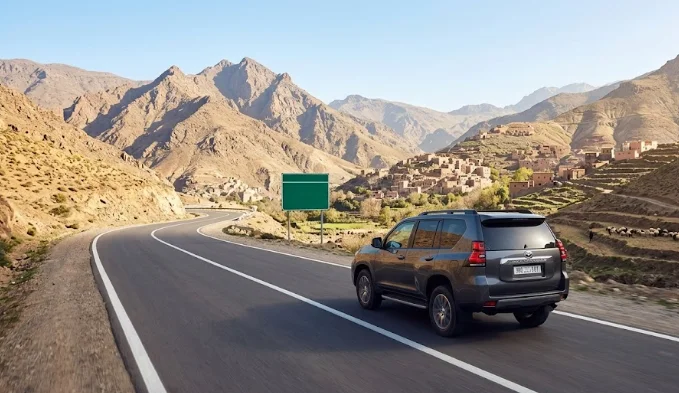
On the other hand, if your itinerary includes crossing the high mountain passes of the High Atlas (such as the Tizi n’Tichka pass) or venturing deep into the desert regions around Merzouga, renting a compact SUV or a 4WD is highly recommended. The extra ground clearance makes a massive difference on gravel roads, detours, and roads affected by mountain erosion.
Insurance is Non-Negotiable
Moreover, when booking your car, always opt for comprehensive collision damage waiver (CDW) insurance. Read the fine print regarding tire and windshield damage, as rocky mountain roads can easily kick up loose gravel and cause chips or punctures.
3. Essential Rules for Driving in Morocco
Morocco’s traffic laws are standard and largely align with European systems. Nevertheless, there are a few key rules that you must keep in mind to stay safe and avoid fines:
- Right-Hand Traffic: Vehicles drive on the right side of the road and overtake on the left.
- Seatbelts are Mandatory: Additionally, both front and rear passengers must wear seatbelts at all times.
- No Mobile Phones: Furthermore, using a handheld phone while driving is strictly illegal and subject to heavy on-the-spot fines. Use a hands-free mount if you are using your phone for navigation.
- Strict Zero Alcohol Tolerance: Unlike some Western countries where a low blood-alcohol limit is permitted, Morocco enforces a 0.0% blood-alcohol limit. Therefore, if you plan to drink, do not drive. Penalties are severe and can include imprisonment.
Understanding Moroccan Roundabouts
Roundabouts are common in Moroccan towns and cities, but they come with a specific layout rule.
- Default Rule (No Traffic Lights): Standard roundabouts operate like those in Europe. Specifically, vehicles already in the roundabout have the right of way, and those entering must yield.
- The Traffic Light Rule: Conversely, if a roundabout is controlled by traffic lights, you must follow the light. If you have a green light to enter the roundabout, you go. However, as you circle the roundabout to turn left or make a U-turn, you will encounter red lights inside the roundabout itself to allow oncoming traffic to enter. You must stop at these internal red lights.
4. Speed Limits for Driving in Morocco
Moroccan traffic police and the Royal Gendarmerie (Gendarmerie Royale) take speed enforcement very seriously. Specifically, both fixed speed cameras and officers armed with mobile radar guns are common sights along major highways and at the entrance to towns. Consequently, you should strictly adhere to the limits.
Standard Speed Limits
In general, speed limits are calculated in kilometers per hour (km/h) and follow these guidelines:
| Road Type | Speed Limit | Notes |
| Urban / Built-up Areas | 40 to 60 km/h | Often drops to 40 km/h in busy downtowns or historic areas. |
| Rural / Secondary Roads | 100 km/h | Expressways (voies expresses) are also capped at 100 km/h. |
| Highways (Autoroutes) | 120 km/h | Drops to 80 or 100 km/h during heavy rain or wind. |
Warning: Speed limit signs can change rapidly. A highway route might drop from 100 km/h to 60 km/h within a few hundred meters as it approaches a small village or intersection. Therefore, keep a sharp eye on road signs, as police officers often wait right behind the transition signs.
5. Navigating Police Checkpoints While Driving in Morocco
One of the most unique aspects of driving in Morocco for first-time visitors is the frequency of police checkpoints. These are set up at the entrances and exits of almost every major town and city to maintain safety and monitor regional traffic.
How to Behave at a Checkpoint
- First, slow down early: As you approach a checkpoint, you will see signs saying “Halte Police” or “Halte Gendarmerie.”
- Second, do not drive straight through: Slow down to a crawl. Stop completely a few meters before the barrier or the officer unless they explicitly wave you through.
- Next, wait for the signal: Make eye contact with the officer. If they wave their hand, nod, or gesture for you to proceed, you can drive through slowly.
- Finally, be polite and cooperative: If they pull you over, remain calm and polite. They will usually ask for your driver’s license, passport, and car rental documents. Many officers speak French, and basic English is increasingly common.
Indeed, if you did not break any laws, a checkpoint stop is a routine document check that takes less than two minutes.
6. Road Types You Will Encounter When Driving in Morocco
Morocco’s road network has seen massive investment and is generally split into three categories:
1. The Autoroutes (Toll Highways)
Indicated by the letter A (e.g., A1, A3), these are modern, divided, multi-lane toll highways connecting major hubs like Tangier, Rabat, Casablanca, Marrakech, and Agadir. They are fast, highly safe, and feature excellent rest stops with gas stations, cafes, and clean restrooms.
- How Tolls Work: When entering an Autoroute, you pull a ticket from an automated booth. When you exit, you hand the ticket to a cashier and pay the toll.
- Payment: Moreover, while electronic tags exist, tourists should use the cash lanes (marked with a green arrow or a cash symbol). Always carry cash (Moroccan Dirham – MAD) in coins and small bills, as toll booths rarely accept foreign credit cards. Tolls are very affordable, typically ranging from 10 to 50 MAD ($1 to $5 USD).
2. Routes Nationales (National Roads)
Indicated by the letter N, these link smaller cities and rural regions. They are usually single-lane roads in each direction. However, they can be highly busy, meaning you will need to patiently time your overtakes around slow-moving trucks and agricultural vehicles.
3. Pistes (Unpaved Tracks)
These are gravel or dirt tracks common in remote mountain areas or deep desert valleys. Consequently, unless you are driving a sturdy 4WD and have experience with off-road navigation, it is best to avoid these roads.
7. Crucial Survival Tips for Driving in Morocco
To keep your journey stress-free, keep these local driving realities in mind:
- Avoid Night Driving: Outside of well-lit city centers, avoid driving at night. As a result of poor road illumination, you may encounter unlit scooters, pedestrians walking on the shoulder, or wandering livestock (like goats, sheep, and donkeys) on the asphalt.
- Expect the Unexpected: Pedestrians cross roads everywhere, even on busy national routes. Furthermore, keep a defensive mindset, drive cautiously through villages, and always be prepared to brake.
- Understand “Guardian de Voiture” (Parking Guardians): In almost every Moroccan city, street parking is managed by local parking guardians. They wear reflective vests and help guide you into parking spots. In addition, when you return to your car, you are expected to pay them a small fee. The standard rate is 2 to 5 MAD for a short daytime stay and 10 to 20 MAD for overnight parking.
- Keep Cash on Hand: Many rural gas stations, toll booths, and parking guardians do not accept card payments. Additionally, always carry cash in local currency.
- Download Offline Maps: While mobile coverage is good, mountain passes can have dead zones. Finally, download Google Maps or Maps.me offline for your route before departing.
FAQ: Common Questions About Driving in Morocco
Can I drive in Morocco with a US/UK/EU driving license?
Yes. Tourists can drive in Morocco using their valid home country license for up to one year. However, we highly recommend getting an International Driving Permit (IDP) before your trip to ensure that driving in Morocco is as smooth and effortless as possible.
Is it safe for tourists to drive in Morocco?
Yes, driving in Morocco is generally safe, provided you drive defensively, obey the posted speed limits, and avoid driving at night. In addition, the highway infrastructure between major cities is outstanding and highly comparable to Western Europe.
What happens if I get a speeding fine?
If you are pulled over by police for speeding, you will be issued an on-the-spot fine (usually 150 to 300 MAD, roughly $15 to $30 USD). Consequently, ensure you ask for an official paper receipt. Keep cash on hand to pay immediately, as failure to pay can result in the confiscation of your driver’s license.
Do I need a 4×4 or 4WD vehicle in Morocco?
For standard routes (Tangier – Fes – Marrakech – Essaouira – Agadir), a normal 2WD sedan is perfectly fine. Conversely, a 4×4 is only necessary if you plan to do heavy off-roading, navigate deep desert sand dunes, or explore remote, unpaved mountain tracks.
Are road signs in Morocco easy to read?
Yes. Road signs follow international standards and are written in both Arabic and French, making them easy to read for tourists. Moreover, major highway exits and tourist destinations also include English translations.