
Moroccan Leather Bag: How to Choose Real Quality
- Leather & Leather Goods Moroccan Crafts
 Maroc Fans
- 0
- 19 minutes read

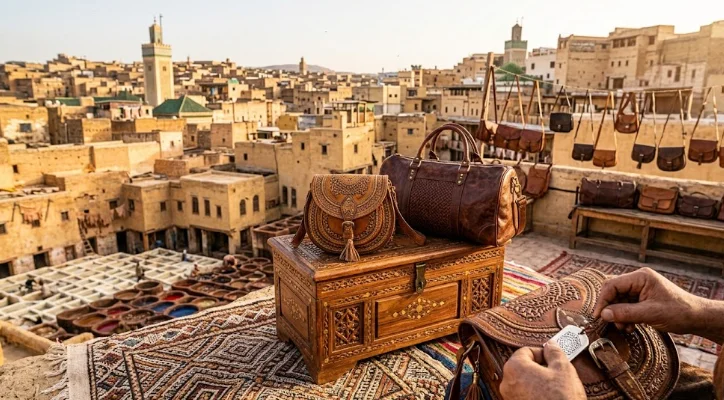
Few fashion accessories carry as much history, character, and soul as an authentic Moroccan leather bag. Step into the bustling souks of Marrakech or the ancient, labyrinthine alleys of Fez, and your senses are immediately greeted by the unmistakable, rich aroma of genuine leather. Hanging from the wooden beams of market stalls are intricately designed backpacks, sleek cross-body bags, and robust travel duffels—each one telling a unique story of heritage and survival.
In an era dominated by mass-produced, synthetic fast fashion, the Moroccan leather bag stands out as a beacon of slow, sustainable craftsmanship. But what makes these bags so special? Indeed, how have Moroccan artisans managed to preserve a tanning and crafting process that dates back over a thousand years?
Whether you are looking to purchase your first piece of Moroccan artistry or want to understand the deep-rooted culture behind your favorite accessory, this ultimate guide will explore everything you need to know about the iconic Moroccan leather bag.
1. The Living History Behind Every Moroccan Leather Bag
To truly appreciate a Moroccan leather bag, one must first understand its origins. In fact, Morocco’s relationship with leatherworking is deeply embedded in its national identity. For centuries, Moroccan leather—historically referred to in Europe as “Morocco leather” or “Marroquin”—was highly prized by European nobility for its unmatched softness, durability, and ability to take vibrant dyes.
The Historic Tanneries Crafting the Moroccan Leather Bag
The heart of Morocco’s leather industry resides in its ancient tanneries, the most famous being the Chouara Tannery in Fez, which has operated continuously since the 11th century.
Consequently, looking down at Chouara Tannery from a nearby rooftop is like looking at a giant, vibrant watercolor palette. Dozens of stone vessels are filled with various liquids and natural dyes. Here, master tanners work under the intense Moroccan sun, using the exact same methods passed down from generation to generation. Moreover, no modern machinery is used; the process relies entirely on human labor, natural elements, and time.
2. From Hide to Handbag: The Making of a Moroccan Leather Bag
The creation of a Moroccan leather bag is a labor of love that requires weeks of intensive manual work. Unlike modern industrial tanneries that rely heavily on harsh chemicals like chromium, traditional Moroccan tanneries utilize an eco-friendly, organic process.
Step 1: Cleaning and Curing the Hides
The process begins with raw hides—typically goat, sheep, cow, or camel skin. In general, goat and sheep skins are the most common choices for creating a lightweight Moroccan leather bag because they are naturally supple and flexible. First, the hides are soaked in a mixture of water, limestone, and natural ingredients to gently remove hair and excess fat.
Step 2: Softening in the Vats
Next, the hides are transferred to vats containing a mixture of water and pigeon droppings. Because the ammonia naturally present in the droppings acts as a powerful softening agent, it breaks down the stiff fibers of the hide without destroying its structural integrity. Meanwhile, tanners stand waist-deep in these vats, kneading the skins with their feet to ensure total absorption.
Step 3: Natural Vegetable Dyeing
Once the leather is perfectly supple, it is finally ready for the color vats. To achieve this, Moroccan artisans use 100% natural, vegetable-based dyes sourced from local plants and minerals:
- Poppy flowers or Henna for rich reds and oranges.
- Saffron or Pomegranate skin for vibrant yellows.
- Indigo for deep blues.
- Cedar wood for warm, classic browns.
Therefore, the skins soak in these natural pigments for days until they absorb the deep, rich hues that characterize an authentic Moroccan leather bag.
Step 4: Sun Drying and Hand-Stitching the Moroccan Leather Bag
After dyeing, the leather is spread out across the hillsides and rooftops of the medina to dry naturally under the Moroccan sun. As soon as it is dry, the leather is sold to local artisans who cut, shape, and sew the pieces by hand. In addition, many a Moroccan leather bag features intricate geometric embossing, hand-woven embroidery, or traditional metal buckles, ensuring that no two pieces are exactly alike.
3. The Different Styles of Moroccan Leather Bags
Whether you need a functional bag for everyday errands or a statement piece for weekend getaways, Moroccan leather craftsmanship offers a style for every occasion.
| Bag Style | Best Used For | Key Features |
| The Cross-body / Saddle Bag | Daily wear, casual outings, hands-free travel | Compact, features traditional embossed patterns, adjustable strap. |
| The Leather Backpack (Rucksack) | Students, commuters, day trips | Spacious compartments, sturdy buckle closures, vintage aesthetic. |
| The Weekend Duffel Bag | Travel, gym, overnight stays | Heavy-duty cowhide or camel leather, reinforced handles, side pockets. |
| The Tote Bag | Work, shopping, beach days | Minimalist design, large open interior, long shoulder straps. |
The Classic Moroccan Leather Bag: The Saddle Style
Often featuring a rounded bottom and a front flap adorned with traditional Berber or Andalusian geometric motifs, the saddle bag is the quintessential Moroccan accessory. As a result, it pairs effortlessly with bohemian styles, casual denim, or summer dresses.
The Heavy-Duty Travel Duffel
On the other hand, if you are looking for an investment piece that will last a lifetime, a Moroccan leather bag designed as a duffel and made from thick cowhide or camel leather is unmatched. Indeed, these bags develop a beautiful patina over time, darkening and softening with every journey you take.
4. How to Spot a Genuine Moroccan Leather Bag
Because of the global popularity of Moroccan style, the market has unfortunately been flooded with cheap, synthetic imitations (faux leather or PU leather) and mass-produced factory goods. Therefore, if you want a truly authentic piece, keep these indicators in mind:
- The Smell: An authentic, vegetable-tanned Moroccan leather bag has a distinct, earthy, pungent smell when new. In contrast, it does not smell like plastic or chemicals. While some find the natural smell strong at first, it fades over a few weeks of use and exposure to fresh air.
- Imperfections are a Good Sign: Since genuine bags are handmade, they are not chemically perfected. Thus, look for slight variations in color, natural vein lines in the hide, or minor irregularities in the hand-stitched seams. These are not flaws; rather, they are certificates of authenticity.
- Texture and Weight: Real leather feels substantial, warm, and slightly textured to the touch. Conversely, synthetic leather often feels uniformly smooth, cold, and unnaturally lightweight.
- The Water Test: If you place a tiny drop of water on a genuine, unsealed Moroccan leather bag, the surface will slowly absorb it (causing the spot to temporarily darken). However, water will simply slide off synthetic plastic leather.
5. Sustainability and Ethical Value of the Moroccan Leather Bag
In today’s consumer landscape, sustainability is more important than ever. For this reason, a Moroccan leather bag is inherently a product of ethical fashion and a circular economy.
- By-product of the Food Industry: First, the leather used in Morocco is sourced from livestock raised primarily for meat and milk. Consequently, the hides are a by-product that would otherwise go to waste.
- Biodegradable and Chemical-Free: Furthermore, because traditional tanneries use vegetable dyes and organic softening agents instead of toxic chromium heavy metals, the environmental footprint is significantly lower than industrial alternatives.
- Supporting Local Communities: Finally, purchasing a handmade Moroccan leather bag directly supports local artisan families. In doing so, you help to preserve a centuries-old cultural heritage and keep traditional craftsmanship alive in the digital age.
6. How to Care for Your Moroccan Leather Bag
A well-made Moroccan leather bag can easily last a lifetime—even transforming into a cherished heirloom—if properly maintained. However, because it is tanned using natural methods, it requires a little bit of love to stay hydrated and flexible.
- Air it Out: If your Moroccan leather bag arrives with a strong natural scent, place it in a well-ventilated room or a shaded outdoor area for a few days. But avoid direct, intense sunlight for extended periods, as this can dry out the leather too quickly.
- Condition Regularly: In addition, every 6 to 12 months, apply a high-quality, natural leather conditioner or a small amount of natural olive oil/mink oil using a soft microfiber cloth. By doing this, you keep the leather supple and prevent cracking.
- Keep it Dry: While a light drizzle won’t ruin your Moroccan leather bag, you should avoid soaking it in heavy rain. If it does get wet, then stuff it with newspaper to help it keep its shape and let it dry naturally away from artificial heat sources.
A Piece of Morocco wherever You Go
Ultimately, a Moroccan leather bag is far more than just a place to store your wallet and keys. It is a wearable piece of art, a testament to human resilience, and a direct link to the ancient medinas of North Africa. As it ages, it adapts to your lifestyle, gathering scratches, softening up, and deepening in color to mirror your personal journeys.
Ready to dive deeper into the rich cultural tapestry of Morocco? Explore our lifestyle and travel guides on MarocFans to discover the hidden gems of the country’s historic medinas. Learn more about the vibrant souks in our comprehensive Marrakech Travel Guide, or explore the roots of Moroccan design in our feature on Traditional Berber Artistry and Crafts.
Frequently Asked Questions (FAQ)
1. Why does my new Moroccan leather bag have a strong smell?
The distinct smell comes from the traditional, chemical-free vegetable tanning process, which uses natural ingredients like pigeon droppings and plant extracts. Therefore, this aroma is proof that the leather is authentic and eco-friendly. The smell is completely harmless and will naturally fade away within a couple of weeks of regular use and airing out.
2. Is camel leather better than goat or cow leather for a Moroccan leather bag?
Camel leather is exceptionally durable, boasting up to ten times the tensile strength of standard cowhide. Thus, it is excellent for heavy-duty travel duffels and backpacks. In contrast, goat and sheep leather are much softer, lighter, and more flexible, which makes them ideal for everyday cross-body bags and elegant shoulder purses.
3. Are Moroccan leather bags waterproof?
They are water-resistant but not completely waterproof. Because the leather is tanned naturally without thick synthetic plastic sealants, it remains porous. Although a light rain will not damage it, you should avoid submerging it or exposing it to heavy downpours.
4. How can I soften a stiff Moroccan leather bag?
The best way to soften your bag is simply to use it! Since natural leather reacts to the warmth of your hands and movement, it becomes more flexible over time. Alternatively, you can speed up the process by applying a natural leather balm or conditioner.
5. How much should I expect to pay for an authentic Moroccan leather bag in the souks?
Prices vary dramatically depending on the size of the bag, the type of leather (goat vs. camel), and the complexity of the hand-stitching. For instance, a small cross-body bag might cost between 200 to 400 MAD ($20–$40 USD), while a large, heavy-duty camel leather duffel bag can range from 800 to 1,500 MAD ($80–$150 USD). Remember, bartering is expected in Moroccan souks!
6. Are the tanneries in Morocco ethical for workers?
The work in traditional tanneries is incredibly demanding and physically intense. However, in recent years, there have been growing movements and government initiatives in Morocco to improve working conditions, provide better safety gear, and preserve the historic craft while ensuring fair wages for the master tanners and artisans involved. Consequently, buying directly from reputable local cooperatives ensures your money directly supports the craftsmen.