

Visit Marrakech: The Ultimate 2026 Guide to the Red City
- Activities & Experiences Destinations Morocco Guide Travel in Morocco
 Maroc Fans
- 0
- 23 minutes read

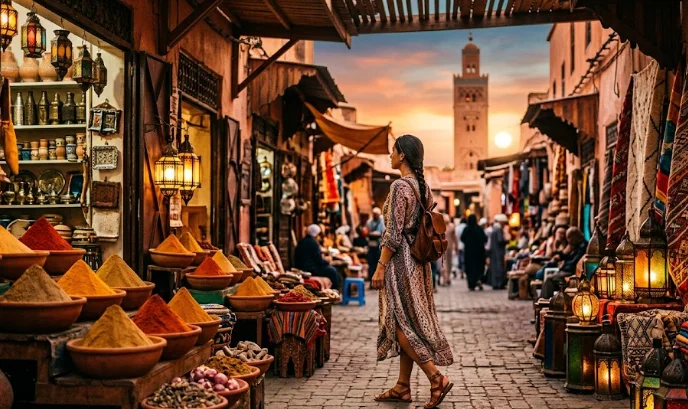
Marrakech is a city that engages every single one of your senses from the moment you arrive. Known as the “Red City” due to the warm hue of its historic clay walls, this North African oasis seamlessly blends heritage with modern culture. Whether you are navigating the lively mazes of its historic markets or sipping fresh mint tea on a quiet rooftop terrace, a decision to visit Marrakech offers an unforgettable travel experience.
If you are planning your first trip or returning to see what is new, this ultimate guide covers the best things to do in Marrakech. It is complete with local insider tips, historic context, and practical travel advice to help you maximize your stay.
1. Lose Yourself in the Chaos of Jemaa el-Fnaa
No trip to visit Marrakech is complete without stopping at Jemaa el-Fnaa. This massive open-air square is the beating heart of the city. By day, it is relatively quiet, populated by fresh orange juice stalls, Henna artists, and street performers.
However, as the sun begins to set, Jemaa el-Fnaa transforms into a giant, pulsating night market. Smoke rises from dozens of outdoor food stalls cooking fresh brochettes and tajines. Meanwhile, circles of spectators form around traditional Amazigh musicians, storytellers, and magicians. Experiencing this nightly transformation is truly one of the most magical things to do when you visit Marrakech. Consequently, the square earned a spot as a UNESCO Masterpiece of the Oral and Intangible Heritage of Humanity.
Local Tip: If the crowd on the ground feels overwhelming, head to one of the many surrounding rooftop cafes. Places like Le Grand Balcon du Café de la Poste or Café de France let you watch the spectacle safely from above with a refreshing drink.
2. Navigate the Labyrinth of the Central Souks to Visit Marrakech
Directly off Jemaa el-Fnaa lies a sprawling network of covered alleyways known as the souks. Therefore, when you visit Marrakech, exploring these vibrant commercial pathways is essential. The markets are roughly organized by trade, making it a fascinating place to watch artisans at work.
- Souk Semmarine: The main artery, packed with textiles, leather goods, and souvenirs.
- Souk Haddadine: The blacksmiths’ quarters, where you can hear the rhythmic hammering of iron and watch lanterns being forged.
- Rahba Kedima (Spice Square): A vibrant square filled with woven baskets, colorful spices, and traditional cosmetics.
Haggle gently but firmly if you want to buy something. Offering roughly 30% to 50% of the vendor’s starting price is a standard baseline to begin negotiations. For more details on budgeting for your market run, check out our guide on Is Marrakech Cheap?.
3. Admire the Symmetry of the Ben Youssef Madrasa
Originally founded in the 14th century and beautifully reconstructed in the 16th century, the Ben Youssef Madrasa was once the largest Islamic college in North Africa. It housed up to 900 students. For architecture lovers who visit Marrakech, this site is an unmissable destination.
Today, it stands as an absolute masterpiece of Moroccan architecture. As you step into the central courtyard, you are surrounded by highly detailed zellij (mosaic tilework) and carved stucco. Massive cedarwood beams carved with Arabic calligraphy frame the space. Taking in the stunning geometric layouts here tops the list of essential cultural things to do in Marrakech.
4. Find Peace in the Jardin Majorelle When You Visit Marrakech
When you need a break from the high energy of the Medina, escape to the Jardin Majorelle. It is located in the modern Gueliz neighborhood. Originally created by French painter Jacques Majorelle over forty years, the botanical garden was later purchased and restored by fashion icon Yves Saint Laurent and his partner Pierre Bergé in 1980.
The garden features a stunning collection of exotic cacti, bamboo groves, and water lilies. These are all set against a striking cobalt blue villa, now known worldwide as Majorelle Blue.
Important Note: You cannot buy entry tickets at the gate anymore. To visit Marrakech and include this landmark in your plans, you must book your tickets online via the official website. Do this at least a few days in advance to secure a time slot.
5. Explore the Opulent Bahia Palace
Meaning “Palace of the Brilliance,” the Bahia Palace was built in the late 19th century for Si Moussa, the grand vizier of the sultan. The sprawling complex was designed to capture the essence of Islamic and Moroccan architectural styles.
As you wander through its 160 rooms, you will pass through sun-drenched marble courtyards and lush harem gardens. The residential quarters feature spectacular stained-glass windows and hand-painted cedar ceilings. Adding this palace to your list of things to do in Marrakech gives you a clear look into the luxurious lifestyle of Moroccan royalty during the 1800s.
6. Step Back in Time at the Saadian Tombs
Sealed away for centuries and hidden behind high stone walls, the Saadian Tombs were completely rediscovered by chance. Aerial photography revealed them in 1917. This beautiful mausoleum serves as the final resting place for roughly sixty members of the wealthy Saadian dynasty, which ruled Morocco from 1554 to 1659.
The absolute highlight of the complex is the Chamber of the Twelve Columns. This room features intricate stucco work and Italian Carrara marble columns. Furthermore, magnificent geometric ceilings showcase the pinnacle of golden-age Moroccan craftsmanship.
7. Walk Through El Badi Palace as You Visit Marrakech
Unlike the pristine preservation of Bahia Palace, El Badi Palace is a massive, atmospheric ruin. Built in the late 16th century by Sultan Ahmad al-Mansur to celebrate a military victory, it was once referred to as the “Incomparable Palace.” It boasted walls lined with gold, turquoise, and crystal.
Regrettably, a later ruler stripped the palace of its riches to build a new capital in Meknes. Today, when tourists visit Marrakech, they can explore the vast sunken orange orchards. They can also climb the high mud-brick ramparts for panoramic views of the city, and spot the giant storks that build their nests along the crumbling walls.
8. Experience an Authentic Moroccan Hammam
If your feet are tired from walking miles across stone alleys, booking a session at a hammam is the perfect remedy. This traditional steam bath has been a staple of Moroccan social and spiritual life for centuries.
You can choose between a local neighborhood hammam for an authentic, no-frills experience or a luxury private spa Riad (like Hammam de la Rose) for a deeply relaxing treatment. A standard session involves relaxing in a heated steam room. This is followed by an intense full-body scrub using traditional savon noir (black eucalyptus soap) and a kessa glove to leave your skin feeling completely refreshed.
9. Stay Overnight in a Traditional Riad to Visit Marrakech Perfectly
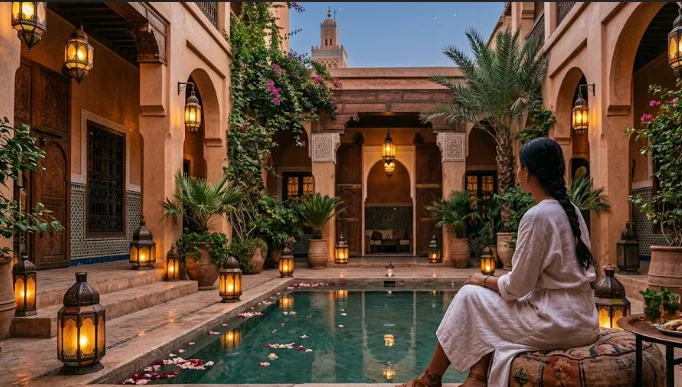
To truly experience the soul of the city, skip the standard Western hotels. Instead, choose to visit Marrakech while staying inside an authentic Riad. A Riad is a traditional Moroccan house or palace featuring an interior garden or courtyard, typically located inside the ancient walls of the Medina.
Riads are specifically designed with inward-facing windows to maximize family privacy. This layout also keeps the indoor climate cool. Stepping through a plain wooden door from a loud, chaotic alleyway directly into a silent, sunlit courtyard filled with orange trees, fountain water, and mosaic tiles is one of the most memorable things to do in Marrakech. For recommendations on the safest and most historic districts to book, check out our guide on Where to Stay in Marrakech.
10. Sample Authentic Food on a Street Food Tour
Moroccan cuisine is celebrated worldwide, and Marrakech is its culinary capital. While you should absolutely sit down for a slow-cooked lamb tajine or a sweet-and-savory pastilla, the local street food scene holds its own unique treasures.
Consider booking a guided evening street food tour around the Medina. This allows you to safely try local delicacies you might otherwise miss.
Must-Try Local Specialties
- Tanjia Marrakchia: A dish native to Marrakech. Beef or lamb is packed into a clay pot with garlic, cumin, saffron, and preserved lemon. It is then buried in the ashes of a local hammam furnace to slow-cook for hours until the meat falls off the bone.
- Harira: A hearty, traditional tomato-based soup packed with lentils, chickpeas, and fragrant cilantro, typically served with sweet dates.
- Msemmen: Flaky, laminated square pancakes fried on a griddle, served hot with butter and wild honey.
11. Enjoy Coffee at the Legendary Bacha Coffee
Located inside the historic Dar el Bacha palace (The Museum of Confluences), Bacha Coffee is widely considered one of the most beautiful coffee rooms on earth. Originally built in 1910, this grand room hosted legendary historical figures like Charlie Chaplin, Winston Churchill, and Franklin D. Roosevelt.
The stunningly restored room features black-and-white checkered marble floors and elaborate wood carvings. Additionally, a massive menu features over 200 varieties of 100% Arabica coffees sourced from all over the world. They are served in heavy gold pots alongside fresh, warm croissants. Stopping here for a morning brew is among the most elegant things to do in Marrakech.
12. Dive Into Modern Art When You Visit Marrakech
While Marrakech honors its ancient history, it also embraces the modern world. Art lovers who plan to visit Marrakech should explore two key spots outside the old city:
- The Musée Yves Saint Laurent: Located right next to the Jardin Majorelle, this sleek, contemporary brick building houses an extensive collection of haute couture garments, sketches, and photographs highlighting YSL’s deep creative connection to Morocco.
- MACAAL (Museum of African Contemporary Art Al Maaden): An incredible independent museum showcasing the work of contemporary visual artists from across the African continent.
13. Uncover the History of the Mellah
The Mellah is the historic Jewish Quarter of Marrakech, established in 1558 as a safe haven for Jewish populations escaping persecution in Europe. It features a noticeably distinct architectural layout compared to the rest of the Medina. It is characterized by homes with prominent external balconies facing the street.
While visiting the Mellah, stop by the peaceful Slat Al Azama Synagogue, built around a beautiful white-and-blue open courtyard. Afterward, wander through the nearby Place des Ferblantiers, a lively historic square where local metalworkers craft stunning tin lamps.
14. Take in the View from a Medina Rooftop
As the late afternoon sun casts a deep golden glow over the clay buildings, make your way up to a panoramic rooftop bar or restaurant. Watching the city light up while the melodic evening adhan (call to prayer) echoes simultaneously from hundreds of minarets across the city is a profound experience.
Popular spots like DarDar Rooftop, El Fenn, or Le Salama offer fantastic views of the iconic 12th-century Koutoubia Mosque minaret. The tower stands proud against the silhouette of the distant High Atlas Mountains.
Amazing Day Trips to Plan When You Visit Marrakech
If you are spending more than three days in the city, using Marrakech as a base camp for day trips into the surrounding countryside is a fantastic way to experience the geographical diversity of Morocco.
| Destination | Distance from Marrakech | Best For | Key Attraction |
| Agafay Desert | 45 minutes | Desert dining, sunset camel rides | Luxury stone-desert camps |
| Ourika Valley | 1 hour | Hiking, escaping summer heat | Setti Fatma Waterfalls |
| Ouzoud Falls | 2.5 hours | Nature lovers, wildlife | 110-meter waterfalls & wild Barbary macaques |
| Essaouira | 3 hours | Coastal breeze, fresh seafood | Historic sea fortresses & surfing |
Practical Travel Tips for Your Marrakech Adventure
- Best Time to Visit: The shoulder seasons of spring (March to May) and autumn (September to November) offer ideal weather. Summer temperatures regularly climb past 104°F (40°C), while winter nights inside unheated Medina buildings can feel surprisingly cold. For a deep dive into weather patterns, read When is the Best Time to Visit Marrakech?.
- Dress Code: Morocco is a conservative country. While Marrakech is accustomed to international tourists, dressing modestly (keeping your shoulders and knees covered) is respectful. It also helps prevent unwanted attention while walking through traditional residential areas.
- Navigating the Medina: The old city’s alleys are a maze, and Google Maps can occasionally get confused. Download an offline map app like Maps.me, or ask established shopkeepers for directions rather than young men lingering on street corners, who may demand a cash tip to guide you. Learn more about staying secure by reading Is Marrakech Safe?.
Frequently Asked Questions (FAQ) to Visit Marrakech
1. How many days do I need to visit Marrakech?
To see the main historic sights, explore the souks, and enjoy a traditional hammam without rushing, 3 days is the perfect amount of time. If you wish to include day trips to the Atlas Mountains or the Agafay Desert, plan for 5 to 7 days.
2. Can you drink the tap water in Marrakech?
It is highly recommended that international travelers stick to filtered or bottled water during their stay to avoid stomach upset. Most Riads and high-end restaurants use filtered water for ice and washing vegetables, but always ask if you are unsure.
3. What is the difference between the Agafay Desert and the Sahara Desert?
The Agafay Desert is a barren, rocky desert located just 45 minutes outside Marrakech. It offers beautiful desert camps and sunset views, but it does not have large sand dunes. The actual sand dunes of the Sahara Desert (like Erg Chebbi or Zagora) require at least a 2-to-3-day road trip to reach from Marrakech.
4. Is haggling mandatory in the souks?
Haggling is an integral part of Moroccan market culture. Vendors expect you to negotiate, and their initial price is always set significantly higher than the item’s actual value. Keep the interaction polite, lighthearted, and smile throughout the process.
5. Is Marrakech safe for solo female travelers?
Yes, Marrakech is generally safe for solo female travelers, but you will likely experience persistent street hassling from vendors or guides. Walking confidently, wearing modest clothing, ignoring unsolicited comments, and avoiding walking through quiet, unlit alleys alone at night will help ensure a hassle-free trip.
6. Can I visit the mosques if I am not Muslim?
Most active mosques in Morocco, including the famous Koutoubia Mosque in Marrakech, are strictly closed to non-Muslim visitors. However, you can freely explore historical Islamic educational structures like the Ben Youssef Madrasa to view traditional religious architecture.