


Moroccan Mint Tea: Secret to a Flawless Brew Now

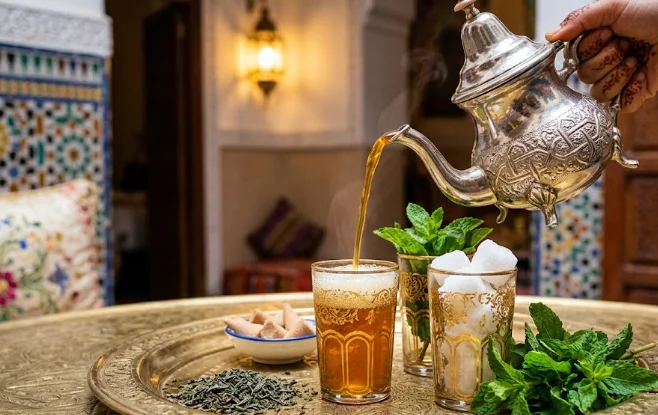
If there is one beverage that perfectly captures the heart, soul, and hospitality of North Africa, it is moroccan mint tea. Known locally as Atay, Maghrebi mint tea, or affectionately referred to as “Berber whiskey,” this iconic drink is far more than just a refreshing beverage. Ultimately, it stands as a cultural institution, a symbol of welcome, and a daily ritual that binds families and strangers together.
Whether you are walking through the bustling alleys of the Marrakech Medina or sitting in a quiet village in the Atlas Mountains, the aroma of fresh spearmint and warm gunpowder green tea is a constant companion. Consequently, in this comprehensive guide, we will explore the fascinating history behind moroccan mint tea, the precise art of its traditional preparation, and how you can recreate this authentic experience right in your own kitchen.
The History and Cultural Significance of Moroccan Mint Tea
While mint is indigenous to North Africa, the story of modern moroccan mint tea is a beautiful tale of globalization. In the mid-19th century, during the Crimean War, British merchants found themselves with a massive surplus of Chinese gunpowder green tea. Looking for new markets, they traded their stock in Moroccan ports.
Therefore, local Moroccans ingeniously combined this imported green tea with their abundant homegrown wild mint (Naana) and large quantities of sugar. What began as a resourceful experiment quickly transformed into a national obsession.
Today, moroccan mint tea remains deeply woven into the fabric of daily life. For instance, it represents the absolute pinnacle of Moroccan hospitality. Refusing a cup of tea when it is offered to you is considered a major social faux pas. Instead, it is brewed all day long—morning, afternoon, and late into the night. Furthermore, it is proudly served to guests, business clients, and family members alike. Traditionally, the preparation of the tea is a task reserved for the head of the household, a role taken on with immense pride.
The Sacred Anatomy of a Moroccan Mint Tea Set
To truly appreciate moroccan mint tea, one must understand the specific tools used to make and serve it. A traditional Moroccan tea service is a work of art in itself:
- The Berrad (Teapot): Crafted as a heavy, curved stainless steel or silver vessel, it is designed to be placed directly over an open flame. Moreover, its long, elegant spout remains crucial for creating the iconic foam.
- The Siniya (Tray): This beautifully engraved brass or silver-plated platter securely holds the teapot, glasses, and fresh ingredients.
- The Tea Glasses: Western traditions heavily favor porcelain cups, but moroccan mint tea is exclusively served in small, intricately decorated colorful glass cups instead.
Ingredients Needed for Moroccan Mint Tea
The beauty of moroccan mint tea lies in its minimal, yet highly specific ingredients. To make a truly authentic batch, you will need:
- Gunpowder Green Tea: Rolled into tiny pellets that resemble gunpowder, this specific type of Chinese green tea delivers a bold, smoky profile. In addition, its slightly bitter taste effectively cuts through the sweetness of the sugar.
- Fresh Spearmint (Naana): Please avoid using peppermint for this recipe. True Moroccan tea strictly requires fresh spearmint leaves, which offer a sweeter, mellower aroma without any aggressive menthol bite.
- Sugar: Traditional recipes rely on large cones of hard sugar, but standard white granulated sugar or sugar cubes work perfectly. Authentic moroccan mint tea is notoriously sweet, though you can adjust this to your taste.
- Water: Using filtered water is highly preferred because it lets the clean flavors of the mint and tea leaves shine without interference.
How to Brew Authentic Moroccan Mint Tea
Brewing this tea is a multi-step ceremony that requires patience. Follow these steps to achieve the perfect balance of flavors.
Step 1: Washing the Tea (The Spirit)
First, add 1 to 2 tablespoons of gunpowder green tea pellets directly into your teapot. Pour in about one cup of boiling water, swirl it gently for 30 seconds, and pour the liquid out into a clean glass. Do not throw this liquid away! This first liquid is called the “spirit” or “soul” of the tea; it contains the highly concentrated aromatic essence of the leaves. Set this glass aside.
Step 2: Rinsing the Leaves (The Wash)
Next, pour another cup of boiling water into the teapot, swirl it vigorously around the remaining leaves, and discard this liquid entirely. This step rinses away any bitterness and loose dust from the dried tea pellets.
Step 3: Combining the Elements
Afterward, pour the reserved “spirit” glass back into the teapot with the washed leaves. Fill the teapot with boiling water (around 3 to 4 cups). Place the teapot directly onto your stovetop over medium heat and bring the liquid to a gentle boil.
Step 4: Adding the Mint and Sugar
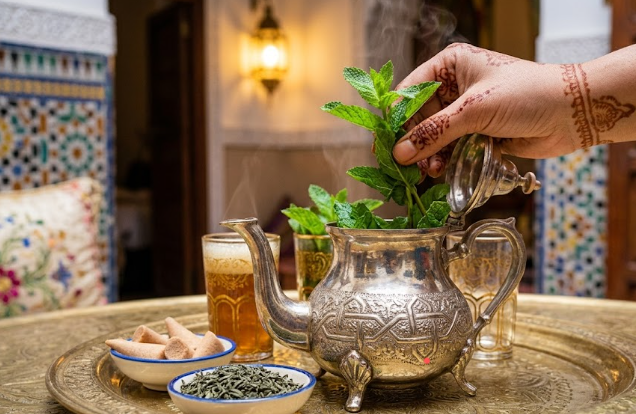
Once the tea is boiling, carefully stuff a large handful of fresh, washed spearmint leaves directly into the teapot, pressing them down so they are completely submerged (if left on top, the leaves turn brown and taste bitter). Immediately follow with 3 to 5 tablespoons of sugar. Let the mixture simmer on the heat for another 1 to 2 minutes to caramelize the sugar and infuse the mint.
Step 5: The High Pour and Aeration
Subsequently, remove the teapot from the heat. To mix the sugar evenly, do not stir with a spoon. Instead, pour a glass of tea from a high distance, then pour that glass back into the teapot. Repeat this process 2 or 3 times.
When pouring the final glasses for guests, raise the teapot as high as possible above the glass while maintaining a steady, unbroken stream. This serves two vital purposes: it cools the boiling hot tea to a drinkable temperature, and it aerates the liquid, creating a thick layer of froth at the top of the glass known as the “crown” (regga).
Summary Table: Ingredients and Proportions
| Ingredient | Standard Amount (4-Cup Teapot) | Purpose |
| Gunpowder Green Tea | 1.5 Tablespoons | Provides the smoky, robust, caffeine base. |
| Fresh Spearmint | 1 Large Handful (Stems included) | Adds the crisp, aromatic, sweet mint flavor. |
| White Sugar | 3 to 5 Tablespoons (Adjustable) | Balances the bitterness of the green tea. |
| Water | 4 Cups (Boiling) | Extracts the flavors through boiling. |
Final Thoughts on Moroccan Mint Tea
Drinking moroccan mint tea is an exercise in mindfulness. It forces you to slow down, sit with others, and converse while waiting for the boiling liquid to reach the perfect temperature. Indeed, there is a famous nomadic proverb often spoken in Morocco that beautifully sums up the experience:
“The first glass is as gentle as life. The second is as strong as love. The third is as bitter as death.”
Now that you know the secrets behind this legendary drink, invite some friends over, boil a pot of water, and experience a taste of Moroccan hospitality right from home.
Frequently Asked Questions (FAQ)
1. Can I use peppermint instead of spearmint for Moroccan mint tea?
While you can technically use peppermint, it will significantly alter the authentic flavor profile. Moroccan tea traditionally relies on spearmint (Mentha spicata), which has a naturally sweeter, subtler flavor. Alternatively, peppermint contains high levels of menthol, which can create an overwhelming “icy” sensation that overpowers the smoky notes of the gunpowder green tea.
2. Why do Moroccans pour the Moroccan mint tea from such a high distance?
Pouring the tea from a height serves three distinct purposes. Initially, this action cools the boiling liquid down to a temperature that won’t burn your mouth. Furthermore, the impact of the liquid against the glass creates a beautiful, frothy foam layer at the top. Finally, the high pour thoroughly aerates the tea, enhancing the rich aromas of the fresh mint as they hit the glass.
3. Is Moroccan mint tea always served with sugar?
Traditionally, yes—authentic moroccan mint tea is served exceptionally sweet, as the sugar counterbalances the natural bitterness of the boiled green tea. However, if you are mindful of your sugar intake, you can absolutely reduce the amount of sugar or omit it completely. Just note that the flavor will taste much more robust and astringent without it.