

Moroccan Gastronomy: The Magic of a Complete Feast
- Moroccan cuisine Moroccan Culture Morocco Guide
 Maroc Fans
- 0
- 12 minutes read

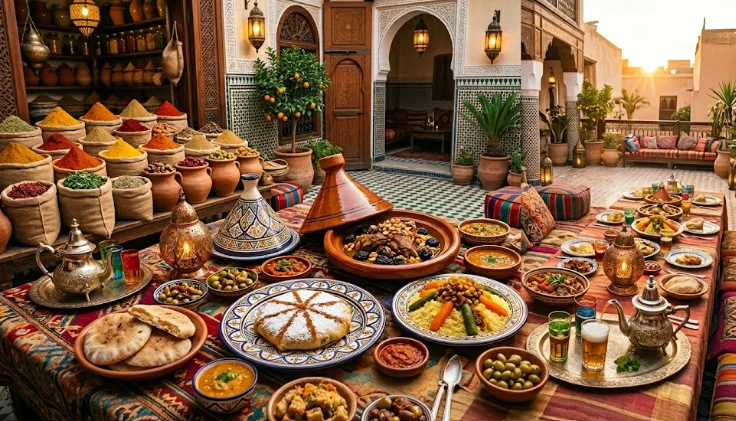
When you step into a Moroccan kitchen, you instantly enter a centuries-old crossroads of civilizations. Moroccan Gastronomy evokes an immediate sensory rush that captivates the mind. Specifically, the deep red of paprika and the golden hue of saffron catch your eye first. Then, the sweet scent of orange blossom water fills the room, accompanied by the sizzling sound of a clay tagine over hot coals. Globally renowned as one of the world’s greatest culinary traditions, this cuisine represents a masterful fusion of Amazigh (Berber), Arab, Andalusian, Mediterranean, and African influences. Ultimately, it balances contrast perfectly by marrying sweet with savory, fiery with subtle, and rustic with deeply refined elements.
The Historical Melting Pot of Moroccan Gastronomy
To understand the true depth of this culinary tradition, one must explore the complex history of the land. The indigenous Amazigh people originally provided the foundational building blocks. For instance, they introduced the world to couscous, developed slow-cooking methods using clay vessels, and mastered the use of rustic ingredients like barley, dates, and olive oil.
During the 7th century, Arab expansions brought exotic spices from the East to North Africa. Consequently, locals embraced dried fruits and began pairing meats with sweet elements. Centuries later, the Moors and Jews fled the Spanish Inquisition and settled across Morocco. As a structural result, they introduced complex Andalusian culinary techniques, innovative agricultural practices, and a deep appreciation for citrus and olives. French colonial history eventually followed, leaving an indelible mark on the country’s modern baking and cafe culture. Therefore, the contemporary national menu feels entirely cohesive yet incredibly diverse today.
Flavors at the Heart of Moroccan Gastronomy: Spices, Herbs, and Aromatics
At the core of every dish lies a sophisticated understanding of seasoning. Unlike Western cuisines that rely heavily on thick sauces, Moroccan Gastronomy builds its depth from the ground up using complex spice blends.
The legendary blend known as Ras el Hanout translates literally to “head of the shop” and represents the best a spice merchant has to offer. This unique mixture can contain anywhere from 10 to over 30 different ground spices, including cardamom, nutmeg, anise, cinnamon, ginger, and various peppers. Because of this variety, it tastes warm, complex, and deeply aromatic.
In a similar way, saffron gives dishes a luxurious, earthy undertone alongside a vibrant yellow color. Meanwhile, preserved lemons add a unique, deeply salty, and fermented citrus punch that fresh lemon simply cannot replicate.
Finally, fresh herbs like cilantro and parsley are utilized by the handful rather than just as simple garnishes. Chefs chop them finely to form the base of vibrant marinades like chermoula, which is a mix of garlic, cumin, paprika, and olive oil used primarily for fresh seafood.
The Pillars and Signature Dishes of Moroccan Gastronomy
A traditional meal is a communal experience designed to be shared. Diners usually eat with the fingers of the right hand, using crusty, freshly baked round bread (khobz) as a primary utensil.
1. The Tagine: Slow-Cooked Perfection
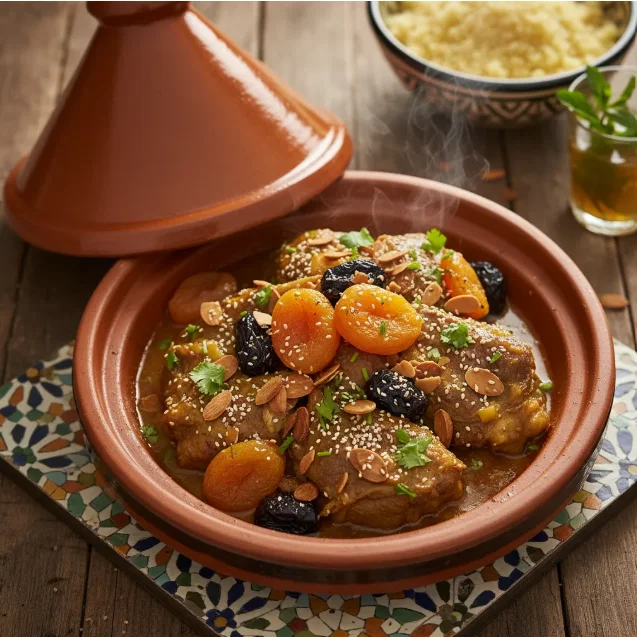
Named after the conical clay pot in which it is cooked, the tagine stands as the ultimate symbol of culinary identity. The unique shape of the vessel acts as a natural condenser. By trapping steam and returning it to the bottom safely, it ensures that the meat becomes melt-in-your-mouth tender while using very little water. Splendid classic combinations include Tagine de Poulet aux Olives et Citrons Confits (Chicken with olives and preserved lemons). Another nationwide favorite is Tagine d’Agneau aux Pruneaux (Lamb cooked with prunes and toasted almonds, drizzled with honey and sesame seeds).
2. Couscous: The Friday Ritual
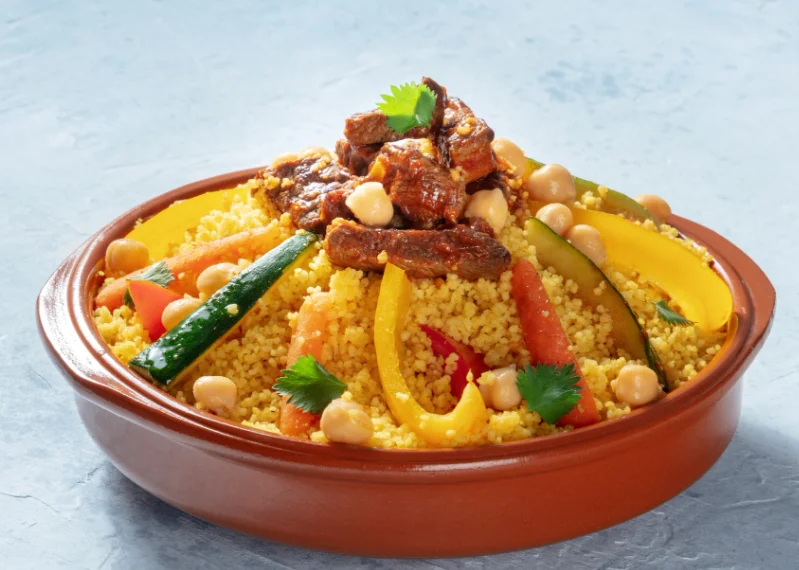
Couscous is far more than just a simple grain; it is a sacred cultural ritual. Traditionally prepared on Fridays for the holy day, families gather around a massive ceramic platter to enjoy it together. The semolina grains are meticulously steamed three times over a simmering broth in a special pot called a couscoussier. Regarding variations, the most famous is Couscous aux Sept Légumes (Couscous with seven vegetables). It features sweet pumpkin, carrots, zucchini, cabbage, turnips, onions, and chickpeas piled high over tender beef or lamb.
3. Pastilla: The Ultimate Sweet-Savory Masterpiece
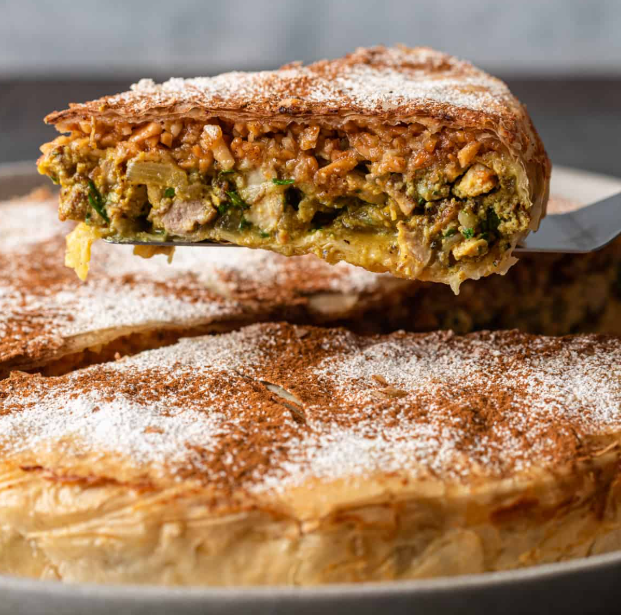
Originating from the imperial city of Fes, the Pastilla represents the absolute pinnacle of celebratory cooking in Moroccan Gastronomy. It features paper-thin layers of warka pastry stuffed with a savory filling of slow-cooked shredded pigeon or chicken. This meat is carefully cooked with aromatic spices and bound with eggs. Next, chefs add a crispy layer of toasted, crushed almonds, sugar, and cinnamon. The entire pastry is then baked until shatteringly crisp. Finally, it is dusted with powdered sugar and lines of ground cinnamon, creating a stunning display of culinary equilibrium.
                       ┌───────────────────────────┐
                       │    MOROCCAN GASTRONOMY    │
                       └─────────────┬─────────────┘
                                     │
         ┌───────────────────────────┼───────────────────────────┐
         ▼                           ▼                           ▼
 ┌───────────────┐           ┌───────────────┐           ┌───────────────┐
 │   THE BASICS  │           │  THE CLASSICS │           │ THE RITUALS   │
 ├───────────────┤           ├───────────────┤           ├───────────────┤
 │ • Khobz Bread │           │ • Tagine      │           │ • Atay        │
 │ • Chermoula   │           │ • Couscous    │           │   (Mint Tea)  │
 │ • Ras el      │           │ • Pastilla    │           │ • Friday      │
 │   Hanout      │           │ • Harira      │           │   Gatherings  │
 └───────────────┘           └───────────────┘           └───────────────┘
Street Food and Comfort Classics
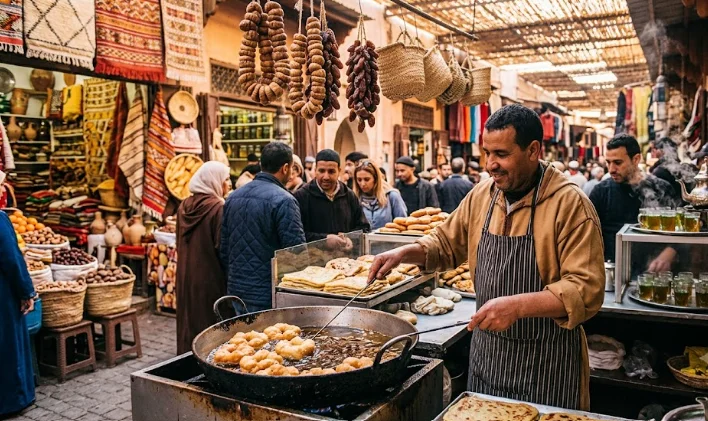
Beyond grand banquet halls and family homes, the bustling city streets offer a vibrant culinary landscape. In Marrakesh’s famous Jemaa el-Fnaa square, for example, thick smoke rises from dozens of open-air grills. These vendors cook brochettes (skewers of spiced beef, lamb, or chicken) and kefta (ground meat seasoned with cumin and paprika).
When the colder months arrive, locals flock to street stalls serving Harira. This rich, velvety soup is made from tomatoes, lentils, chickpeas, and meat, then thickened with flour and heavily scented with coriander and celery. Because of its nourishing qualities, it is the traditional soup used to break the fast during the holy month of Ramadan. Usually, it is accompanied by sweet, sesame-coated fried pastries called Chebakia. Another street favorite is Bissara. This comforting soup is made from dried fava beans or green peas, and it is served piping hot with a generous swirl of olive oil, a dusting of cumin, and chili powder.
The Art of Hospitality within Moroccan Gastronomy
You cannot truly appreciate Moroccan Gastronomy without mentioning Atay—Moroccan mint tea. Also known affectionately as “Berber whiskey,” mint tea represents the ultimate expression of warm hospitality. It is a sweet blend of Chinese gunpowder green tea, fresh spearmint leaves (naana), and a generous amount of sugar.
The preparation and pouring of the tea is an intricate art form usually performed by the host. The teapot is held remarkably high above the glasses, creating a long, elegant stream of steaming liquid. This technique is not just for show; it introduces oxygen into the liquid, creating a delicate layer of froth at the top known as the “crown.” At the same time, it cools the tea to the perfect drinking temperature. Consequently, to decline a cup of mint tea when offered is considered a major social faux pas.
Following the tea ritual, sweet treats are always nearby. Local pastries rely heavily on almond paste, orange blossom water, mastic, and honey. The most famous include Cornes de Gazelle (Gazelle horns), which are crescent-shaped pastries stuffed with spiced almond paste. Another classic option is Ghoriba, a beautifully cracked, chewy cookie made from coconut or almonds.
“A Moroccan meal is an exercise in patience and presence. It cannot be rushed, it cannot be eaten in isolation, and it is always seasoned with the warmth of welcome.”
The Modern Renaissance of Moroccan Gastronomy
Today, this culinary heritage is experiencing an exciting global evolution. Traditional recipes remain fiercely protected by Moroccan grandmothers (Dadas). However, a new generation of innovative chefs in cities like Casablanca, Marrakesh, and Rabat is actively rethinking these classics.
They are applying modern culinary techniques to ancient traditions. For instance, they reduce cooking times to preserve vegetable textures and plate dishes with contemporary artistry. Meanwhile, they keep the true soul of traditional flavors entirely intact.
Whether you enjoy a rustic tagine in a mud-brick village high in the Atlas Mountains or a deconstructed pastilla at a Michelin-starred restaurant in Paris, Moroccan Gastronomy remains unforgettable. It successfully tells the story of its past while continuing to delight the modern palate, one perfectly spiced bite at a time.e.