
Rabat Lights Up Storytelling Festival – Here’s Why!
- Festivals & Events Morocco Guide
 Maroc Fans
- 0
- 11 minutes read

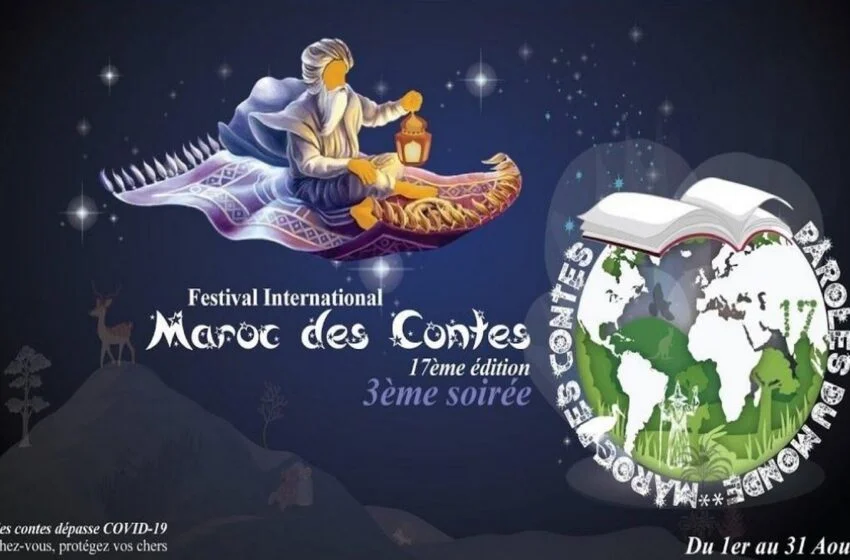
For the second time, Rabat has once again put imagination, collective memory, and the art of storytelling in the spotlight through the celebration of the International Moroccan Tales Festival. Through this major cultural event, the Moroccan capital reaffirms its role as a crossroads between tradition and modernity—between an ancient oral heritage and contemporary artistic creation. Far more than a simple cultural gathering, the festival offers a true immersion into a world where popular narratives, legends, fables, and stories passed down from generation to generation come alive before a diverse public. That audience includes children as well as adults, enthusiasts of oral literature, and casual visitors alike—people drawn simply by curiosity.
In a world dominated by screens and instantaneity, the tale finds in Rabat its full symbolic power. It becomes a tool for transmission, a vehicle for intercultural dialogue, and a means of valuing intangible heritage. The International Moroccan Tales Festival is not limited to an artistic program alone: it stands out as a meeting space where storytellers from Morocco and beyond gather, alongside researchers, educators, artists, and institutions united by a shared ambition—to preserve and reinvent the art of narrative. As a result, the event radiates well beyond the stages that host it, carrying a universal message about the importance of shared speech and collective listening.
A festival that celebrates the richness of Moroccan oral heritage
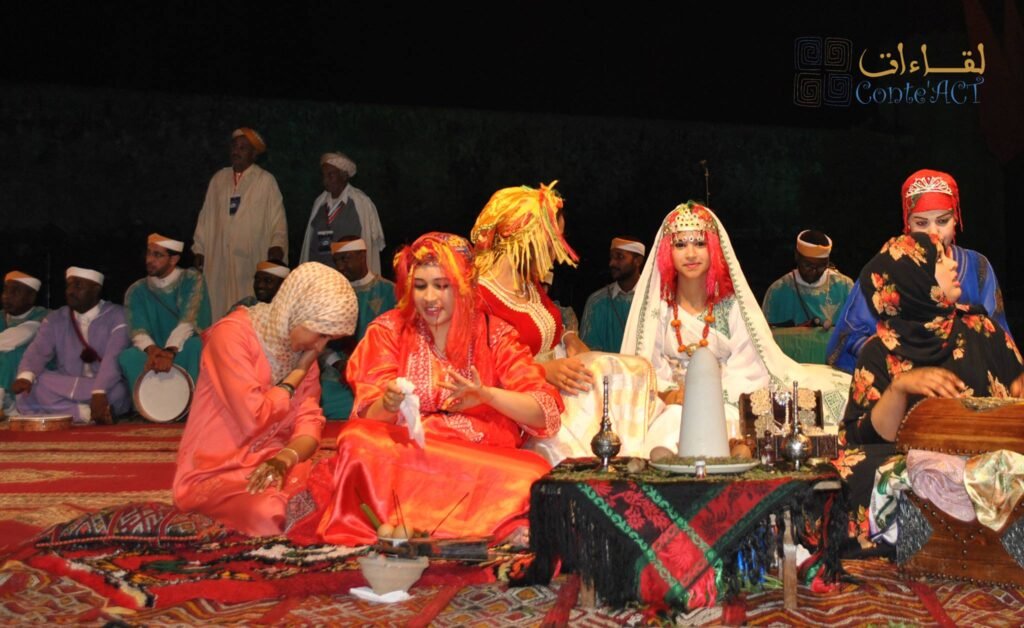
Morocco boasts an oral tradition of exceptional diversity. From the imperial medinas to mountain villages, from the Atlantic plains to the Saharan regions, tales have always held a central place in social life. They were told in public squares, in family homes, during evening gatherings, and on occasions of festivities and community get-togethers. By hosting the International Moroccan Tales Festival, Rabat highlights how vital and living this legacy remains—an inheritance essential to understanding the country’s cultural identity.
Moroccan storytelling draws on multiple sources: Amazigh, Arabic, African, Andalusian, Hassani, and Mediterranean influences. This plurality translates into a wide richness of characters, narrative motifs, and symbolic meanings. The stories feature kings and wise figures, cunning animals, courageous heroines, mysterious genies, and travelers confronted with the unknown. Beneath their apparent simplicity, these narratives often convey profound lessons about justice, solidarity, prudence, love, cleverness, and dignity.
In this way, the festival plays a fundamental role in bringing that shared memory to the forefront. It is not only about entertainment; it also gives visibility to a heritage that has too often been pushed to the margins in favor of more institutionalized cultural forms. By bringing together different storytelling styles and several languages, the event helps reaffirm that oral tradition remains a major component of Moroccan culture.
Rabat, an ideal cultural capital for the arts of storytelling
Choosing Rabat as the host city for this festival is far from accidental. As the political capital of the Kingdom, Rabat has also, for several years now, established itself as a major cultural hub. The city brings together historical heritage, creative momentum, and international openness. Its monuments, cultural institutions, libraries, theaters, and public spaces provide an especially fitting setting for a festival devoted to tales.
Rabat also benefits from its image as a city open to the world—capable of welcoming artists from many backgrounds while still highlighting local traditions. This dual dimension aligns perfectly with the spirit of the International Moroccan Tales Festival. On one side, it defends an inheritance deeply rooted in Moroccan cultures; on the other, it encourages exchanges between international narrative practices. The capital thus becomes a stage where traditional oral expression meets contemporary creativity.
Holding this kind of event in Rabat also fits into a broader strategy aimed at cultural outreach. By multiplying festivals, meetings, and artistic events, the city strengthens its status as an essential cultural destination in Morocco and the wider region. In that context, the tale—often perceived as a modest art form—gains greater visibility thanks to the symbolic weight of the capital itself.
Storytelling, an ancestral art that remains fully relevant
At first glance, storytelling may seem to belong to the past. Yet its continuing success proves that it fulfills a fundamental human need: to listen, to interpret, and to pass stories on. The International Moroccan Tales Festival underscores this point by reminding audiences that storytelling is not reduced to an old practice frozen in folklore. Rather, it is a living form—one that can evolve with the times, adapt to new audiences, and engage with the challenges of the present day.
Today’s storytellers do not simply reproduce old narratives. Many reinterpret traditional tales, modernize them, or blend them with other artistic disciplines such as music, theater, poetry, and the visual arts. This creative work allows storytelling to resonate with current concerns: questions of transmission, ecology, migration, memory, equality, and identity.
This contemporary relevance helps explain the growing interest the festival draws from new audiences. In schools, media libraries, festivals, and cultural centers, spoken-word storytelling finds its place again as both a pedagogical tool and an artistic expression in its own right. Rabat’s festival contributes fully to this renewal by demonstrating that oral narrative can still bring people together, move them deeply, and encourage reflection.
A program open to storytellers from Morocco and the world
One of the great strengths of the International Moroccan Tales Festival lies in its openness. As its name suggests, the event is not restricted to the national repertoire. It also welcomes foreign artists, enabling the public to discover other narrative traditions and other ways of bringing the world to life through speech. This international dimension considerably enriches the overall festival experience.
Each country has its own figures, rhythms, images, silences, and ways of captivating an audience. Some storytellers rely heavily on gesture, others emphasize the musicality of the voice, while still others foreground humor, improvisation, or interaction with the audience. By bringing together these varied approaches, the festival highlights both the diversity of the arts of storytelling and their universal dimension. Everywhere, human beings tell stories to pass something on, to explain, to dream, and to build connections.
Intercultural exchanges at the heart of the event
The meeting between Moroccan storytellers and visiting artists from elsewhere fosters genuine cultural dialogue. These exchanges make it possible to compare recurring themes across oral traditions around the world: the initiatory trial, the quest, metamorphosis, cleverness, the relationship to nature, and the transmission of knowledge. Audiences quickly realize that, despite differences in language and context, certain narrative structures cross borders and continue to speak to people everywhere.
This intercultural dimension is especially valuable in today’s context, when festivals play an important role in cultural diplomacy. Through tales, different visions of the world meet, respond to one another, and enrich themselves. In that sense, Rabat becomes a place for peaceful dialogue where listening and speech take precedence over divisions.
The essential place of young audiences
The International Moroccan Tales Festival generally gives special attention to children and adolescents. This choice is both strategic and symbolic. First, because young audiences naturally connect with the world of storytelling—its vivid images, surprising characters, and power to transport listeners beyond everyday life. Second, because the survival of oral traditions largely depends on their being passed on to new generations.
In a society where digital leisure increasingly dominates daily routines, offering storytelling performances, initiation workshops, and moments of shared oral reading helps reconnect children with an experience different from the screen. Here, there is no digital barrier between the story and the audience: everything passes through the voice, the gaze, silence, rhythm, and presence. This direct relationship supports attentive listening, imagination, and concentration.
For adolescents, storytelling can also become a tool for personal expression. Certain educational activities organized around the festival may encourage young people to write, tell, or revisit stories drawn from their family environment or local community. In that way, the festival does not merely present shows; it can also spark vocations and nurture a new generation of storytellers and story-bearers.