



Moroccan Zellige Decoration: Design Ideas & Styles
- Moroccan Crafts Pottery & Zellige
 Maroc Fans
- 0
- 21 minutes read

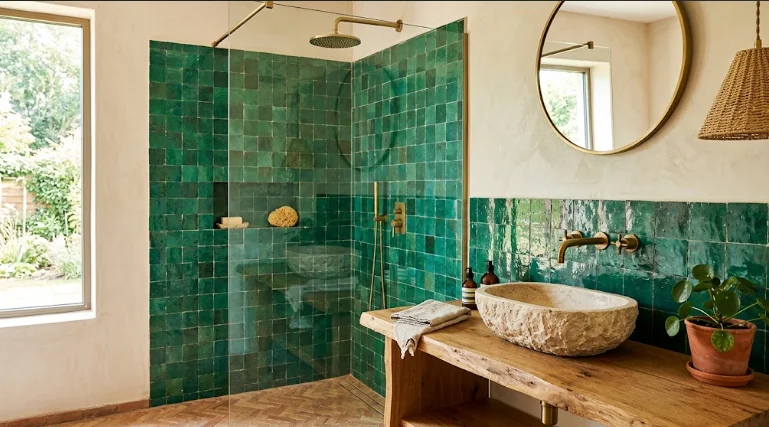
From the vibrant riads of Fez and Marrakech to modern luxury penthouses in Paris, New York, and Dubai, Moroccan zellige decoration has become one of the most popular trends in contemporary interior design. Renowned for its rich color variations, shimmering glazed surfaces, and unique hand-chiseled charm, Moroccan zellige decoration brings warmth, authenticity, and architectural depth to any space.
Whether you are planning a full kitchen overhaul, designing a spa-like bathroom retreat, or adding an artistic touch to an accent wall, incorporating Moroccan zellige decoration offers endless creative possibilities. In this comprehensive guide, we explore the heritage of handcrafted zellige, modern layout ideas, room-by-room inspirations, practical comparisons, and essential installation tips.
1. What is Handcrafted Moroccan Zellige?
To master Moroccan zellige decoration, it helps to understand what sets this material apart from mass-produced factory ceramics.
The History and Craftsmanship
Zellige (also spelled zelige or zillij) is a traditional form of handmade clay tilework native to Morocco, dating back to the 10th century. Fez remains the world center for authentic production due to the unique chemical composition of its local natural grey clay.
Unlike industrial tiles made by machines, authentic zellige is crafted entirely by hand:
- Clay Preparation: Natural clay is soaked in water, kneaded manually to remove air pockets, and hand-molded into flat square shapes.
- Sun-Drying: The clay tiles dry naturally under the Moroccan sun.
- Glazing: Enamel glazes made from mineral oxides (cobalt for blue, copper for green, iron for yellow) are applied by hand.
- Olive-Pit Kiln Firing: Tiles are fired in traditional kilns powered by olive pits. Variations in heat distribution create subtle changes in color hue, surface shimmer, and texture on every tile.
- Hand Chiseling (Bejmat and Cutting): Master artisans (Maâlems) chisel the edges of each tile at an angle using a specialized hammer called a manqarch. This allows tiles to be laid extremely close together with minimal grout lines.
Key Takeaway: No two zellige tiles are identical. Subtle chips, micro-cracks, and shade variations are not defects—they are the authentic signatures of true Moroccan zellige decoration.
2. Why Choose Moroccan Zellige Decoration for Your Home?
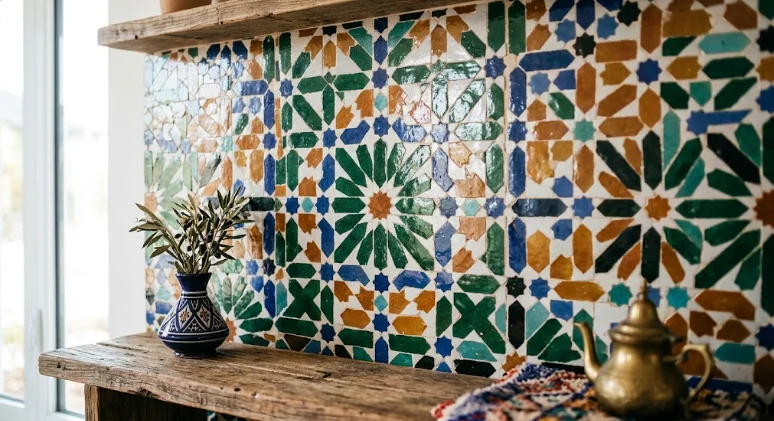
Interior designers around the world regularly choose Moroccan zellige decoration for its striking design benefits:
- Dynamic Light Reflection: The semi-glossy glaze and uneven surface catch natural and artificial light from every angle, making dark or compact spaces feel bright and vibrant.
- Versatility Across Styles: While deeply rooted in Moorish architecture, Moroccan zellige decoration pairs effortlessly with Minimalist, Japandi, Industrial, Coastal, and Bohemian interior themes.
- Eco-Friendly Materials: Made strictly from earth, water, and mineral pigments, handcrafted zellige is a natural, sustainable interior choice.
- Long-Term Durability: Fired at high temperatures, zellige is heat-resistant, water-impervious once glazed, and built to last for generations.
3. Formats and Shapes Used in Moroccan Zellige Decoration
While ancient mosaics involved complex geometric puzzle panels, modern Moroccan zellige decoration relies on clean geometric tile formats that emphasize tone and texture.
       [ Square 10x10 cm ]           [ Bejmat / Brick 5x15 cm ]
      +-------------------+         +--------------------------+
      |                   |         |                          |
      |   Classic Gloss   |         |    Herringbone / Stack   |
      |                   |         |                          |
      +-------------------+         +--------------------------+
Classic Square Tiles (10×10 cm / 4×4 inches)
The foundational format for Moroccan zellige decoration. Ideal for backsplashes, accent walls, and walk-in showers. The grid pattern creates a stunning watercolor wash across the wall as light hits the subtle shade variations.
Bejmat (Brick Format: 5×15 cm / 2×6 inches)
Bejmat tiles are slightly thicker rectangular tiles suitable for both walls and floors. Popular layout patterns include:
- Herringbone pattern: Adds dynamic directional motion to shower walls or floor entryways.
- Vertical stack bond: Draws the eye upward to accentuate high ceilings in modern kitchens.
- Horizontal running bond: A warm, artisanal alternative to standard subway tiles.
Geometric Patterns & Mosaics
For accent features, scale-shaped (fish scale), hexagonal, or star-and-cross interlocking zellige patterns provide a striking visual focal point.
4. Room-by-Room Guide to Moroccan Zellige Decoration
A. The Kitchen: Backsplashes, Islands, and Nooks
Using Moroccan zellige decoration in the kitchen introduces warmth and organic texture to counteract hard countertops and modern metal appliances.
+-------------------------------------------------------------+
|                      UPPER CABINETRY                        |
+-------------------------------------------------------------+
|                                                             |
| [Moroccan Zellige Decoration: Off-White / Iridescent Glaze] |
| Refracts natural sunlight & under-cabinet LED light         |
|                                                             |
+-------------------------------------------------------------+
|                     COUNTERTOP (Marble/Quartz)              |
+-------------------------------------------------------------+
- The Iridescent Off-White Backsplash: Swap flat white ceramic tiles for cream or pearl zellige. The surface gloss prevents light-colored kitchens from looking clinical.
- Tiled Kitchen Islands: Wrap the front or base of your island with dark emerald green or deep sapphire blue bejmat tiles to protect against scuffs while creating a dramatic focal point.
- Stove Hood Alcoves: Tiling the alcove behind your range top brings Mediterranean hearth styling directly into your cooking area.
B. The Bathroom: Creating an Artisanal Sanctuary
In wet areas, Moroccan zellige decoration shines by turning functional walls into shimmering surfaces.
- Walk-In Showers: Covering shower walls from floor to ceiling with sage green, seafoam, or warm terracotta zellige creates an atmospheric spa environment.
- Vanity Backsplashes: Pair a glossy zellige backsplash with a matte stone or marble vanity sink. The contrast between smooth stone and handcrafted glaze elevation enhances tactile appeal.
- Monochromatic Wet Rooms: Use matching shades of wall zellige and floor bejmat to craft an enclosed, cozy sanctuary feel.
C. Living Rooms, Fireplaces, and Architectural Feature Walls
Extend Moroccan zellige decoration beyond wet areas into main living spaces:
- Fireplace Surrounds: Zellige holds up exceptionally well to heat. Wrapping a fireplace surround in bronze, olive, or charcoal tiles builds an inviting hearth that glows warmly in firelight.
- Bar Nooks and Alcoves: Transform a small recessed wall or home bar into an elegant corner by tiling it with deep jewel tones.
- Built-In Seating: Finish masonry benches or entryway ledges with smooth bejmat tiles for a cohesive Mediterranean indoor-outdoor transition.
5. Styling Moroccan Zellige Decoration with Colors and Materials
To achieve a balanced look, combine Moroccan zellige decoration with complementary natural textures and color schemes:
| Interior Style | Recommended Zellige Tones | Matching Materials & Finishes |
| Wabi-Sabi / Japandi | Natural Clay, Chalk White, Sand, Light Grey | Light oak, limewash walls, matte black hardware, natural linen |
| Modern Bohemian | Emerald Green, Ochre, Terracotta, Cobalt Blue | Rattan furniture, warm brass fixtures, leafy plants, jute rugs |
| Contemporary Minimalist | Pearl, Soft Off-White, Graphite Gray, Dusty Rose | Polished concrete, quartz tops, brushed stainless steel, glass |
| Coastal & Mediterranean | Ocean Blue, Sky Blue, Seafoam, Warm White | Bleached timber, travertine, woven baskets, abundant natural light |
6. Comparing Zellige to Other Popular Tiles
Understanding how authentic tiles perform helps you make informed choices for your Moroccan zellige decoration project.
| Feature | Authentic Moroccan Zellige | Standard Machine Ceramics | Encaustic Cement Tiles |
| Crafting Method | 100% Hand-molded & kiln-fired | Industrial machine press | Cold-pressed cement & pigments |
| Surface Finish | Glossy, reflective, lightly uneven | Perfectly smooth, uniform | Matte, flat, porous |
| Color Variation | High (V4 shade variations) | Low to zero (V1 uniform) | Moderate tonal shifts |
| Maintenance | Low (Glazed surface) | Very Low | High (Requires sealing) |
| Heat Resistance | High (Kiln-tested clay) | High | Moderate |
| Edge Finish | Hand-chiseled bevels | Rectified straight edges | Straight edges |
7. Key Installation Tips for Moroccan Zellige Decoration
Because handcrafted tiles carry natural size and edge variations, installing Moroccan zellige decoration requires specific techniques:
   TYPICAL ZELLIGE CROSS-SECTION:

   [ Glaze Layer ]      ~~ Reflective, irregular surface
   -----------------
   [ Hand-cut Clay ]   <-- 10-12 mm thick, organic variation
   -----------------
   [ Thin-set Mortar ]
   =================
   [ Substrate / Backer Board ]
- Blend Boxes Prior to Setting: Open multiple boxes at once and mix tiles across your floor space. This distributes color variations evenly rather than creating noticeable dark or light patches.
- Soak Tiles if Un-Glazed: Raw clay tiles or unglazed bejmat should be dipped briefly in clean water so they do not absorb moisture out of the tile adhesive too quickly.
- Keep Joints Ultra-Tight: Traditional Moroccan zellige decoration uses minimal joint spacing (approx. 1 mm). This creates a seamless, tapestry-like appearance across the entire wall.
- Choose Neutral Grout Colors: Use a fine, flexible non-sanded grout. Matching the grout shade closely to the tile color produces a continuous surface, while a pale grey grout outlines individual tiles subtly.
- Seal Grout and Unglazed Pieces: While glazed tile faces are naturally water-resistant, seal your grout lines and any unglazed edges or floor bejmat with a penetrating sealer.
8. Frequently Asked Questions (FAQ)
How do I clean and maintain Moroccan zellige decoration?
Glazed zellige is smooth and simple to maintain. Clean regularly with warm water, mild pH-neutral soap, and a soft microfiber cloth. Avoid acidic cleaners or harsh chemical bleaching agents that could damage grout seals.
Can Moroccan zellige decoration be used on floors?
Standard wall zellige (approx. 10 mm thick) is meant for vertical surfaces. For floors, use Bejmat tiles (approx. 20 mm thick), which are made specifically to withstand regular foot traffic in hallways, bathrooms, and kitchens.
Is zellige suitable for outdoor installation?
Glazed zellige performs well outdoors in mild and warm climates. However, in regions with severe freezing temperatures, unsealed tiles can absorb moisture and crack during freeze-thaw cycles. Ensure frost-rated tiles are selected for outdoor colder climates.
Why are there small chips and color marks on my zellige tiles?
Minor surface chips, color spots, and micro-cracks (crazing) are normal aspects of authentic Moroccan zellige decoration. They occur during sun-drying, manual chiseling, and kiln-firing, giving handcrafted tiles their distinctive character.
How much extra material should I order for my project?
We recommend adding a 15% to 20% waste margin when ordering zellige tiles. This accounts for edge cuts, corner adjustments, and shade selection during installation.
Conclusion: Transform Your Space with Zellige
Choosing Moroccan zellige decoration is more than selecting a tile—it is bringing centuries of artisanal tradition, human craftsmanship, and organic texture into your living space. Whether applied as a refined backsplash or a full-room feature, zellige elevates everyday walls into captivating design highlights.