



Middle Atlas Trek: Ultimate Guide to Morocco’s Hidden Trails
- Morocco Guide Travel Tips
 Maroc Fans
- 0
- 14 minutes read

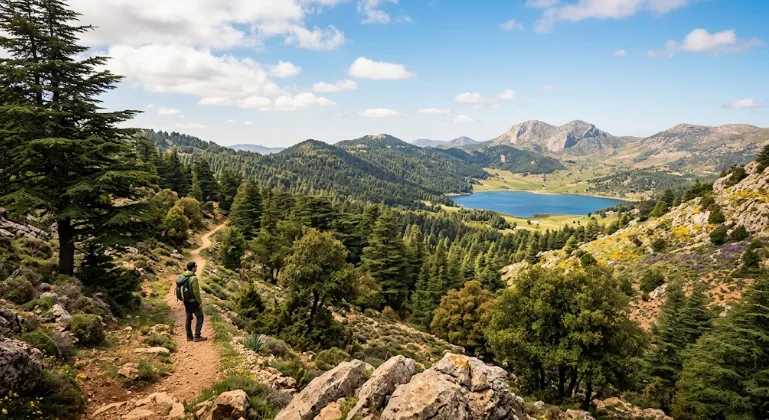
The Middle Atlas range remains one of North Africa’s best-kept secrets. While most outdoor enthusiasts flock to the high-peak drama of Mount Toubkal, travelers seeking ancient cedar forests, pristine volcanic lakes, Berber shepherd trails, and peaceful encounters with local wildlife will find their sanctuary here. Consequently, planning a Middle Atlas Trek offers an incredible alternative to the busier southern routes. Whether you are looking for a casual day hike near Ifrane or a multi-day wilderness traverse through remote mountain passes, this comprehensive guide covers everything you need to plan an unforgettable adventure.
Why Choose a Middle Atlas Trek for Your Next Adventure?
The Middle Atlas region offers a distinct natural and cultural landscape compared to the rest of Morocco. Dominated by limestone plateaus, vast subterranean aquifers, wild oak woodlands, and iconic Barbary macaque habitats, it presents a gentler, greener environment.
- Fewer Crowds: Enjoy peaceful trails without the heavy tourist traffic found along popular High Atlas routes.
- Rich Biodiversity: Traverse protected sanctuaries like Ifrane National Park and Tazekka National Park.
- Authentic Berber Culture: Experience genuine hospitality in traditional Amazigh villages untouched by mass tourism.
- Accessible Terrain: Routes vary from beginner-friendly woodland paths to challenging high-plateau ascents.
Best Time of Year for a Middle Atlas Trek
Choosing the right season is crucial for a safe and enjoyable journey. However, the climate varies significantly depending on elevation and season.
- Spring (March to May): The absolute best time for a Middle Atlas Trek. Temperatures are mild, rivers flow at maximum volume, and wild peony fields bloom across the plateaus.
- Autumn (September to November): Excellent trekking conditions. Crisp, clear air makes for spectacular mountain panoramas, while daytime temperatures remain comfortable.
- Summer (June to August): Can be warm at lower elevations; nevertheless, forest canopies near Azrou offer cooler refuge. Trekking at higher altitudes remains pleasant.
- Winter (December to February): Brings snow to higher elevations such as Michlifen. Consequently, snowshoeing and winter treks are possible with proper cold-weather gear.
Top Routes for Your Middle Atlas Trek
1. The Cedar Forest Loop (Ifrane to Azrou)
- Distance: 18 km (1-day circuit)
- Difficulty: Easy to Moderate
- Highlights: Ancient Atlas cedars, Barbary macaques, tranquil forest paths.
- Overview: Perfect for beginners and families. Starting near Ifrane, this trail wanders under towering cedar canopies toward Azrou. In addition, keep an eye out for native bird species along the way.
2. The Great Lakes Circuit
- Distance: 35 km (2-day trek)
- Difficulty: Moderate
- Highlights: Volcanic crater lakes (Dayet Aoua, Dayet Ifrah), limestone karst formations, migratory bird watching.
- Overview: This trail traverses an ancient volcanic landscape dotted with natural freshwater lakes. For instance, you will pass nomadic encampments, rolling pasturelands, and serene lake shores ideal for wild camping.
3. Jbel Bou Naceur Summit Ascent
- Distance: 42 km (3 to 4 days)
- Difficulty: Strenuous / Advanced
- Highlights: Peak elevation of 3,356 m, panoramic ridge walks, deep limestone gorges.
- Overview: As the highest peak in the region, this route offers a serious alpine challenge for any Middle Atlas Trek. The trail involves steep ascents over rocky terrain, rewarding hikers with sweeping 360-degree views.
4. Tazekka National Park & Friouato Caves Trail
- Distance: 28 km (2 days)
- Difficulty: Moderate
- Highlights: Jbel Tazzeka cork oak forests, the majestic Chiker cave systems, cascades of Tazzeka.
- Overview: Located near Taza, this lush route takes you through dense oak woodlands, dramatic gorges, and past deep karst caves like the Gouffre de Friouato.
Route Comparison Matrix
| Route Name | Duration | Distance | Max Elevation | Difficulty Level | Best For |
| Cedar Forest Loop | 1 Day | 18 km | 1,650 m | Easy | Families, Wildlife |
| Great Lakes Circuit | 2 Days | 35 km | 2,000 m | Moderate | Nature, Birding |
| Tazekka Park Trail | 2 Days | 28 km | 1,980 m | Moderate | Caves, Woodlands |
| Jbel Bou Naceur | 3-4 Days | 42 km | 3,356 m | Challenging | Summit Seekers |
Essential Gear & Preparation Tips for a Middle Atlas Trek
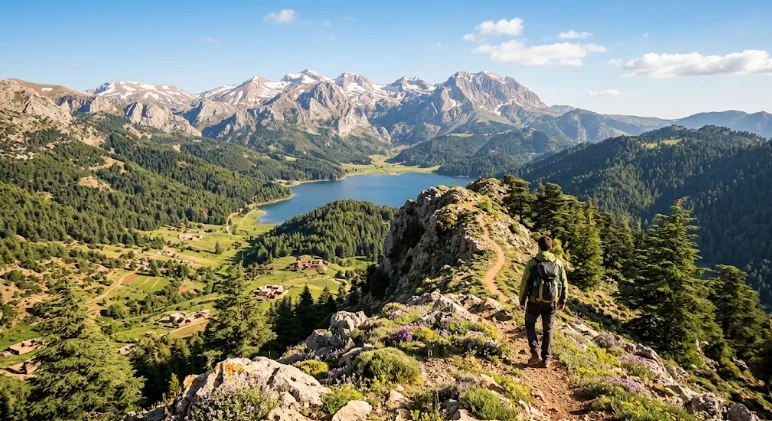
Preparation makes all the difference when venturing into remote mountain corridors. Therefore, ensure you have the appropriate gear before setting off.
- Sturdy Footwear: Waterproof, ankle-high hiking boots with good lug depth are essential for uneven limestone terrain.
- Layered Clothing: Mountain weather changes rapidly. As a result, pack moisture-wicking base layers, a fleece mid-layer, and a waterproof shell jacket.
- Navigation & Safety: Offline GPS maps (e.g., AllTrails, Maps.me) are recommended because cell signal can be patchy on rural trails.
- Hydration & Purification: Carry at least 2.5–3 liters of water per day, along with purification tablets or a high-efficiency water filter.
- Respect Local Culture: Dress modestly when passing through traditional Amazigh villages. Furthermore, always ask for permission before taking photographs of local residents.
- Leave No Trace: Pack out all trash, avoid disturbing native wildlife, and stick to established paths to prevent trail erosion.
Frequently Asked Questions (FAQ)
Q: Do I need a licensed guide for a Middle Atlas Trek?
A: For day hikes around Ifrane or Azrou, self-guided hiking is straightforward. However, for multi-day traverses like Jbel Bou Naceur or deep wilderness trails in Tazekka National Park, hiring a certified local guide is strongly recommended for safety and navigation.
Q: What accommodation options are available along the trails?
A: Accommodations range from cozy village guesthouses (gîtes d’étape) and traditional homestays to designated wilderness campsites. In addition, comfortable hotels and eco-lodges are widely available in larger hub towns like Azrou and Ifrane.
Q: Are there wild animals I should be cautious of?
A: The most famous resident is the Barbary macaque. Although they are generally harmless, do not feed or attempt to touch them. Similarly, sturdy boots protect against rare encounters with scorpions or vipers in dry rocky areas during mid-summer.
Q: How do I get to the main trailhead hubs?
A: Cities like Fez and Meknes serve as primary gateways. Consequently, from Fez, local grand taxis and regular CTM buses connect directly to Ifrane and Azrou within 1 to 1.5 hours.
Taking a Middle Atlas Trek offers an authentic window into Morocco’s natural heritage, combining ancient cedar forests, volcanic crater lakes, and rich Amazigh traditions away from the tourist crowds. Whether you tackle a quick day loop near Azrou or summit the heights of Jbel Bou Naceur, the region promises a deeply rewarding outdoor escape.