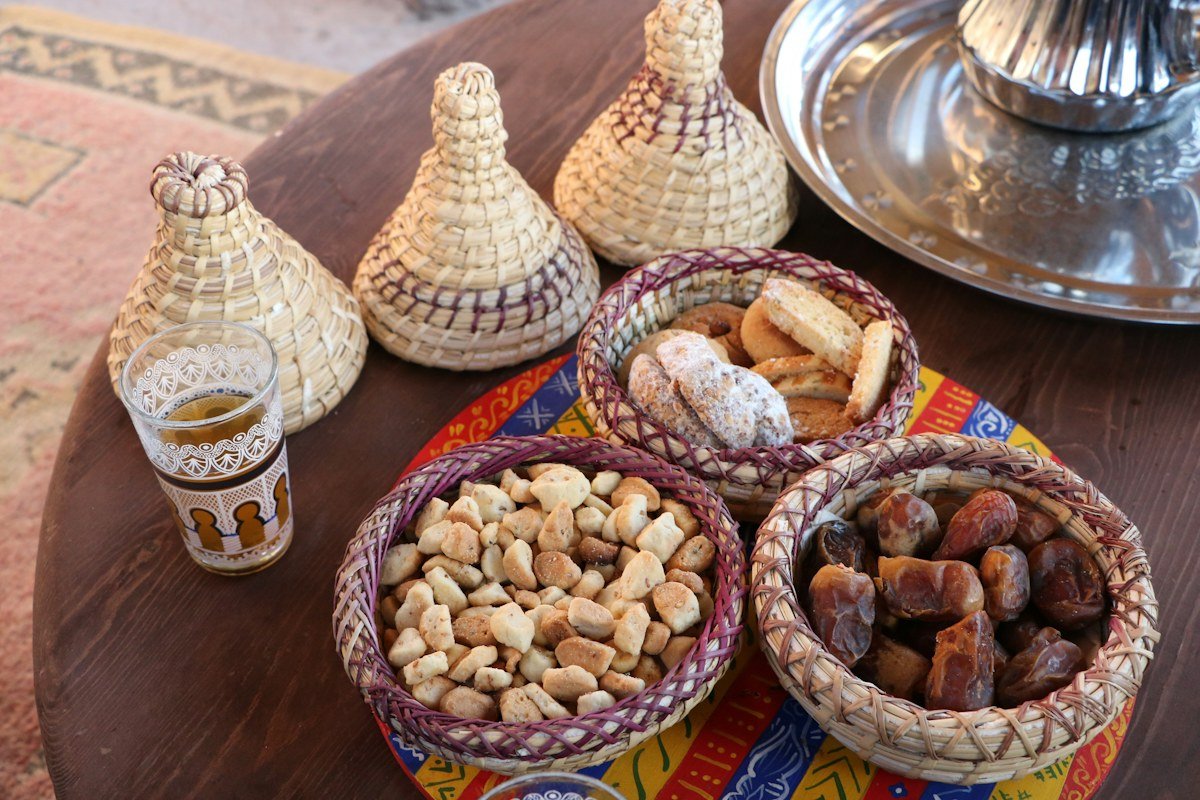
A traditional Moroccan breakfast is less about one fixed dish and more about sharing bread, spreads, warm drinks and freshly prepared favourites. Depending on the region, family and day of the week, the table may include crusty bread, flaky msemen, soft baghrir, olive oil, honey, olives or amlou. Here is what to expect and how to recreate a simple Moroccan breakfast at home.
What does a typical Moroccan breakfast include?
There is no single menu followed in every household. Some mornings call for bread and olive oil with tea or coffee; weekends and family gatherings can be more elaborate. The common thread is a selection of dishes placed in the centre of the table so everyone can help themselves.
1. Khobz: everyday Moroccan bread
Khobz is round Moroccan bread with a substantial crust and a soft interior. It can be baked at home, purchased from a bakery or, in some neighbourhoods, taken to a communal oven. At breakfast, pieces of khobz are often dipped into olive oil or used to scoop up soft cheese, honey and other accompaniments.
2. Msemen: flaky square flatbread
Msemen is a layered Moroccan flatbread that is folded into a square and cooked on a hot griddle. Its crisp edges and tender inner layers make it popular with butter, honey or soft cheese. It is especially delicious served fresh, although leftovers can be warmed gently in a pan.
3. Baghrir: pancakes with tiny holes
Baghrir, sometimes called thousand-hole pancakes, has a soft and airy surface that absorbs toppings beautifully. The little holes form while the batter cooks, usually on one side. A warm mixture of melted butter and honey is a classic accompaniment, but you can adjust it to taste.
4. Amlou: a rich Amazigh-inspired spread
Amlou is a spread commonly associated with southern Morocco and Amazigh food traditions. It is made from roasted almonds, argan oil intended for food and honey, with the proportions varying by recipe. Its nutty flavour pairs well with bread. Use culinary-grade argan oil, not cosmetic oil, if preparing it yourself.
5. Olive oil, olives, cheese and honey
Small bowls often provide variety with little preparation. Quality olive oil, olives, honey, jam, butter or fresh cheese can be served according to preference. Some breakfasts also include eggs. The exact combination is shaped by local habits, season and what the household has available.
6. Moroccan mint tea or coffee
Tea has an important place in Moroccan hospitality and daily life. Green tea with mint is familiar on many tables, although coffee and other hot drinks are also common. See our step-by-step Moroccan mint tea recipe for ingredients and serving tips.
How to make a Moroccan breakfast at home
- Place a loaf of khobz or slices of fresh bread in the centre of the table.
- Warm msemen in a dry pan, or prepare baghrir if you have extra time.
- Add small bowls of honey, olive oil, olives and amlou.
- Offer cheese, fruit or eggs for more variety.
- Prepare mint tea or coffee and serve everything together.
For a modest everyday version, start with bread, olive oil and tea. Add one homemade flatbread and two toppings when friends or family visit. A generous breakfast does not need to be expensive or complicated.
Regional and family variations
Breakfast traditions vary between urban homes, mountain villages and coastal towns. Different breads, grains, spreads and drinks may appear according to local production and family taste. Amlou is particularly associated with the southwest, while particular styles of bread or pancakes can have strong regional ties. It is best to think of Moroccan breakfast as a family of traditions rather than one universal recipe.
Frequently asked questions
Is Moroccan breakfast usually sweet or savoury?
Often both. Bread may be served alongside honey and jam as well as olives, olive oil or cheese.
What is the difference between msemen and baghrir?
Msemen is folded and layered like a flaky flatbread; baghrir is a spongy pancake with many small surface holes.
Can I prepare everything in advance?
You can arrange toppings ahead of time, but freshly warmed bread and pancakes generally taste best. Store perishable ingredients safely.
Explore Morocco beyond the table: discover the traditional craft streets of Fez’s medina or the Blue City in our Chefchaouen travel guide.
Featured photo: Catherine OLLART / Unsplash. Breakfast customs vary by family and region.