

What to Eat in Marrakech: The Ultimate Medina Foodie Guide
- Moroccan cuisine Traditional Dishes
 Manal Hachi
- 0
- 25 minutes read

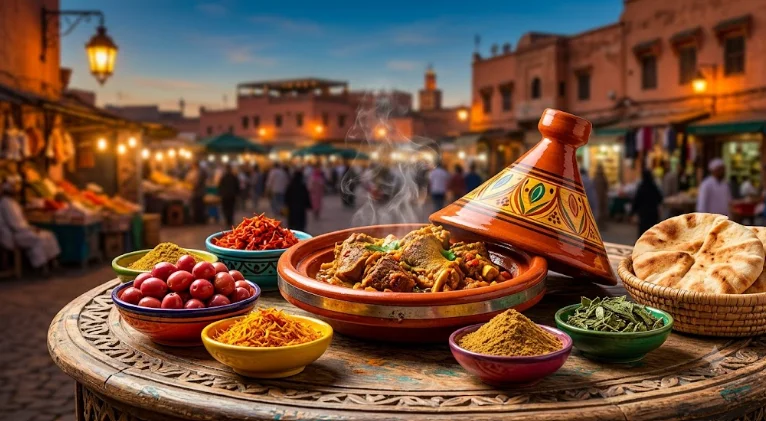
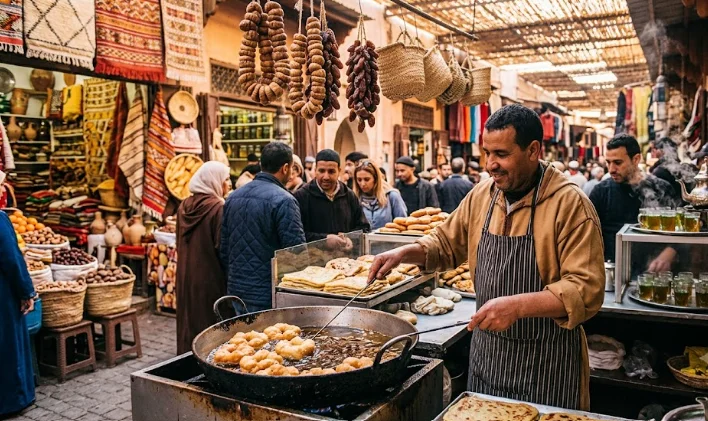
When you want to eat in Marrakech, stepping into the ancient Medina provides an immediate sensory experience. Between the vibrant textiles hanging in the souks, the ringing metal of brass artisan shops, and the irresistible aromas of roasted cumin, sweet cinnamon, and sizzling meats floating through the narrow alleyways, your senses constantly engage with the surroundings. Above all else, Morocco’s famous “Red City” remains an absolute paradise for food lovers looking to experience true North African gastronomy.
Navigating the historic labyrinth to find authentic, safe, and mouthwatering local cuisine feels overwhelming for first-time visitors. From humble street food stalls serving century-old recipes to hidden rooftop paradises reimagining traditional flavors, this comprehensive guide covers exactly what to eat in Marrakech, where travelers find the best bites, and how locals dine.
1. Local Meat Specialties Unique to Marrakech When You Eat in Marrakech
Although visitors find tagines all across Morocco, Marrakech boasts several hyper-local dish preparations that you cannot experience anywhere else in the country with the same authentic flavor. Therefore, if you plan to eat in Marrakech, these specialties are essential.
Tanjia Marrakchia: The City’s Signature Dish When You Eat in Marrakech
If you pick one absolute must-eat dish when you eat in Marrakech, choose Tanjia Marrakchia. Unlike the famous Moroccan tagine cooked over charcoal, cooks traditionally prepare a tanjia as a uniquely local specialty for working bachelors and market traders.
- The Ingredients: Chefs season cuts of beef shank, lamb, or camel heavily with preserved lemon, garlic bulbs, unrefined olive oil, saffron threads, cumin, and smen (aged, salted fermenting butter).
- The Process: Workers pack the raw ingredients tightly inside an amphora-shaped terracotta pot, seal them with parchment paper, and tie them securely with twine. Furthermore, people bring the pot down to the local Fernatchi—the underground furnace room that heats the neighborhood public bathhouse (hammam). There, the pot buries gently in hot wood ashes for 6 to 8 hours.
- The Result: The meat cooks so tenderly that it melts off the bone at the mere touch of a fork, bathed in a rich, gelatinous, spice-infused sauce.
Mechoui: Subterranean Pit-Roasted Lamb
Located just off the main square in an alleyway affectionately known as Mechoui Alley (Derb Semarine), local vendors specialize strictly in one item: Mechoui.
Workers lower whole spiced lambs into deep, subterranean clay ovens built directly into the brick floors. Consequently, because they seal the ovens with wet mud to trap the intense dry heat, the meat roasts slowly for several hours. When handlers pull the meat back up with metal hooks, the skin appears golden and crispy while the interior remains intensely tender and juicy. Customers order it by weight (100g to 500g), and vendors serve it simply on greaseproof paper with coarse sea salt and ground cumin for dipping.
2. Street Food Staples & Quick Bites to Eat in Marrakech
The heart of Marrakech’s street food identity lies right in its bustling alleyways and public squares. As dusk falls over the historic quarter, street corners transform into open-air kitchens for travelers looking to eat in Marrakech.
Msemen & Meloui (Moroccan Flatbreads) When You Eat in Marrakech
For a warm breakfast or an afternoon snack alongside a glass of tea, hungry visitors look for local women working griddles along the edge of the street markets.
- Msemen: Cooks make a square, layered, pan-fried flatbread by repeatedly folding paper-thin dough laminated with butter and fine semolina flour.
- Meloui: Bakers shape a round, rolled variation that yields a flaky, pastry-like texture.
Sellers serve them piping hot, drizzled with local wildflower honey and soft cheese, or stuffed with a savory mixture of minced onions, bell peppers, fat, and paprika (Msemen Maamra).
Maakouda Sandwiches
Maakouda comprise golden, spiced potato fritters made with mashed potatoes, garlic, coriander, and cumin, dipped in batter and deep-fried. Street vendors slice open a fresh piece of Khobz (Moroccan round flatbread), spread a layer of spicy harissa paste or tomato salsa, mash 3 to 4 crispy maakouda inside, and top the sandwich with fresh tomato-cucumber salad. For example, locals consider this the best budget snack you can eat in Marrakech.
Harira & Chebakia
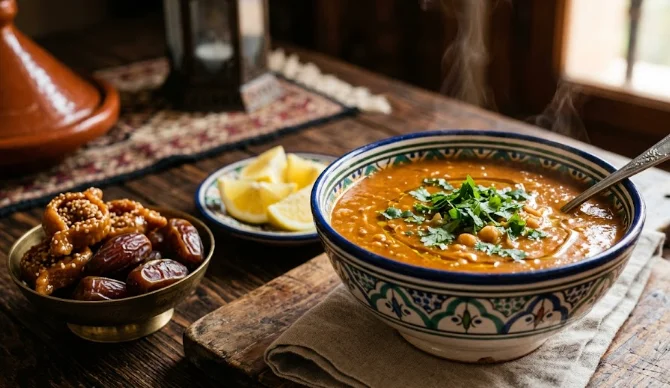
- Harira: Chefs prepare a rich, velvety soup from tomatoes, lentils, chickpeas, cilantro, parsley, and fine vermicelli noodles. Traditionally, people across North Africa use this soup to break the daily fast during the holy month of Ramadan, although stalls sell it year-round.
- Chebakia: Bakers shape a sweet, deep-fried pastry like a flower, coat it in warm honey, and sprinkle it with toasted sesame seeds. Locals always pair a hot bowl of savory harira with a piece of sweet chebakia to balance the flavors.
3. Classic Slow-Cooked Moroccan Tagines When You Eat in Marrakech
While quick street bites provide instant gratification, sitting down for a proper slow-cooked tagine reveals the deep complexity of traditional Moroccan spice blending when you eat in Marrakech.
       ┌────────────────────────────────────────────────────────┐
       │             THE ANATOMY OF A PERFECT TAGINE            │
       └───────────────────────────┬────────────────────────────┘
                                   │
         ┌─────────────────────────┼─────────────────────────┐
         ▼                         ▼                         ▼
  [ Base Proteins ]        [ Aromatics & Fat ]       [ Sweet & Savory ]
  Lamb Shank, Beef,        Saffron, Ginger, Cumin,   Preserved Lemons,
  Free-Range Chicken       Preserved Lemons, Smen    Prunes, Toasted Almonds
Chicken Tagine with Preserved Lemon and Olives
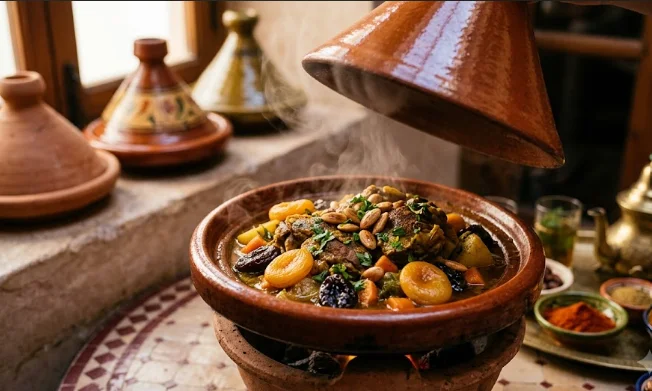
This dish represents the gold standard of everyday Moroccan cuisine. Chefs marinate free-range chicken pieces in chermoula (a vibrant paste of parsley, cilantro, garlic, lemon juice, cumin, paprika, and saffron) before braising them slowly beneath a conical terracotta lid. Furthermore, adding tangy preserved lemons and brine-cured red olives creates a bright, rich, savory gravy designed for scooping up with fresh bread.
Lamb Tagine with Prunes and Almonds
As a staple dish for weddings and family celebrations, this preparation highlights the classic North African pairing of sweet and savory elements. Tender pieces of lamb simmer alongside cinnamon, ginger, saffron, and honey. Afterward, cooks top the dish with plump, sweet poached prunes, a dusting of toasted sesame seeds, and golden fried almonds for extra crunch.
Pastilla (B’stilla): The Imperial Sweet-Savory Pie
Originating from Andalusian roots, pastilla serves as an imperial masterpiece of sweet-savory dining. Cooks stuff delicate layers of paper-thin warqa pastry with shredded, spiced chicken or pigeon cooked with onions, herbs, and egg. They layer this savory core with toasted, finely crushed almonds, orange blossom water, and sugar. After baking the pie until crisp, kitchen staff dust the entire pastry with powdered sugar and ground cinnamon.
4. Dining at Jemaa el-Fnaa: Navigating the Night Market When You Eat in Marrakech
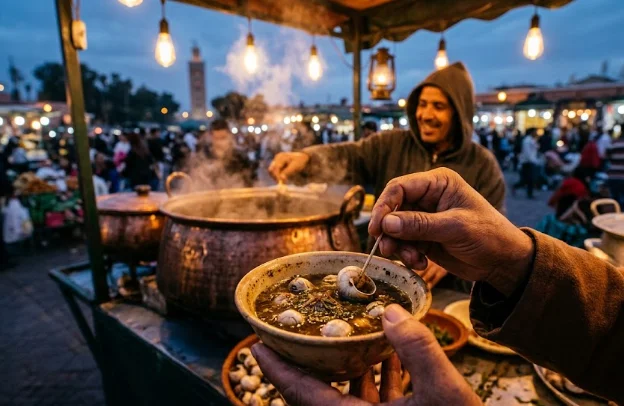
The central square of Jemaa el-Fnaa forms the beating heart of the Medina. Recognized as a UNESCO Intangible Cultural Heritage site, it converts every single evening into a massive open-air dining space filled with dozens of numbered food stalls for anyone looking to eat in Marrakech.
What to Order in the Square
- Freshly Squeezed Citrus Juice: Bright orange carts line the perimeter of the square during the day. For 10 to 15 MAD ($1.00 – $1.50), vendors press fresh oranges, pomegranates, or grapefruit right in front of customers.
- Babouche (Escargot Soup): Look for stalls carrying massive steaming cauldrons filled with small land snails. Chefs simmer the snails in a dark, aromatic broth composed of over 15 herbs and spices, including licorice root, thyme, aniseed, and dried chili. Diners eat the snails with a toothpick, then drink the warming, digestive broth straight from the bowl.
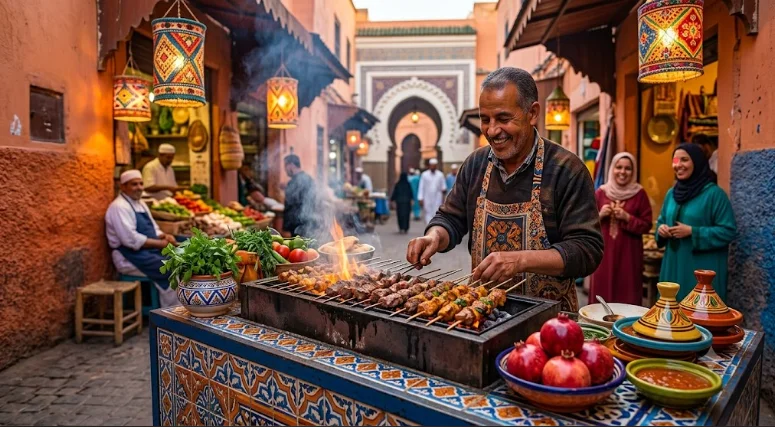
- Grilled Meat Skewers (Brochettes): Sizzling over hot embers, stalls cook seasoned beef, chicken, lamb, and spicy minced meat patties (kefta). Always choose stalls with high customer turnover where you can watch cooks prepare the skewers fresh to order.
Street Food Safety & Smart Dining Tips
- Pick Busy Stalls: Avoid empty stalls where aggressive hawkers try to pull you into seats. Instead, choose stalls packed with local Moroccan families; fast turnover guarantees fresh, hot food.
- Confirm Menu Prices First: Menus usually display clear prices, but always confirm whether sides (such as bread, olives, and tomato dip) incur extra costs before sitting down.
- Practice Good Hygiene: Wash your hands thoroughly before eating. While most stalls provide a bowl of water, soap, and a towel, carrying travel hand sanitizer remains recommended.
5. Teas, Sweets, and Drink Culture When You Eat in Marrakech
Dining in Morocco feels incomplete without understanding the cultural importance of its beverages and pastries whenever you eat in Marrakech.
Maghrebi Mint Tea (“Moroccan Whiskey”) When You Eat in Marrakech
More than just a hot drink, atay bi naana (Chinese gunpowder green tea brewed with fresh spearmint leaves and generous amounts of sugar) acts as the ultimate symbol of Moroccan hospitality. Servers pour the tea from a silver teapot held high above the table into small glass tumblers. Consequently, this technique creates a light layer of foam on top (the crown), which aerates the tea and cools it down to drinking temperature.
Traditional Artisan Pastries
Moroccan pastries taste rich and dense while remaining rarely overly sweet, relying heavily on almond paste, sesame, cinnamon, and orange blossom essence.
- Cornes de Gazelle (Gazelle Horns): Bakers shape crescent pastries filled with smooth almond paste scented with orange blossom water and cinnamon, wrapped in a thin pastry shell.
- Briouats: Cooks fold triangular fried filo-pastry envelopes stuffed with sweet almond paste or savory spiced meats.
- Ghoriba: Bakers form crinkled, shortbread-like cookies using semolina, coconut, or toasted sesame.
6. Comparative Overview of Dining Options in Marrakech When You Eat in Marrakech
To help you decide where to eat in Marrakech based on your budget, dining style, and atmosphere, use this quick comparison table:
| Dining Category | Typical Price (per person) | Atmosphere & Experience | Must-Order Dishes | Best Suited For |
| Street Stalls & Souk Carts | 15 – 40 MAD ($1.50 – $4.00) | Bustling, sensory, authentic, fast-paced | Maakouda, Msemen, Escargot broth, Orange Juice | Quick bites, budget travelers, full cultural immersion |
| Mechoui Alley / Local Furnace | 50 – 100 MAD ($5.00 – $10.00) | Rustic, basic communal seating, historic | Tanjia Marrakchia, Pit-Roasted Mechoui | Meat lovers seeking deep culinary heritage |
| Rooftop Cafes & Bistros | 100 – 250 MAD ($10.00 – $25.00) | Relaxed, scenic views over the Medina rooftops | Pastilla, Mixed Grill, Vegetable Tagines | Sunset views, comfortable seating, casual lunch |
| Fine Dining Riads | 350 – 700+ MAD ($35.00 – $70.00+) | Intimate, elegant courtyards, quiet luxury | Multi-course royal menus, Seafood Pastilla | Special occasions, romantic dinners, gourmet cuisine |
7. Food Safety, Etiquette, and Cultural Norms When You Eat in Marrakech
Eating local food in North Africa requires practical knowledge to ensure your trip remains comfortable and enjoyable.
Essential Food Safety Rules
- Drink Bottled Water: Stick strictly to sealed bottled mineral water (Sidi Ali and Ciel represent standard local brands). Avoid unboiled tap water and ice cubes at informal street carts.
- Peel Fruit Yourself: Enjoy fresh fruits that you can peel yourself (oranges, bananas, pomegranates, melons) to minimize contact with untreated wash water.
- Eat Cooked-Fresh Foods: Stick to hot foods cooked thoroughly right in front of you. Avoid warm, pre-cooked dishes left sitting out at room temperature.
Dining Etiquette: How to Eat Like a Local
- Eat with Your Right Hand: When eating traditional meals family-style without cutlery, always use your right hand. In local custom, society reserves the left hand for personal hygiene.
- Master the Bread Technique: In Morocco, khobz serves as your spoon. Break off a small piece, use your thumb and first two fingers to pinch a bite of meat or vegetable along with sauce, and lift it to your mouth.
- Share Communally: If eating from a central communal tagine, eat strictly from the triangular section directly in front of you.
8. Recommended Resources & Trip Planning
To continue planning your complete culinary and travel itinerary across Morocco, explore our related guides:
- Explore Historic Sights: Discover architectural masterpieces in our guide to the Best Historic Landmarks in the Marrakech Medina.
- Where to Stay: Experience authentic Moroccan hospitality with our list of Top Traditional Riads in Marrakech.
- Souk Shopping: Learn how to navigate the markets with our Marrakech Souk Shopping & Haggling Guide.
- Day Trips: Escape the city heat with our guide to Day Trips from Marrakech to the High Atlas Mountains.
- Travel Safety: Prepare for your journey using our essential Morocco Travel Tips on Culture, Safety, and Currency.
Frequently Asked Questions (FAQ)
Is street food in Marrakech safe to eat?
Yes, street food in Marrakech is generally very safe and delicious, provided you follow sensible guidelines. Choose stalls that host long lines of local residents, because high turnover ensures fresh ingredients. Stick to dishes cooked piping hot right in front of you, and always choose sealed bottled water over tap water.
How much does a typical meal cost when you eat in Marrakech?
Budget street bites like a maakouda sandwich or msemen flatbread cost between 5 to 15 MAD ($0.50 – $1.50). A hearty meal at a local mechoui stall or casual market diner ranges from 40 to 90 MAD ($4.00 – $9.00). Dining at a stylish rooftop restaurant or fine-dining riad typically ranges from 150 to 500 MAD ($15.00 – $50.00) per person.
Are there good vegetarian or vegan options when you eat in Marrakech?
Yes! Although Moroccan cuisine is famous for slow-cooked meats, vegetarians find plenty of options. Classic meat-free dishes include zaalouk (cooked eggplant and tomato dip), taktouka (grilled bell pepper salad), seven-vegetable tagines cooked without meat broth, fresh Moroccan tomato-cucumber salads, and warm flatbreads served with olive oil and olives.
What is the difference between a Tagine and a Tanjia?
Cooks prepare a tagine slowly over a charcoal fire inside a conical clay vessel containing meats, poultry, or fish cooked together with vegetables, dried fruits, and spices. Conversely, a tanjia acts as a specialty unique to Marrakech made strictly with seasoned cuts of meat, garlic, lemon, butter, and spices, sealed inside an amphora-shaped pot and buried in hot wood ashes underneath a local bathhouse furnace.
Do restaurants in the Marrakech Medina serve alcohol?
Most traditional street stalls and informal local eateries inside the historic Medina do not serve alcohol. However, many licensed rooftop restaurants, international hotels, and upscale riad dining rooms throughout the Medina serve wine, beer, and cocktails.
Conclusion
The food scene in Marrakech reflects Morocco’s rich history—a seamless blend of Amazigh traditions, Arab spice trade routes, and Andalusian influences. Whether you savor tender pit-roasted lamb in Mechoui Alley, sip sweet mint tea on a terrace overlooking the bustling rooftops, or break bread over a steaming chicken tagine, choosing what to eat in Marrakech offers far more than simple nourishment; it delivers an unforgettable cultural adventure.