

Ultimate Moroccan Tagine: Regional Recipes and Timeless Traditions
- Moroccan cuisine Traditional Dishes
 Maroc Fans
- 0
- 18 minutes read

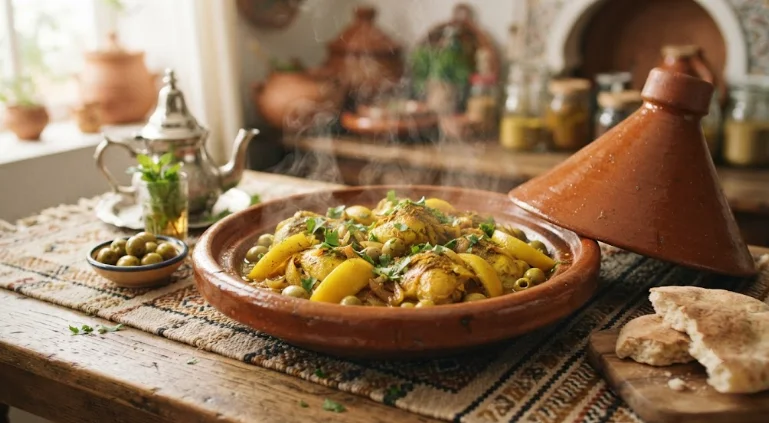
Few culinary creations are as deeply intertwined with a nation’s identity as the Moroccan tagine.
Named after the distinct conical earthenware pot in which it is traditionally slow-cooked, the tagine functions as both a cooking vessel and the dish itself.
For centuries, this slow-cooking marvel has been the centerpiece of Moroccan hospitality. It represents a masterclass in culinary science and geography: because a heavy-based pot and a tight-fitting conical lid are utilized, steam rises, condenses against the cooler top, and trickles back down into the ingredients. As a result, tough cuts of meat become fork-tender, vegetables absorb deep spices, and flavors meld into a rich, harmonious sauce.
Throughout this guide, we will explore the history and regional variations of Moroccan tagine. We will provide a comparative breakdown, a comprehensive FAQ, and step-by-step insights into making the world’s most famous Moroccan tagine.
The Anatomy of a Traditional Moroccan Tagine
Before diving into regional specialties, it is essential to understand what makes a Moroccan tagine work. Traditionally made from clay or terracotta, every authentic Moroccan tagine is designed for slow cooking over charcoal braziers (mejmar).
Essential Components of Every Moroccan Tagine:
- The Base: A wide, shallow dish that holds the ingredients and distributes heat evenly.
- The Lid: The signature cone or dome that traps steam and returns moisture to the food.
- The Base Layer (Aromatic Foundation): Usually a bed of sliced onions, garlic, olive oil, and herbs (cilantro and parsley) that prevents burning and builds flavor.
- The Spices: Ras el Hanout, ginger, turmeric, paprika, and cumin form the warm, aromatic spine of this Moroccan tagine cuisine.
- The Liquid: Often a minimal amount of water or broth is used, because the natural juices of meats and vegetables provide ample moisture.
Regional Variations of Every Moroccan Tagine
Moroccan cuisine is a rich mosaic influenced by Amazigh (Berber), Arab, Andalusian, and Mediterranean traditions. Because geography shapes agriculture, each region has developed its own signature Moroccan tagine preparations.
| Region | Signature Tagine | Key Ingredients & Flavor Profile |
| Fes & Meknes (Imperial North) | Tagine with Prunes & Almonds | Beef/Lamb, Prunes, Almonds, Cinnamon, Honey (Sweet & Savory) |
| Marrakech & The South | Tagine Mkaouda or Kefta with Eggs | Kefta (Meatballs), Eggs, Tomato Sauce, Cumin, Paprika |
| Souss-Massa (Agadir / Atlas) | Berber Tagine (Tagine Soussi) | Mixed Vegetables, Argan Oil, Turmeric, Ginger, Free-range Meat |
| Coastal Regions (Essaouira / Safi) | Fish & Seafood Tagine | White Fish, Charmoula, Tomatoes, Bell Peppers, Preserved Lemons |
1. Fes and Meknes: The Imperial Sweet and Savory Masterpiece
The imperial cities of Fes and Meknes are renowned for their refined, palatal sophistication, heavily influenced by Andalusian heritage. Therefore, the ultimate expression of this culinary artistry is the Lamb or Beef Moroccan tagine with Prunes and Almonds (Lham M’hammer).
- The Flavor Profile: A delicate balance of sweet and savory. Tender meat is infused with warm ginger, saffron, and cinnamon, then topped with plump prunes simmered in honey and butter, and finally garnished with toasted slivered almonds and sesame seeds.
- When it is served: This dish is reserved for weddings, religious holidays like Eid a-adha, and special family gatherings.
2. The Atlas Mountains and Souss-Massa: The Authentic Berber Moroccan Tagine
As you move into the High Atlas Mountains and the southwestern Souss region (home to Agadir and Taroudant), cooking styles shift toward rustic, earth-driven techniques. Consequently, the classic Berber Moroccan tagine is traditionally cooked in unglazed clay pots directly over wood embers.
- The Flavor Profile: Wholesome, vegetable-forward, and deeply comforting. It typically features layers of seasonal root vegetables (carrots, potatoes, turnips, zucchini, and tomatoes) stacked in a dramatic dome shape over beef, lamb, or chicken, and drizzled with local culinary Argan oil.
- The Technique: Because water is scarce in the mountains, the vegetables are sliced thickly so they release enough moisture to steam themselves without drying out.
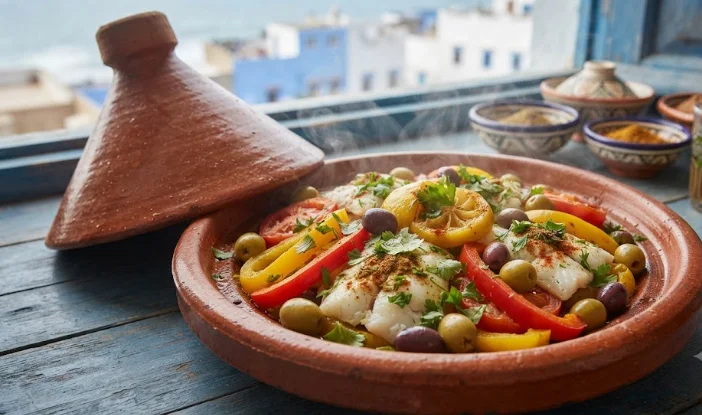
3. Coastal Morocco (Essaouira and Safi): The Charmoula Fish Moroccan Tagine
Morocco boasts thousands of kilometers of Atlantic and Mediterranean coastline, making fish and seafood options an essential regional specialty. Unlike meat varieties, for example, a seafood Moroccan tagine cooks remarkably fast.
- The Flavor Profile: Zesty, herbaceous, and tangy. The fish (usually sea bass, cod, or mackerel) is thoroughly marinated in Charmoula—a vibrant paste made from garlic, cilantro, parsley, cumin, paprika, lemon juice, and olive oil.
- Key Ingredients: Slices of fresh tomatoes, bell peppers, potatoes, and characteristic wedges of preserved lemons and green olives.
4. Marrakech and The South: Kefta Mkaouda Moroccan Tagine
In the bustling alleys of Marrakech and southern towns, quick, comforting preparations take center stage. Thus, the Kefta Moroccan tagine with Eggs is a crowd-favorite street food turned home-cooking staple.
- The Flavor Profile: Robust, spicy, and tomato-forward. Minced beef or lamb is seasoned with cumin, paprika, chopped parsley, and minced onions, rolled into small meatballs, and simmered in a rich, garlicky tomato sauce (smor).
- The Finishing Touch: Just a few minutes before serving, raw eggs are cracked directly into pockets in the bubbling tomato and meat sauce, allowing the whites to set while the yolks remain runny.
Comparative Analysis of Every Moroccan Tagine
To help home cooks choose the right recipe for their occasion, consider the following comparative breakdown based on prep time, cooking method, and ideal protein pairings for every Moroccan tagine:
| Tagine Type | Prep Time | Cook Time | Primary Cooking Fat | Best Served With |
| Fassi Sweet & Savory | 30 mins | 2.5 hours | Smen (aged butter) & Olive Oil | Crusty Khobz (Moroccan bread) |
| Atlas Berber Vegetable | 20 mins | 2.0 hours | Olive Oil / Argan Oil | Freshly baked barley bread |
| Coastal Seafood | 25 mins | 45 mins | Olive Oil | Steamed Semolina or White Bread |
| Marrakech Kefta & Egg | 15 mins | 35 mins | Olive Oil | Warm flatbreads |
For further reading on Mediterranean diet principles found within these regional dishes, consult the nutritional insights provided by theWorld Health Organization (WHO).
Step-by-Step Masterclass: How to Cook a Traditional Moroccan Tagine at Home
Mastering a Moroccan tagine requires patience and an understanding of heat management. Whether using an authentic earthenware tagine or a heavy-bottomed Dutch oven, follow these golden rules to perfect your Moroccan tagine:
- Soak the Tagine (If new): If you are using a traditional unglazed clay tagine for the first time, submerge it in water for 24 hours, rub it with olive oil, and bake it in a low oven to season it.
- Build the Foundation: Always start with cold or low heat. Place sliced onions and a drizzle of olive oil at the very bottom. This creates a cushion that prevents your meat or vegetables from scorching.
- Layer Wisely: Place harder, long-cooking ingredients near the center and bottom. Meanwhile, delicate vegetables like tomatoes, zucchini, and bell peppers go on top.
- Resist the Urge to Stir: Once the Moroccan tagine is assembled and covered, do not lift the lid constantly. Trust the steam cycle!
- Serve Communally: Traditionally, a tagine is placed directly in the center of the table, and everyone eats communally from their section of the pot using pieces of fresh Moroccan bread (khobz) instead of utensils.
To explore more about mastering kitchen techniques and international gastronomy, check out educational resources at theCulinary Institute of America.
Frequently Asked Questions (FAQ) About Moroccan Tagine
However, Can I cook a traditional Moroccan tagine on a modern induction or glass cooktop?
Traditional unglazed clay tagines will crack on direct induction or electric coil burners without a heat diffuser. If you have a modern stovetop, however, you should use a metal heat diffuser plate between the burner and your Moroccan tagine, or use an enameled cast-iron tagine designed for modern kitchens.
2. What is Smen, and can I substitute it?
Smen is a traditional North African fermented, clarified butter with a pungent, cheese-like aroma and deep flavor. If you cannot find it at a local Middle Eastern grocer, you can substitute it with a mixture of high-quality unsalted butter and a tiny touch of sharp blue cheese or aged parmesan for depth.
3. Do I need to add water to my tagine?
Usually, very little water is needed when preparing a Moroccan tagine. Vegetables like onions, tomatoes, and squash release a tremendous amount of liquid as they heat up. Adding too much water turns the rich sauce into a watery broth. Aim for no more than half a cup to one cup of liquid unless specified in slow-cooked meat recipes.
4. How do I clean and maintain my clay tagine?
Never use harsh dish soap or abrasive scouring pads on an unglazed clay tagine, because the porous clay will absorb the soap chemicals. Instead, let your Moroccan tagine cool completely, fill it with warm water to loosen stuck food, and scrub gently with a soft sponge or brush. Dry it thoroughly before storing.
Moroccan Tagine Traditions
The world of the Moroccan tagine offers an incredible window into the culture, history, and geography of North Africa. From the decadent, sweet-and-savory profiles of Fes to the earthy, robust vegetable arrangements of the Atlas Mountains, every dish tells a story of tradition and community. By respecting the slow-cooking process and honoring the balance of spices, you can bring the authentic tastes of Moroccan hospitality directly to your home kitchen.