Exploring the medina of Fez is one of Morocco’s richest cultural experiences. Within its dense network of lanes, workshops, fountains and monuments, everyday life continues alongside centuries of history. The UNESCO-listed old city is not an outdoor museum: it is a lived-in neighbourhood where craftspeople, families and traders share the streets with visitors.
Why the medina of Fez matters
Fez developed from the ninth century and grew into a major centre of learning, trade and craftsmanship. Its architectural heritage includes madrasas, caravanserais or fondouks, mosques, houses and intricate decorative tilework. UNESCO inscribed the Medina of Fez on the World Heritage List in 1981. Exploring it slowly is the best way to appreciate the layers of Moroccan history.
1. Enter through Bab Boujloud
Bab Boujloud, often called the Blue Gate, is a recognisable introduction to Fez el-Bali. The gate is a practical starting point, with food stalls and active streets close by. From here you can follow the main commercial routes before turning toward quieter lanes. Keep a simple offline map, but expect some dead ends and winding passages.
2. Admire the madrasas and architecture
The Bou Inania Madrasa is celebrated for its carved wood, tilework and traditional architecture. Admission and opening conditions may vary, so check locally. Elsewhere in the medina, look for ornate fountains, cedar-wood details, zellige mosaics and decorated doors. Be respectful of religious spaces: not every mosque or prayer area is open to non-Muslim visitors.
3. See the leather tanneries thoughtfully
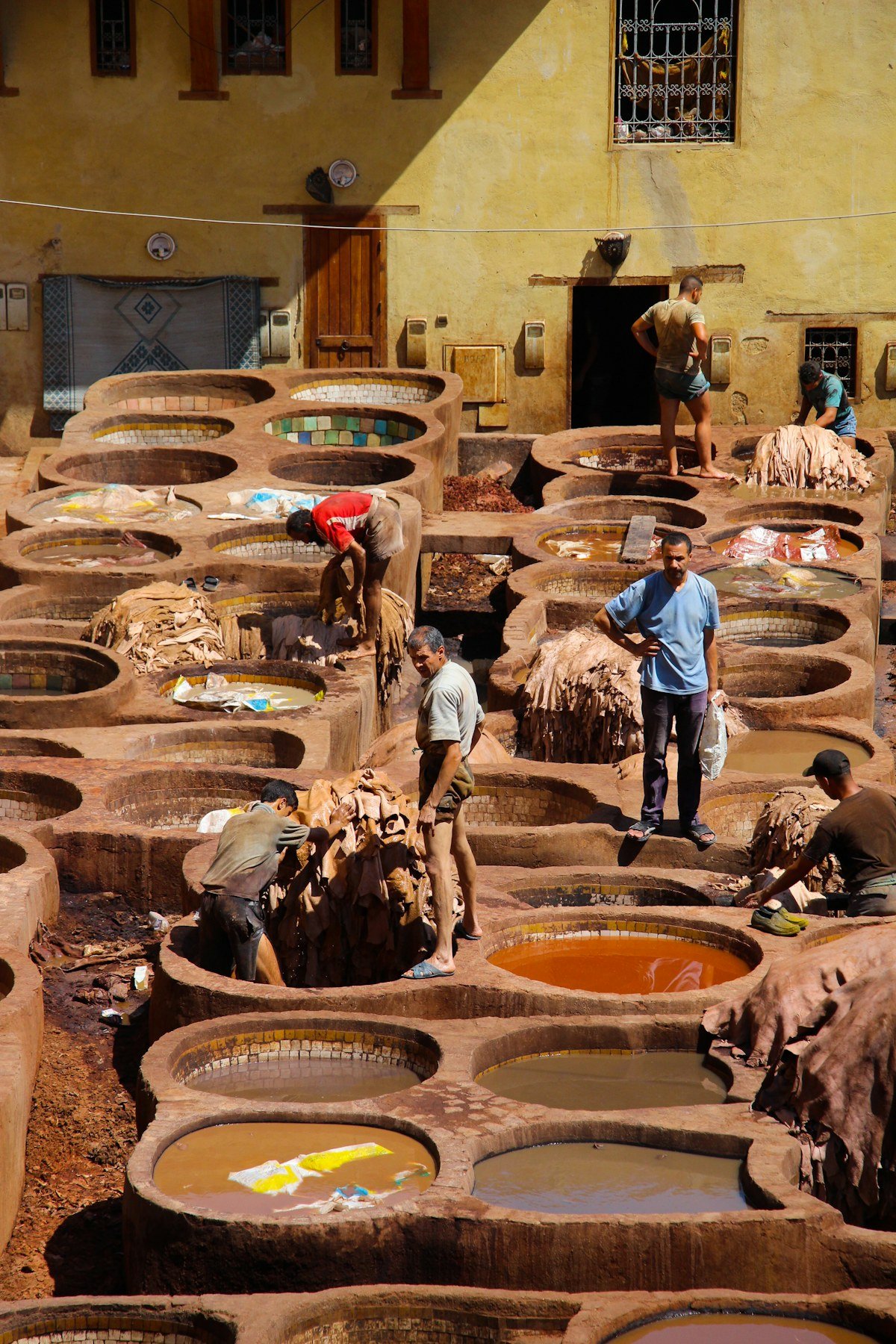
Fez is famous for its traditional leather-working craft. Viewing terraces near the tanneries provide a look at the dyeing and processing areas. Strong smells are part of the experience. Some viewpoints are accessed through shops, and a purchase is not necessarily required; clarify any charge beforehand and avoid pressured visits. Workers are doing a real job, so photography should be considerate.
4. Discover artisan workshops and souks
From metal engraving and pottery to textiles, woodwork and leather goods, the medina’s crafts are remarkable for their variety. Watch how objects are made when artisans invite you in, ask before taking photographs and value the time behind handmade items. Comparing materials and finishing is more useful than judging a souvenir solely by its price.
5. Find the Nejjarine area and the old fondouks
Historic fondouks once supported merchants and travellers. Some have been restored or adapted for cultural uses. The Nejjarine area is particularly associated with wood craftsmanship. It is an excellent place to notice how commercial and artistic life have long intersected in Fez.
6. Take a break for Fassi food
The city’s cuisine is another reason to linger. Depending on the season and menu, try dishes such as chicken pastilla, a slow-cooked tagine or Moroccan salads. Sample freshly baked bread and pause for Moroccan mint tea between stops. Choose a restaurant displaying its menu clearly, and ask about prices before ordering.
Suggested itinerary for one day in Fez el-Bali
- Morning: enter at Bab Boujloud and visit an accessible historic madrasa.
- Late morning: explore the main souks, artisan streets and the Nejjarine neighbourhood.
- Lunch: stop for a traditional Fassi meal.
- Afternoon: visit a tannery viewpoint, then walk through quieter streets with time to spare.
- Evening: leave the medina before dark if you are unfamiliar with the route, or return with a trusted local guide.
Practical tips for visiting Fez medina
- Wear shoes suited to uneven stones and long walks.
- Carry water and a modest amount of cash for smaller purchases.
- Consider a qualified local guide if you want historical context or help navigating.
- Agree on prices and services in advance, especially for informal offers of assistance.
- Keep lanes clear for residents, workers and handcarts.
Frequently asked questions
Can you visit the Fez medina without a guide?
Yes, especially around the main routes. A qualified guide can nevertheless help you understand the monuments and find workshops without wasting time.
How much time should you allow?
One full day is enough for an introduction. Two days offer a more relaxed pace and time for museums, neighbourhoods and craft visits.
Is Fez the same experience as Chefchaouen?
No. Fez is larger, denser and especially known for its historic institutions and crafts. Read our Chefchaouen guide if you are planning both cities.
Sources: UNESCO – Medina of Fez; Moroccan National Tourist Office – Fez. Featured photo: Toni / Unsplash.