


Fez Tanneries: Why Morocco’s Ancient Leather Pits Are Famous
- Leather & Leather Goods Moroccan Crafts
 Manal Hachi
- 1
- 17 minutes read

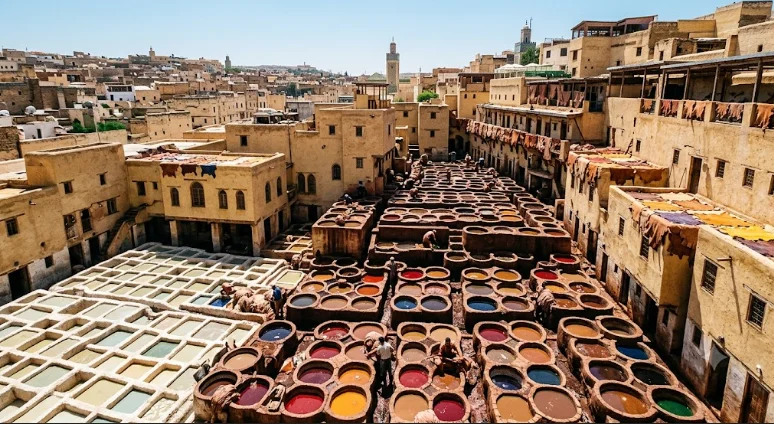
Tucked deep within the labyrinthine alleyways of Fès el-Bali (the medieval old city of Fez), artisans create a sensory spectacle daily that feels unchanged since the Middle Ages. Sprawling honeycomb structures of round stone vats—brimming with organic dyes, milky limestone, and raw hides—create one of the most iconic landscapes in North Africa. Understanding why the Fez tanneries command global fame requires looking beyond the photogenic balconies overlooking Chouara Tannery. This living human history combines zero-machinery craftsmanship, UNESCO World Heritage status, and centuries of mastery to produce some of the softest, most durable leather on Earth.
Whether you plan a trip to Morocco or explore the secrets of traditional African craftsmanship, this in-depth guide explains how these medieval open-air factories work, why their techniques endure, and how you can experience them firsthand.
1. Operating Continuously Since the 11th Century
The primary reason the Fez tanneries command global fame is their extraordinary historical continuity. The Idrisid dynasty established them in the 11th century, and later Almohad and Marinid dynasties expanded them, making the tanneries of Fez the oldest continuously operating leather production sites on the planet.
While industrialization revolutionized leather manufacturing during the 19th and 20th centuries across Europe and Asia, Fez resisted modern mechanization. Today, artisans at these historic sites work using the exact same tools, raw materials, stone vessels, and manual physical labor as their ancestors did 1,000 years ago.
When you stand on a rooftop terrace overlooking Chouara, you do not view a reconstructed historical reenactment; you witness an active, medieval industrial supply chain operating in the 21st century.
2. The Preservation of All-Natural, Organic Tanning Methods
In modern industrial tanning worldwide, chromium salts and harsh synthetic chemicals speed up processing time from weeks down to just a few hours. However, chrome tanning releases toxic heavy metals into soil and waterways.
In contrast, the reputation of the Fez tanneries stems from their absolute adherence to 100% natural, vegetable, and organic tanning processes. Artisans use natural ingredients that sound medieval because they are:
- Quicklime & Water: Loosens animal hair, excess fat, and tough proteins from sheep, goat, cow, and camel hides.
- Pigeon Droppings & Cow Urine: Naturally rich in ammonia and enzymes, pigeon droppings break down stiff proteins to make raw hides soft, supple, and highly receptive to dyes.
- Vegetable Tannins: Tree bark from mimosa, oak, and sumac binds collagen fibers together, transforming perishable raw skin into resilient leather.
- Botanical Dyes: Hides gain vibrant hues through natural sources—saffron or pomegranate peel for yellow, indigo for blue, poppy petals for red, mint for green, henna for orange, and cedar bark for brown.
Because artisans introduce no harsh chemicals, Moroccan vegetable-tanned leather develops a distinct, velvety texture and ages into a rich patina over decades of use.
3. UNESCO World Heritage & Cultural Identity
In 1981, UNESCO designated Fes el-Bali a World Heritage Site. The medieval Fez tanneries—specifically Chouara, Sidi Moussa, and Ain Azliten—serve as pivotal anchor points in this designation.
For centuries, Fez leather reached far beyond North Africa. During the Renaissance, artisans exported fine Moroccan leather across Europe to bind royal books, forge high-end saddles, and craft luxury footwear. In fact, the English language adopted “Morocco leather” (or “Marokain”) as a synonym for high-grade, vegetable-tanned goat skin worldwide.
The tanneries remain deeply embedded in the social fabric of the medina. Artisan families pass down guild memberships and working pits through generations, preserving an intangible cultural heritage that factory machines cannot replicate.
Step-by-Step: How Raw Hides Become Moroccan Leather
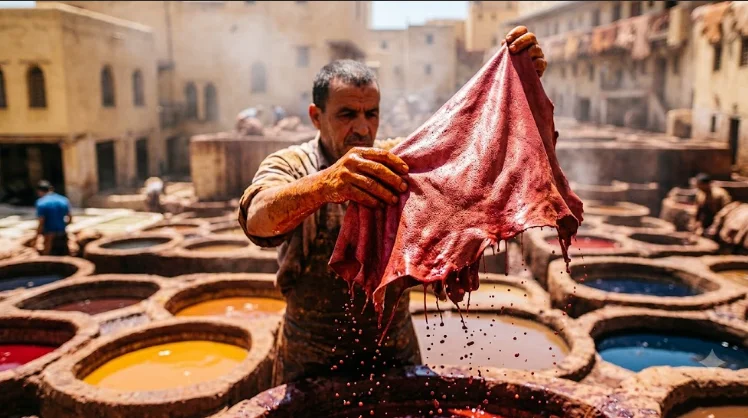
The physical effort involved in processing hides in the Fez tanneries is immense. Tanners submerge themselves waist-deep in stone vats, treading skins by foot under the scorching hot Moroccan sun.
- Dehairing & Cleaning: Duration: 2 to 3 days. Artisans submerge raw hides from sheep, goats, cows, and camels in large stone vats filled with water, quicklime, and salt. This caustic bath dissolves residual fats and loosens animal hair, which workers subsequently scrape off manually using curved blades.
- Softening with Pigeon Droppings: Duration: 1 to 3 days. Workers transfer the scraped hides into vessels containing water mixed with pigeon droppings. Natural ammonia acts as an enzymatic softening agent. Tanners enter the vats barefoot, trampling and kneading the hides for hours to ensure maximum flexibility.
- Vegetable Tanning: Duration: 2 to 4 weeks. Artisans move the softened hides into deep pits containing organic vegetable tannins derived from sumac, mimosa, and oak bark. The hides soak for weeks until plant tannins fully bond with the collagen structure, rendering the skin waterproof and rot-proof.
- Natural Dyeing & Sun Drying: Duration: 1 to 2 weeks. Workers transfer hides to vibrant dye vats infused with botanical extracts like saffron, indigo, and poppy. Tanners work the colors deep into the hide before laying the dyed leather across surrounding rooftops and hillsides to dry under the sun.
Comparing Production Methods: Fez Tanneries vs. Modern Industry
To highlight why traditional Fez tanneries command such global fascination, this table compares their traditional process against modern mass manufacturing:
| Feature | Fez Tanneries (e.g., Chouara) | Modern Industrial Tanneries |
| Primary Tanning Agent | Organic vegetable tannins (mimosa, oak bark, sumac) | Chromium III salts & synthetic chemical compounds |
| Softening Agent | Pigeon droppings (natural ammonia enzymes) | Industrial ammonium salts & synthetic acids |
| Dyes Used | Natural minerals & plants (saffron, poppy, indigo, henna) | Synthetic aniline & azo chemical dyes |
| Energy Source | 100% Manual human labor & solar drying | Electric drums, automated machinery, gas dryers |
| Processing Time | 4 to 8 weeks | 24 to 48 hours |
| Environmental Impact | Biodegradable organic waste, low carbon footprint | Chemical runoff requiring complex industrial wastewater treatment |
| Leather Characteristics | Soft, breathable, develops rich patina, lasts decades | Uniform appearance, prone to cracking over time |
The Three Historic Tanneries of Fez
While Chouara stands as the largest and most famous, Fes el-Bali actually hosts three active medieval Fez tanneries:
- Chouara Tannery (Tannerie Chouara): Located near the Oued Bou Khrareb canal in the heart of the medina. It is the largest, most photogenic, and most popular site for visitors.
- Sidi Moussa Tannery: Located west of Chouara. This smaller site offers a quieter look at artisanal work without large tour groups.
- Ain Azliten Tannery: Situated toward the northern perimeter of the medina near Bab Guissa. This tannery primarily handles larger hides like cow and camel.
Practical Tips for Visiting the Fez Tanneries
Visiting the Fez tanneries is an unforgettable sensory journey, but navigating the area requires a few practical tips:
Embracing the Smell (The Mint Sprig Ritual)
The combination of lime, raw hide, and natural ammonia generates a pungent, unforgettable aroma. When you enter leather shops around the tanneries, shop owners will hand you a fresh sprig of mint. Hold it close to your nose whenever the odor feels overwhelming.
Finding the Best Viewpoints
Special artisan permission is required to walk directly between the stone vats due to slippery surfaces and caustic lime solutions. The best panoramic views open up from the rooftop terraces of leather shops surrounding Chouara Tannery (such as Terrace #10 or Terrace #64).
Tipping and Shopping Etiquette
- Terrace Access: Entering leather shops to view the tanneries from their roof terraces is free, but if you do not buy anything, you should leave a small tip (10 to 20 MAD per person) for the guide or shopkeeper who hosted you.
- Bargaining: If you decide to purchase handcrafted babouches (slippers), leather jackets, poufs, or travel bags, courteous negotiation is standard practice.
Frequently Asked Questions (FAQ)
Why do the Fez tanneries use pigeon droppings?
Pigeon droppings contain natural enzymes and high concentrations of organic ammonia. This acts as a powerful natural softening agent, breaking down tough proteins in raw animal skins to make them soft, flexible, and ready to absorb organic dyes.
What is the best time of day to visit the Fez tanneries?
The morning between 9:00 AM and 12:00 PM offers the best experience. During these hours, artisans at Chouara Tannery actively wash, trample, and dye hides, and morning sunlight highlights the vibrant colors inside the stone vats.
Is there an official admission fee to enter the Fez tanneries?
No official municipal ticket counter or entrance fee exists. Visitors view the tanneries from upper-floor terraces of surrounding leather shops. A small tip (10–20 MAD) is appreciated if you view the scenery without purchasing leather products.
Are chemical dyes used in the traditional Fez tanneries?
Traditional sites like Chouara Tannery rely on 100% natural plant and mineral dyes—such as saffron, poppy petals, indigo, mint, and henna. While secondary modern facilities outside the medina use some modern synthetic dyes, the historic tanneries preserve organic methods.
How do I clean and care for authentic leather from the Fez tanneries?
Because traditional Fez leather is vegetable-tanned, avoid submerging it in water or using harsh synthetic cleaners. Condition the leather once or twice a year with a light coat of natural leather balm or olive oil to maintain soft flexibility and enhance its natural patina.
Conclusion
The historic Fez tanneries remain famous worldwide because they represent a living bridge between medieval history and modern eco-conscious craftsmanship. By preserving organic vegetable tanning, natural dyes, and ancestral handcrafting methods without relying on modern heavy machinery, the artisans of Fez continue to produce timeless leather goods that tell a story in every stitch.

1 Comment
[…] you look down over the Chouara Tannery in Fez from a surrounding rooftop, the scene looks like a giant, chaotic watercolor palette. Dozens […]