



Moroccan Babouche Slippers: History, Types & How to Wear Them
- Home Décor & Traditional Crafts Moroccan Crafts
 Maroc Fans
- 0
- 19 minutes read

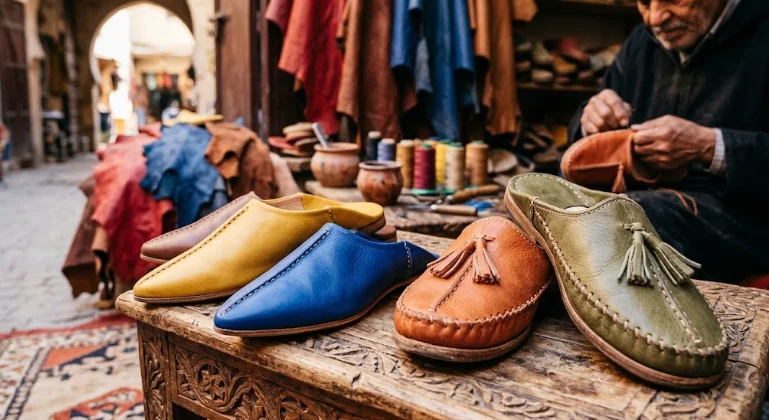
Stepping into the world of traditional North African footwear means discovering the iconic Moroccan babouche slippers (known as belgha in Arabic). Artisans craft these hand-stitched leather shoes using butter-soft hides, a backless silhouette, and centuries-old techniques. Consequently, these historic items have transformed from daily essentials in medieval Medina alleys into global fashion staples.
Whether you want to elevate your loungewear, add a bohemian accent to street style, or find authentic handcrafted footwear, understanding these traditional leather mules helps you choose the perfect pair.
The Origin and History of Moroccan Babouche Slippers
The word babouche derives from the Persian word papush (pa meaning “foot” and push meaning “cover”). Traders introduced these shoes to North Africa over a thousand years ago through Mediterranean networks. Therefore, the footwear quickly integrated into the social fabric of Islamic society.
The Medina Guild System and Chouara Tannery History
Historically, traditional leather footwear indicated social standing, regional identity, and profession. Artisans in Fes, Marrakech, and Tafraoute established strict guild systems led by Maâlems (master craftspeople).
- Vegetable Tanning: Artisans treat hides in historic tanneries—such as the world-famous 11th-century Chouara Tannery in Fes—using natural materials like pigeon feces, limestone, and bark.
- Natural Pigmentation: Craftsmen derive dyes directly from nature:
- Yellow: Saffron or pomegranate rind (traditionally reserved for scholars, royalty, and Friday prayers).
- Red: Poppy petals or madder root.
- Green: Mint or copper oxide.
- Blue: Natural indigo.
Raw Goat/Sheep Hide ──> Organic Tanning ──> Natural Pigment Dyeing ──> Sole Slicing ──> Hand Stitching & Embroidery
By the 17th century, French nobility imported Moroccan babouche slippers as indoor boudoir footwear. Today, luxury design houses and eco-conscious shoppers celebrate these items for their zero-waste, vegetable-tanned construction.
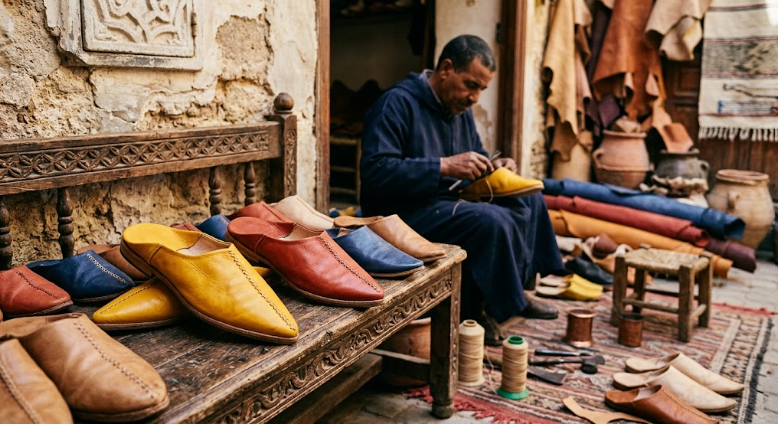
Main Regional Types & Styles
Not all traditional leather slippers feature the same design. Climate, geography, and regional traditions split them into distinct structural families: Urban Slippers and Berber Rural Slippers.
+-----------------------------------------------------------------------------------+
|               STRUCTURAL CATEGORIES OF MOROCCAN BABOUCHE SLIPPERS                 |
+-------------------+---------------------------------------------------------------+
| 1. Fassi (Urban)  | Pointed toe, thin leather sole, soft goatskin, smooth finish.  |
| 2. Marrakech      | Rounded/soft toe, vibrant colors, supple sheepskin/goatskin.   |
| 3. Berber (Rural) | Round toe, thick rubber/tire sole, hard-wearing camel leather. |
| 4. Zayani / Royal | Bright canary yellow, pointed toe, worn with formal Djellabas.|
+-------------------+---------------------------------------------------------------+
1. Fassi (The Urban Classic)
Originating from Fes, this style represents the most refined version of Moroccan babouche slippers.
- Key Features: Sharp pointed toe, thin leather soles, ultra-smooth calfskin or goatskin upper.
- Best Used For: Indoor lounging, formal gatherings, weddings, and lightweight summer wear.
2. Berber (Rural & Outdoor)
Hailing from the High Atlas and Anti-Atlas mountains (particularly Tafraoute), artisans build these durable mountain slippers for rugged outdoor terrain.
- Key Features: Rounded toe box, thick leather or recycled tire-rubber soles, often decorated with vibrant silk or woolen tassels.
- Best Used For: Outdoor walking, garden wear, and rustic bohemian styling.
3. Royal Yellow (Belgha Fassia)
Saturated in vibrant canary yellow, men wear this pointed leather footwear during religious celebrations (Eid), weddings, and national holidays alongside white linen Djellabas.
4. Embellished Women’s Slippers (Cherbil)
For women, traditional footwear ranges from minimalist leather backless mules to elaborately embroidered velvet slippers (Cherbil) decorated with gold thread (Skitli), sequins, and beadwork.
Comparison Table: Urban vs. Berber Styles
| Feature | Urban Fassi Style | Berber Tafraoute Style | Women’s Decorative Cherbil |
| Toe Shape | Sharp Pointed Toe | Round / Broad Toe | Pointed or Almond Toe |
| Primary Material | Goatskin, Sheepskin, Calfskin | Thick Cowhide, Camel Leather | Silk, Velvet, Embossed Leather |
| Sole Construction | Thin Soft Leather (1-2 layers) | Heavy Leather or Recycled Rubber | Thin Leather / Wood Core |
| Primary Purpose | Formal Events, House Slipper, Prayer | Outdoor Walking, Daily Work | Celebrations, Weddings, Evening Wear |
| Terrain Suitability | Indoors, Smooth Tile, Carpet | Rugged Streets, Gardens, Dirt Paths | Indoors, Clean Paved Surfaces |
| Aesthetic Vibe | Sleek, Minimalist, Traditional | Rustic, Tribal, Textured | Glamorous, Intricate, Bohemian |
How Artisans Handcraft Moroccan Babouche Slippers
An authentic pair requires up to 8 separate artisans working in harmony across the Medina guild network.
+-----------------------------------------------------------------------+
|              CROSS-SECTION OF AN AUTHENTIC HANDMADE BABOUCHE          |
+-----------------------------------------------------------------------+
|  [ Upper: Vegetable-Tanned Goatskin or Sheepskin ]                    |
|  [ Inner Lining: Soft Breathable Raw Leather ]                        |
|  [ Insole: Padded Natural Leather Layer ]                             |
|  [ Stitching: Hand-Threaded Waxed Cotton / Silk Thread ]              |
|  [ Outsole: Stiff Hand-Cut Cowhide or Recycled Rubber ]               |
+-----------------------------------------------------------------------+
Step 1: Leather Preparation
Artisans soak goatskin (for supple uppers), sheepskin (for soft linings), and cowhide (for rigid outsoles) in natural tanning vats to soften the fibers.
Step 2: Cutting and Shaping
The Maâlem cuts individual leather panels using hand shears without plastic patterns. As a result, each piece accounts for natural grain variations.
Step 3: Stitching and Assembly
Using waxed threads, the artisan sews the upper inside-out to hide seam lines. Next, the artisan turns the slipper right-side out, which requires significant manual strength and dexterity.
Step 4: Sole Attachment and Finishing
The artisan stitches the durable outsole onto the upper. Finally, craftsmen add decorative embossing or metallic threadwork before buffing the shoe.
Styling & Outfit Inspiration
These iconic shoes offer exceptional versatility across seasonal wardrobes. For example, you can incorporate them effortlessly into modern outfits using these combinations:
1. Casual Everyday Styling
- Women: Pair plain tan, nude, or soft pastel leather slippers with relaxed boyfriend jeans, a crisp white button-down shirt, and a raffia tote bag.
- Men: Match natural brown or navy pointed mules with linen trousers and a rolled-sleeve collarless shirt for effortless summer style.
2. High-Fashion Street Style
- Women: Choose black or dark metallic leather slippers with cropped culottes, a tailored blazer, or a flowing patterned midi dress.
- Men: Combine earth-toned Berber footwear with raw denim jeans and a structured suede jacket.
3. Formal Outfits & Evening Wear
- Women: Opt for gold-embroidered velvet Cherbils paired with a silk maxi dress or wide-leg satin pants.
- Men: Wear authentic canary-yellow Moroccan babouche slippers (Belgha) with a traditional linen tunic or summer suit during beach weddings or resort dinners.
[ Casual Wear ]   ──> Raw Denim + White Linen Shirt + Tan Goatskin Babouche
[ Street Style ]  ──> Cropped Trousers + Tailored Blazer + Black Pointed Babouche
[ Evening/Formal ] ──> Silk Maxi Dress + Gold Thread Cherbil Babouche
Interested in complete oriental styling? Read our guide on Styling Kaftans and Djellabas for Modern Events.
Sizing, Care, and Maintenance Guide
Because artisans make authentic footwear with genuine untreated leather, proper sizing and care remain critical for longevity.
Fit & Sizing Tips
- Order One Size Up: Local sizing runs slightly smaller than US/EU standards. Moreover, because Moroccan babouche slippers feature a backless heel cup, adding 0.5 cm behind your heel ensures maximum comfort.
- Break-In Period: Fresh goatskin slippers feel snug initially. However, they mold to the specific shape of your feet after 3 to 5 wears.
Cleaning & Longevity Rules
- Avoid Saturated Water: Keep untreated vegetable-tanned leather away from water. If your shoes get wet, let them air-dry away from direct heat sources.
- Condition the Leather: Apply a tiny amount of natural leather balm or coconut oil twice a year using a microfiber cloth. Consequently, you will prevent drying and cracking.
- Resole for Hard Outdoor Use: Cobblers can fit thin-soled urban models with a rubber sole to increase longevity on concrete pavements.
Maintain your organic leather items with our step-by-step tutorial on Caring for Handmade Moroccan Leather Poufs and Footwear.
Frequently Asked Questions (FAQ)
Are Moroccan babouche slippers comfortable for all-day walking?
Urban models with thin leather soles work best for indoor lounging, carpeted spaces, or short walks on flat pavement. However, for all-day outdoor walking, choose Berber slippers, which feature thick, shock-absorbing rubber or heavy cowhide soles.
Why do new handmade leather slippers have a distinct smell?
Artisans tan authentic pairs naturally using traditional organic vats rather than harsh industrial chemicals (like chromium). Therefore, the natural leather smell fades completely after you leave the shoes in an open, well-ventilated space for a few days.
Can you wear these slippers outdoors?
Yes, but the sole type determines where you can walk. Models with rubber or reinforced hard-leather soles work well for outdoor pavements. Conversely, you should keep lightweight indoor slippers away from wet mud or sharp gravel.
How do I distinguish genuine handmade pairs from factory knockoffs?
Genuine pairs feature natural variations in leather texture, hand-stitched seams inside the footbed, soft vegetable-tanned lining, and real leather or rubber soles. On the other hand, factory imitations rely on synthetic faux-leather (PU), chemical glues, and uniform machine stamping.
Conclusion
Moroccan babouche slippers represent a unique convergence of historical artistry, sustainable material use, and contemporary fashion versatility. From the pointed Fassi slippers worn in royal courts to rugged Berber mountain sandals, these timeless leather creations offer unmatched comfort and bohemian elegance.