

First Trip to Morocco: The Ultimate Beginner’s Guide
- Morocco Guide Trip Planning
 Manal Hachi
- 1
- 24 minutes read

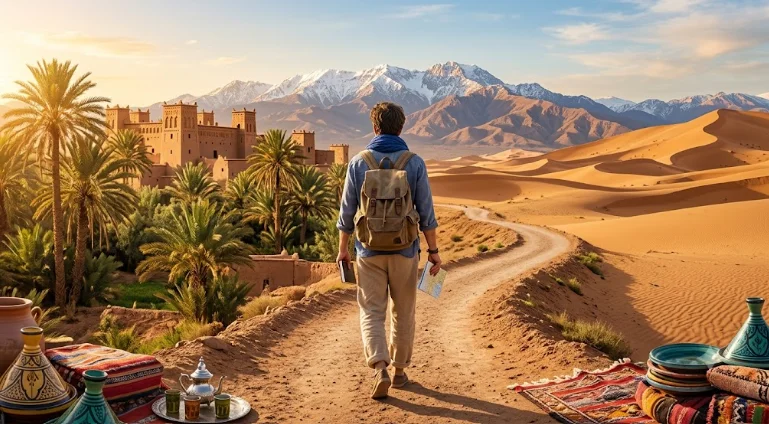
Planning your first trip to Morocco is an unforgettable adventure that awakens every sense. From the aromatic sizzle of spiced tagines cooking on open flames to the hypnotic call to prayer echoing across century-old rooftops, Morocco exists at a vibrant crossroads where African, Arab, Amazigh, and European heritage seamlessly intertwine.
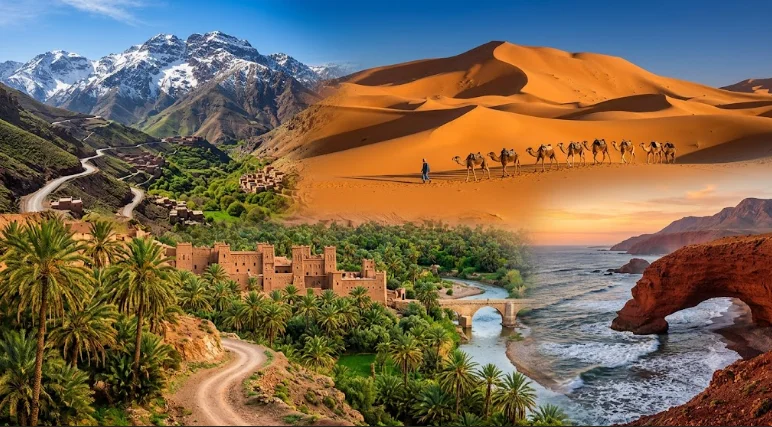
However, for all its undeniable charm and poetic beauty, your first trip to Morocco is not something where you can simply land and “wing it” without prior preparation. Because ancient, labyrinthine medinas operate on unique social norms, cash remains king in local markets. Furthermore, navigating the vast geography from the Atlas Mountains to the Sahara Desert requires thoughtful logistical planning.
If you are currently organizing your itinerary, this definitive guide covers everything you need to know before departure—including entry rules, budgeting, transport, cultural etiquette, packing lists, and safety tips—to ensure your inaugural journey is smooth, authentic, and unforgettable.
1. Essential Entry Logistics for Your First Trip to Morocco
Before diving into colorful souks and desert excursions, you must get your administrative requirements in order.
Visa Requirements for Your First Trip to Morocco
For travelers holding passports from the United States, Canada, the United Kingdom, European Union member states, Australia, and New Zealand, entering the country is relatively straightforward. Consequently, immigration authorities grant you a visa-free stay of up to 90 days upon arrival.
To clear passport control without issues, keep these mandatory entry guidelines in mind:
- Passport Expiry: Your passport must be valid for at least six months beyond your planned date of departure.
- Blank Pages: Ensure your passport has at least one completely blank stamp page for entry and exit stamps.
- Onward Travel: Immigration officers occasionally request proof of onward travel, such as a return flight ticket.
Important Note: If your passport comes from a nation that requires a pre-arranged visa, you must apply online through the official Moroccan E-Visa Portal prior to your journey.
Health, Vaccinations, and Insurance for Your First Trip to Morocco
Health officials do not require mandatory vaccinations for entry unless you arrive from a region with a high risk of Yellow Fever transmission. However, medical authorities strongly recommend standard routine vaccines (Tetanus, Diphtheria, Polio) alongside Hepatitis A and Typhoid. Furthermore, you can consult the World Health Organization (WHO) travel guidelines for specific updates.
Because medical facilities in major cities like Casablanca, Rabat, and Marrakech feature high-quality private clinics, emergency care in urban centers is reliable. However, care in rural mountain villages or remote desert locations remains limited. Therefore, you should always purchase comprehensive travel insurance with emergency medical evacuation coverage.
2. When to Schedule Your First Trip to Morocco
Morocco features Atlantic and Mediterranean coastlines, towering mountain ranges, and expansive arid deserts. Consequently, choosing the timing of your journey depends entirely on your planned itinerary.
                     MOROCCO REGIONAL CLIMATE OVERVIEW
 ┌─────────────────────────────────────────────────────────────────────────┐
 │ Spring (Mar-May)   : Ideal nationwide (Mild temperatures, lush greens)  │
 │ Summer (Jun-Aug)   : Coastal regions pleasant; Inland & Desert fiery    │
 │ Autumn (Sep-Nov)   : Outstanding weather across cities, mountains, desert│
 │ Winter (Dec-Feb)   : Cold in mountains/desert; Mild along the coast     │
 └─────────────────────────────────────────────────────────────────────────┘
Best Weather Seasons for Your First Trip to Morocco
Spring (March to May) and Autumn (September to November) represent the ideal season for traveling. Daytime temperatures range between 20°C and 28°C (68°F–82°F), which makes urban exploration comfortable. Similarly, mountain trekking in the High Atlas and staying in desert camps near Merzouga offer perfect weather conditions during these months.
Summer Considerations for Your First Trip to Morocco
Summers inland are intensely hot. For instance, cities like Marrakech and Fes frequently exceed 40°C (104°F) during July and August, while Sahara Desert excursions become dangerously uncomfortable. Therefore, if your travel falls in summer, focus your itinerary on coastal destinations like Essaouira, Taghazout, and Tangier.
Winter Weather Expectations for Your First Trip to Morocco
Winter brings mild, sunny days along the coast and in southern lowlands, but temperatures plummet significantly after sunset. High Atlas mountain passes often experience heavy snowfall, and desert nights can drop near freezing. For this reason, pack warm layers if traveling during this period.
3. Financial Planning for Your First Trip to Morocco
Understanding how money works in North Africa will save you unnecessary transaction fees and unexpected headaches during your stay.
Using Currency on Your First Trip to Morocco
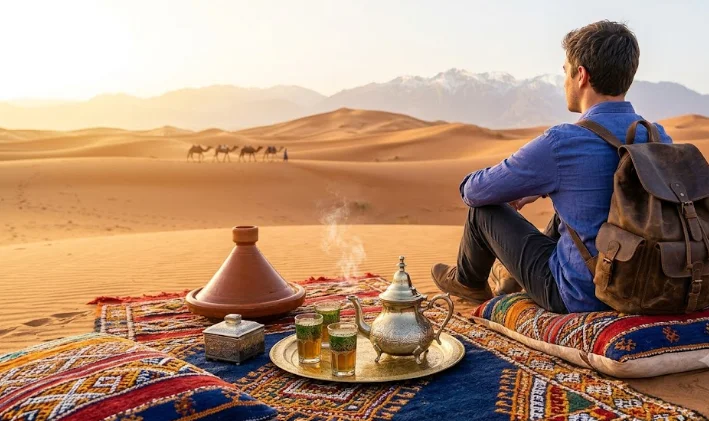
The official currency is the Moroccan Dirham (MAD). The Dirham is a “closed currency,” which means you cannot legally buy or sell it outside of Morocco.
- Exchanging Money: Avoid exchanging large sums of cash at airport arrival desks because banks charge high fees there. Instead, bring Euros, US Dollars, or British Pounds in physical cash and exchange them at bank branches or accredited exchange kiosks in city centers.
- ATMs: ATMs are widely available across major towns and cities. Always select the option to pay in local currency (MAD) rather than converting at the ATM machine, because this avoids unfair Dynamic Currency Conversion (DCC) fees.
Daily Travel Budgets
Morocco offers exceptional value across all travel tiers, from backpacker-friendly guest houses to high-end luxury palaces.
| Budget Category | Estimated Daily Cost (per person) | What It Typically Covers |
| Backpacker / Budget | 350 – 550 MAD ($35 – $55 USD) | Hostel dorms/budget hotels, street food meals, public buses/trains, self-guided sight visits. |
| Mid-Range Comfort | 800 – 1,600 MAD ($80 – $160 USD) | Traditional mid-scale riad, sit-down restaurant meals, private city tours, intercity train seats. |
| Luxury / Premium | 2,500+ MAD ($250+ USD) | Boutique luxury riads, fine dining, private driver, customized Sahara desert glamping. |
Cash Management Inside Local Medinas
While high-end hotels, modern restaurants, and boutique shops accept Visa and Mastercard, small vendors, street food stalls, local taxis, and tipping are strictly cash-only. Therefore, always carry smaller notes (20 MAD, 50 MAD) with you.
4. Getting Around on Your First Trip to Morocco
Navigating the country is relatively efficient thanks to well-developed rail systems and modern highway networks.
┌────────────────────────────────────────────────────────────────────────┐
│                        TRANSPORTATION AT A GLANCE                      │
├──────────────┬──────────────────┬─────────────────┬────────────────────┤
│ Mode         │ Speed & Comfort  │ Ideal For       │ Booking Strategy   │
├──────────────┼──────────────────┼─────────────────┼────────────────────┤
│ Trains       │ High (Al Boraq)  │ Intercity travel│ Book online via    │
│ (ONCF)       │ Modern & Reliable│ North to Center │ ONCF website       │
├──────────────┼──────────────────┼─────────────────┼────────────────────┤
│ Long-Distance│ Moderate         │ Mountain routes │ CTM or Supratours  │
│ Buses        │ Comfortable      │ & coastal towns │ apps/ticket desks  │
├──────────────┼──────────────────┼─────────────────┼────────────────────┤
│ Petite Taxis │ Fast city travel │ Inner-city rides│ Ensure meter       │
│              │ Budget friendly  │ (within city)   │ (*compteur*) is ON │
├──────────────┼──────────────────┼─────────────────┼────────────────────┤
│ Private      │ Maximum comfort  │ Tailored multi- │ Book through       │
│ Driver       │ & flexibility    │ day itineraries │ licensed operator  │
└──────────────┴──────────────────┴─────────────────┴────────────────────┘
Train Travel During Your First Trip to Morocco
Morocco boasts one of Africa’s best railway networks.
- Al Boraq: Africa’s first high-speed train connects Tangier to Casablanca via Kenitra and Rabat in roughly two hours.
- Standard Express Trains: These trains link major destinations including Marrakech, Casablanca, Rabat, Meknes, and Fes comfortably. You can check timetables and purchase tickets directly on the official ONCF Railway Portal.
Long-Distance Buses
For routes without train services—such as traveling to Chefchaouen, Essaouira, or down to the southern desert gateways—reputable bus companies like CTM and Supratours offer reliable, comfortable, and air-conditioned coaches.
5. Accommodation Choices for Your First Trip to Morocco
Where you sleep will form a core memory of your vacation.
       TRADITIONAL RIAD                 DESERT GLAMPING
    ┌──────────────────────┐        ┌──────────────────────┐
    │  Interior Courtyard  │        │  Nomadic Fabric Tents│
    │  Central Fountain    │        │  Stargazing Decks    │
    │  Intricate Tilework  │        │  Campfire & Music    │
    │  Rooftop Terraces    │        │  Private Ensuite     │
    └──────────────────────┘        └──────────────────────┘
The Riad Experience
A Riad is a traditional Moroccan home or palace built around an inner courtyard or garden, often featuring detailed zellij tilework, carved plaster, and a central fountain or plunge pool. Because they sit inside historic medinas, staying in a riad provides an intimate, tranquil oasis away from the noisy streets outside.
Pro-Tip: Vehicles cannot enter narrow medina alleyways. Therefore, you should arrange an airport or station transfer directly through your riad. Staff will meet your driver at the nearest drop-off point and guide you safely to your door.
6. Crafting an Itinerary for Your First Trip to Morocco
Trying to see the entire country in one week is the most common mistake travelers make. Because distances between regions are vast, winding mountain roads take time to navigate.
The Classic First-Timer Journey (7 to 10 Days)
This route balances urban culture, magnificent mountain scenery, and an iconic desert adventure:
- Marrakech (Days 1–3): Explore the historic Djemaa el-Fna, Bahia Palace, Majorelle Garden, and dynamic souks.
- High Atlas & Ait Ben Haddou (Day 4): Cross the stunning Tizi n’Tichka pass to visit the UNESCO ancient fortress city.
- Sahara Desert / Merzouga (Days 5–6): Ride camels into the dunes, watch the sunset over the sands, and spend a night stargazing at a desert camp.
- Fes (Days 7–9): Journey north through the wiz Valley to Fes, where you can explore the world’s largest car-free urban medina (Fes el-Bali) and famous leather tanneries.
- Casablanca or Departure (Day 10): Visit Hassan II Mosque before flying home.
7. Culture and Etiquette for Your First Trip to Morocco
Morocco is a Muslim-majority nation where traditional customs coexist with modern lifestyles. Respecting local cultural standards ensures warm interactions throughout your visit.
                  DRESS CODE RECOMMENDATIONS
 ┌──────────────────────────────────────────────────────────┐
 │ Men         : Chinos/light trousers, polo shirts, t-shirts│
 │ Women       : Midi/maxi dresses, wide-leg trousers,      │
 │               light scarves (to cover shoulders/chest)   │
 │ Footwear    : Sturdy, closed-toe walking shoes           │
 │ Avoid       : Extremely tight or revealing clothing      │
 └──────────────────────────────────────────────────────────┘
What to Wear
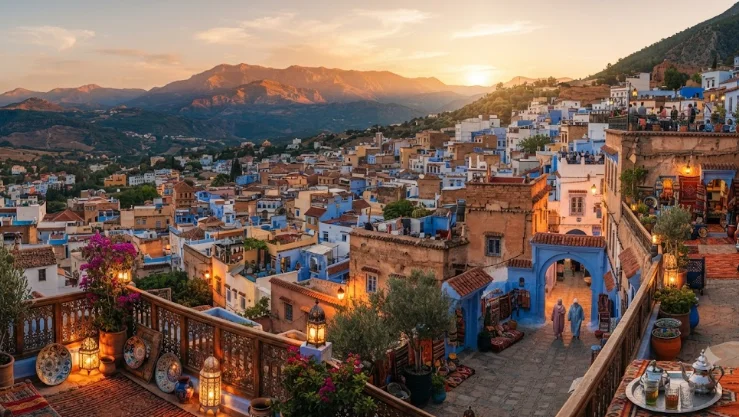
In tourist hubs like Marrakech or beach towns like Taghazout, visitors often wear typical resort clothing. However, modest attire is polite and appreciated when exploring historic medinas, rural villages, and residential neighborhoods:
- For Women: Loose, breathable fabrics covering shoulders and knees work best. For instance, maxi dresses, wide-leg linen pants, and lightweight tops are very practical.
- For Men: Light trousers, chinos, or knee-length shorts paired with t-shirts or linen shirts work great.
8. Medina Safety for Your First Trip to Morocco
Ancient walled medinas are vibrant, historic treasure troves, but their bustling atmosphere can feel sensory-overwhelming.
                 COMMON MEDINA SCAMS TO AVOID
 ┌──────────────────────────────────────────────────────────┐
 │ 1. "Street Closed" Scam : Misleading directions to       │
 │    steer you into private shops or tannery traps.        │
 │ 2. Unsolicited Guides   : Strangers offering walking     │
 │    help, then demanding high payment at destination.     │
 │ 3. Unrequested Henna    : Artists starting designs       │
 │    without consent, demanding large fees after.          │
 └──────────────────────────────────────────────────────────┘
Navigating Without Getting Lost
- Download offline mapping tools like Maps.me or Google Maps offline areas before heading into the medina.
- Note prominent landmarks near your riad so you can find your way back easily.
- If you need directions, step inside an established shop or restaurant rather than asking casual passersby on the street.
9. Food Safety and Cuisine on Your First Trip to Morocco
Moroccan cuisine is world-renowned for its aromatic spices, slow-cooked stews, and delicate pastries.
What to Eat and Drink
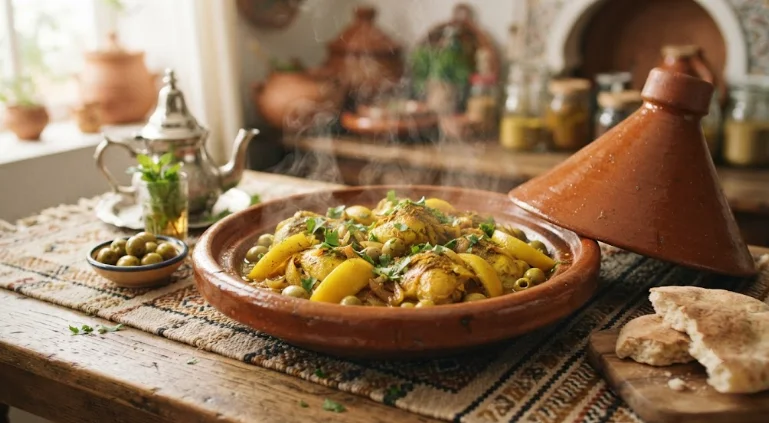
- Tagine: Meat, poultry, or fish cooked slowly alongside fresh vegetables inside a conical clay pot.
- Couscous: Locals traditionally serve this dish on Fridays after midday prayers, topped with tender vegetables and braised meats.
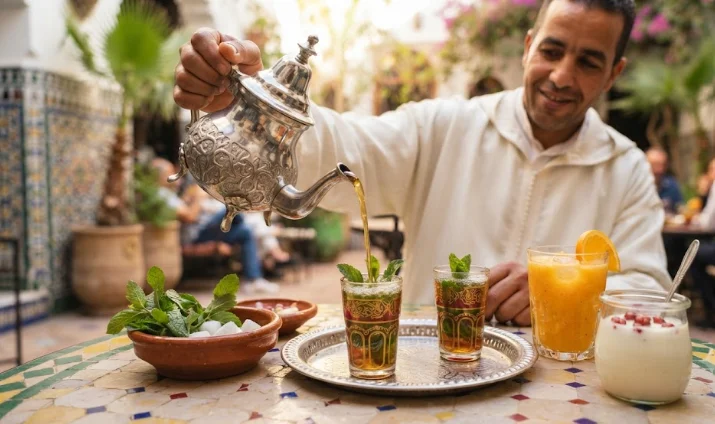
- Moroccan Mint Tea: Known as “Berber Whiskey,” hosts serve this sweet green tea brewed with fresh mint as a universal sign of hospitality.
10. Frequently Asked Questions (FAQ)
Is a first trip to Morocco safe for beginner travelers?
Yes, Morocco is considered one of North Africa’s safest and most stable travel destinations. Because the country invests heavily in tourist safety, dedicated tourist police (Brigade Touristique) operate in major cities. As a result, you only need standard situational awareness—such as keeping your valuables secure.
What languages do people speak in Morocco?
The official languages are Moroccan Arabic (Darija) and Amazigh (Berber). Additionally, people speak French fluently across hospitality, transport, and commercial sectors. English is also widely spoken in hotels, restaurants, and tourist shops in major destinations.
Can I drink alcohol in Morocco?
Yes. Although Morocco is an Islamic nation, alcohol is legal and available. For example, you can purchase alcohol at major supermarkets (like Carrefour), licensed hotel bars, international restaurants, and modern lounges. However, authorities strictly prohibit drinking in public streets.
How much should I tip in Morocco?
Tipping (Baksheesh) is customary:
- Restaurants: 10% of the total bill for good service.
- Cafés: Rounding up to the nearest 5 or 10 MAD.
- Riad Porter: 10–20 MAD per bag.
- Tour Guides: 100–200 MAD per day.
Preparing for your first trip to Morocco comes down to striking a balance: organizing key logistics (visas, transport, cash, accommodation) in advance while maintaining an open, flexible mindset when exploring the historic medinas.

1 Comment
[…] this is your first visit to the country, read our first-trip guide to Morocco and our practical Morocco travel safety […]